Best Smart Telescopes 2026, Ranked by Category
This article contains affiliate links. If you buy through them, ORIVON may earn a commission at no extra cost to you.
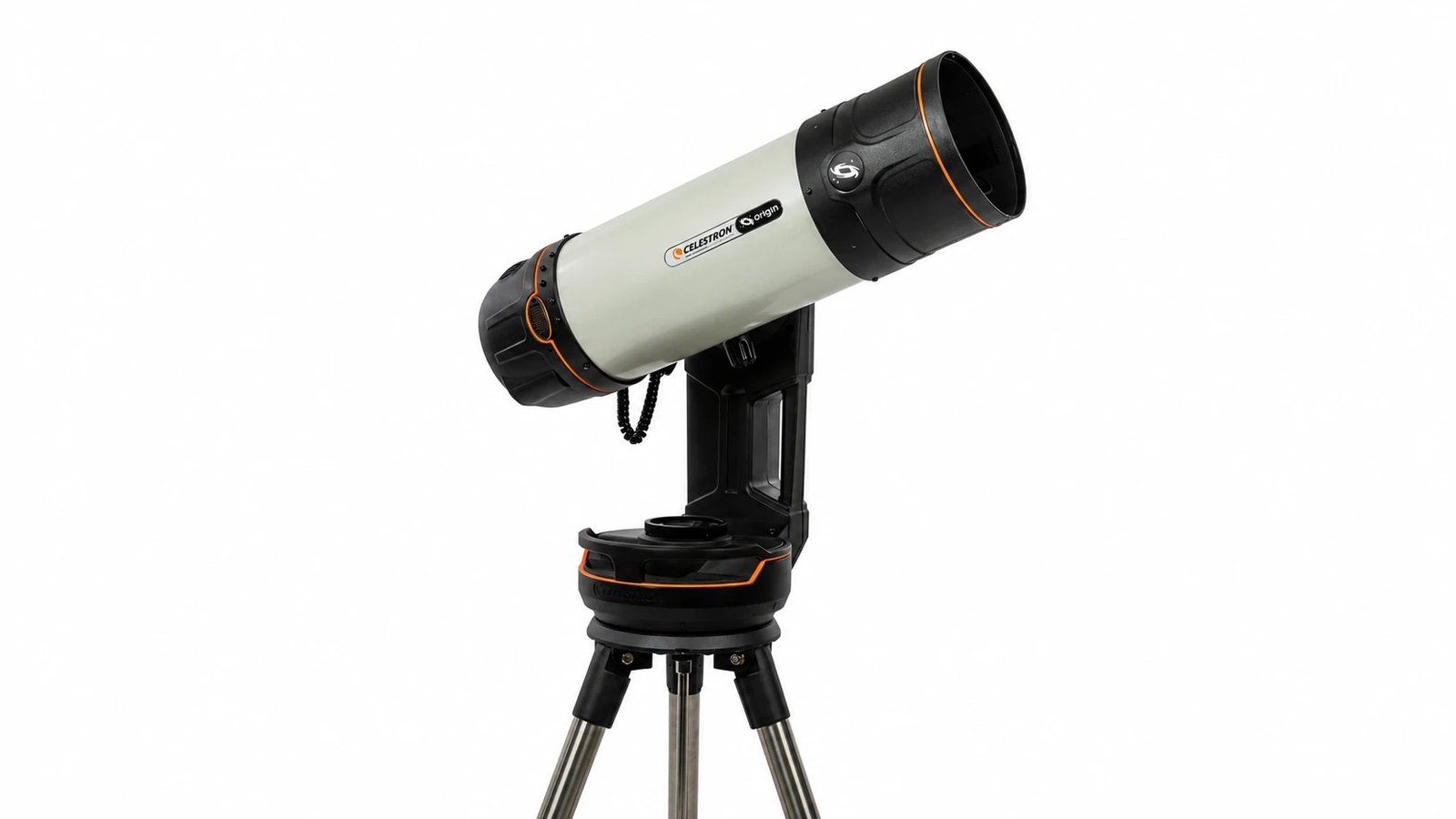
Credit: Celestron
The App-Controlled Promise, Checked Against What's Actually Current
Smart telescopes sell on a simple pitch: point, tap a target in an app, and watch a stacked deep-sky image build in real time — no manual alignment, no star-hopping, no eyepiece required. That promise holds up better for some models than others, and the right one depends less on which is "best" in the abstract than on your budget, how much you travel with it, and whether you're shooting from a backyard or a genuinely dark site.
This isn't a first-hand comparison test — ORIVON has not put every model in this guide through its own side-by-side trial. What follows draws on manufacturer specifications, published reviews and patterns in buyer feedback for each model, organized around the decision an actual buyer is making: which one, for how much, for what. Every product listed here was checked for current pricing and availability on August 27, 2026; several prices have moved since this guide's original version, and one new model — the Seestar S50 Pro — has been added because it genuinely changes where the category's aperture ladder sits, not simply because ORIVON has a page about it.
The Field at a Glance
| Model | Aperture | Price | Best For |
|---|---|---|---|
| Celestron Origin Mark II | 152mm (6") | $4,299 | Best overall deep-sky image quality |
| Unistellar Odyssey Pro | 85mm | $4,599 | Premium, eyepiece-adjacent design |
| Unistellar eQuinox 2 | 114mm | $2,899 | Light-polluted skies |
| Seestar S50 Pro | 50mm + 6mm wide | $899 launch / $999 | Deep-sky reach at a mid-tier price |
| Vaonis Vespera II | 50mm | $1,590 | Portability and simplicity (previous-gen Vaonis model) |
| Seestar S30 Pro | 30mm + 6mm wide | $699 | Best-rounded mid-budget pick |
| DwarfLab Dwarf 3 | Dual-lens, telephoto + wide | $549 | Best value dual-camera option |
| DwarfLab Dwarf Mini | Compact single-lens | $419 | Best portable / entry budget |
Prices as listed on each manufacturer's official U.S. store, checked August 27, 2026. Vaonis now also sells the newer Vespera 3 and Vespera Pro 2; ORIVON has not reviewed either yet and they are not included in this guide's rankings.
Best Overall: Celestron Origin Mark II
With the largest aperture and fastest optics in this guide (152mm, f/2.2), the Origin Mark II is the model reviewers most consistently point to when deep-sky detail is the priority — its Sony STARVIS 2 sensor and fast focal ratio pull in more signal per minute than anything else on this list. Buyers and critics report a genuinely fast setup and an intuitive app, offset by a steep $4,299 price and a design with no eyepiece at all. This is an imaging system, not a traditional telescope with a camera bolted on, and it's priced for buyers who've already decided image quality matters more than cost.
Read the full Celestron Origin Mark II review →
Best Premium Alternative: Unistellar Odyssey Pro
At $4,599, the Odyssey Pro is now the most expensive telescope in this guide, built around a genuine Nikon eyepiece design that sets it apart visually from every other model here, even though it's still an app-mediated, no-direct-look-through experience like the rest. Its 85mm aperture sits between the mid-tier and Origin Mark II's 6-inch class, and reviewers describe its catalog of over 5,000 objects and citizen-science integration as genuine differentiators rather than marketing filler.
Read the full Unistellar Odyssey Pro review → · See it head-to-head against the Origin Mark II in ORIVON's full comparison.
Best for Light-Polluted Skies: Unistellar eQuinox 2
The eQuinox 2's headline feature is automatic light pollution reduction processing, built specifically for observers without access to a dark-sky site — reviewers describe it as a genuinely effective, working feature rather than a marketing claim. At $2,899, it sits well above the mid-tier Seestar and Dwarf models but below the Origin Mark II and Odyssey Pro, and it adds citizen-science partnerships (asteroid occultation timing, exoplanet campaigns) that some buyers cite as a real differentiator beyond the optics. For a more detailed look at this specific use case across every price tier, see ORIVON's Best Smart Telescope for City Skies guide.
Read the full Unistellar eQuinox 2 review → · Deciding between this and the larger-aperture Origin Mark II specifically? See ORIVON's full head-to-head comparison.
Best for Deep-Sky Reach at a Mid-Tier Price: Seestar S50 Pro
ZWO's newest Seestar, launched for preorder in August 2026 at $899, replaces the discontinued original Seestar S50 with a 50mm aperture, an 8.3MP dual-camera system, native equatorial mode support and a 10,000mAh battery. It's included here for what it's specifically built to do — bridge the gap between the S30 Pro's portability and the Origin Mark II's aperture — not because ORIVON has confirmed how it performs under real skies. Independent hands-on testing remains limited as of this writing; treat its placement in this category as based on specifications and early evidence, not a settled verdict.
Read ORIVON's full Seestar S50 Pro first look →
Best Portable Premium Pick: Vaonis Vespera II
At 5kg and roughly the size of a large water bottle, the Vespera II is the smart telescope reviewers describe as genuinely disappearing into a backpack among the higher-priced models in this guide. Its 50mm aperture is the direct trade-off for that portability, partly offset by CovalENS, Vaonis's mosaic-stitching feature for extending the effective field of view. Note that Vaonis has since released newer Vespera 3 and Vespera Pro 2 models; the Vespera II is now the brand's previous-generation offering, still officially sold at an unchanged $1,590 as of this guide's last check, but no longer Vaonis's newest option.
Read the full Vaonis Vespera II review →
Best-Rounded Mid-Budget Pick: Seestar S30 Pro
At $699, the S30 Pro remains the model ORIVON's own research points to most often for buyers who want a genuinely capable dual-camera system without spending Origin Mark II or Odyssey Pro money. Its 4.6° telephoto field of view fits large nebulae without mosaicking, its dual-band filter genuinely helps under city skies, and its automated NFC-assisted setup is about as low-friction as this category gets. Its clearest weakness is planetary imaging, where its 30mm aperture and 160mm focal length produce a small, detail-limited disc.
Read the full Seestar S30 Pro review → · Choosing between this and the larger Seestar S50 Pro? See ORIVON's full comparison.
Best Value Dual-Camera Option: DwarfLab Dwarf 3
At $549, the Dwarf 3 undercuts the Seestar S30 Pro by $150 while still offering a dual-lens design that shoots deep sky and wide-field in one body. It's the value pick for buyers who specifically want the dual-camera workflow without paying ZWO's mid-tier price, though ORIVON's independent research finds the Seestar ecosystem generally has a larger base of published third-party reviews and sample images to draw on for buying confidence.
Read the full DwarfLab Dwarf 3 review →
Best Portable / Entry Budget: DwarfLab Dwarf Mini
At $419 and under a kilogram, the Dwarf Mini is the lightest, cheapest telescope in this entire guide. It's the clearest "try the category without a big commitment" option, with the expected trade-offs of lower resolution and no serious planetary ambition. For beginners specifically worried about wasting money on a hobby they're not sure will stick, this is the lowest-risk entry point among every model here.
Read the full DwarfLab Dwarf Mini review →
Best for Wide-Field Targets: Seestar S30 Pro
Between its 4.6° telephoto frame and dedicated 63° wide-angle second camera, the S30 Pro covers more of the "large target, one frame, no mosaic" use case than any other model in this guide at its price. Reviewers have specifically praised its ability to stitch an 84° Milky Way panorama in a single automated capture — a genuinely different use case from the deep-sky imaging the rest of this guide focuses on.
Mistakes to Avoid
- Buying the largest-aperture model by default — portability and price matter more than raw aperture for a lot of buyers' actual use case
- Expecting a smart telescope to double as a traditional eyepiece-based instrument — none of the models in this guide offer direct visual observing
- Ignoring light pollution conditions at your actual observing location, which matters more for this category than for a traditional telescope — see ORIVON's Best Telescope for Light Pollution guide before buying based on aperture alone
- Assuming a brand-new model automatically beats an established one — the Seestar S50 Pro's specifications look strong, but it has far less independent testing behind it than the S30 Pro or Origin Mark II
- Assuming a higher price always means a better fit — several of the cheapest models here are also the ones reviewers praise most consistently for their intended use case
Sources & Methodology
This guide is built from each manufacturer's official specifications, ORIVON's own previously published reviews of each model, and published third-party testing where available. Prices were rechecked directly against manufacturer stores on August 27, 2026; the Unistellar eQuinox 2 and Odyssey Pro prices in particular have increased since this guide's original version and were updated accordingly. The Seestar S50 Pro is the newest addition and carries the least independent verification of any model listed — see its dedicated first-look article for the full breakdown of what remains unconfirmed.
Frequently Asked Questions
For imaging-focused beginners, yes — see our beginner telescope guide for how this category compares to a traditional Dobsonian as a first purchase.
No. Every smart telescope in this guide replaces the eyepiece entirely — every image is composed and viewed through a companion app, which is a category-wide design decision, not a limitation specific to one model.
It depends on budget. Unistellar's automatic light pollution reduction and the Seestar line's built-in dual-band filters both address this differently — see ORIVON's dedicated Best Smart Telescope for City Skies guide for the full breakdown by price tier.
For raw deep-sky image quality, the Celestron Origin Mark II remains the model reviewers point to most consistently, thanks to its 152mm aperture and fast f/2.2 optics. It is also the most expensive telescope in this guide, so "best overall" and "best for most people" are not the same recommendation here.
It's included because of what it's built to do — a larger 50mm aperture successor to the discontinued Seestar S50 — not because ORIVON has confirmed how it performs. Independent hands-on testing is still limited, so its placement here reflects specifications and early evidence, not a settled verdict.