
Celestron Origin Mark II Review: What Buyers and Critics Are Saying
This article contains affiliate links. If you buy through them, ORIVON may earn a commission at no extra cost to you.
Credit: Celestron
Overview
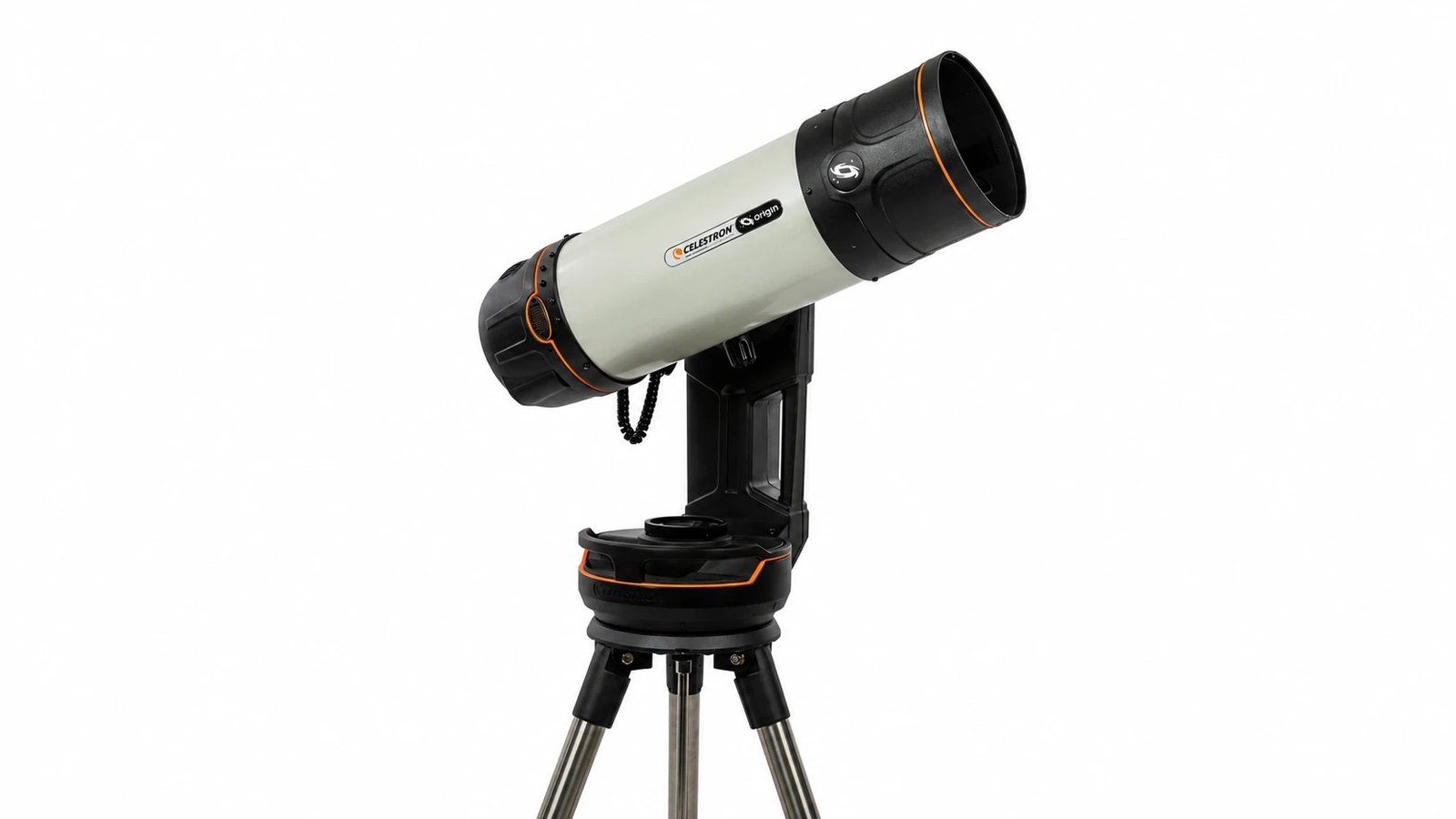
The Celestron Origin Mark II is Celestron's second pass at the smart telescope it introduced a few years ago — and by most accounts, the update addresses the areas early adopters flagged most. Rather than bolting a camera onto a traditional design, Celestron built the Origin line from the ground up as an imaging system, and the Mark II carries that forward with a faster, more sensitive sensor and refinements to automated alignment, focus and stacking.
This assessment draws on the Mark II's manufacturer specifications and recurring patterns across published reviews and buyer feedback, organized the way we'd want it organized if we were about to spend over four thousand dollars on one.
Sources & Methodology
This review combines four distinct kinds of input rather than blending them into one voice: Celestron's own published manufacturer specifications for the Origin Mark II; independent reviewer findings from outlets that have published tests of the telescope; recurring patterns in buyer and owner feedback found in public reviews and forums; and ORIVON's own editorial analysis, weighing that evidence against comparable instruments in the category. ORIVON has not tested the Origin Mark II directly — claims about image quality, setup speed and real-world performance reflect consensus across the sources above, not a hands-on ORIVON test.
Credit: Celestron
What Changed From the Original Origin
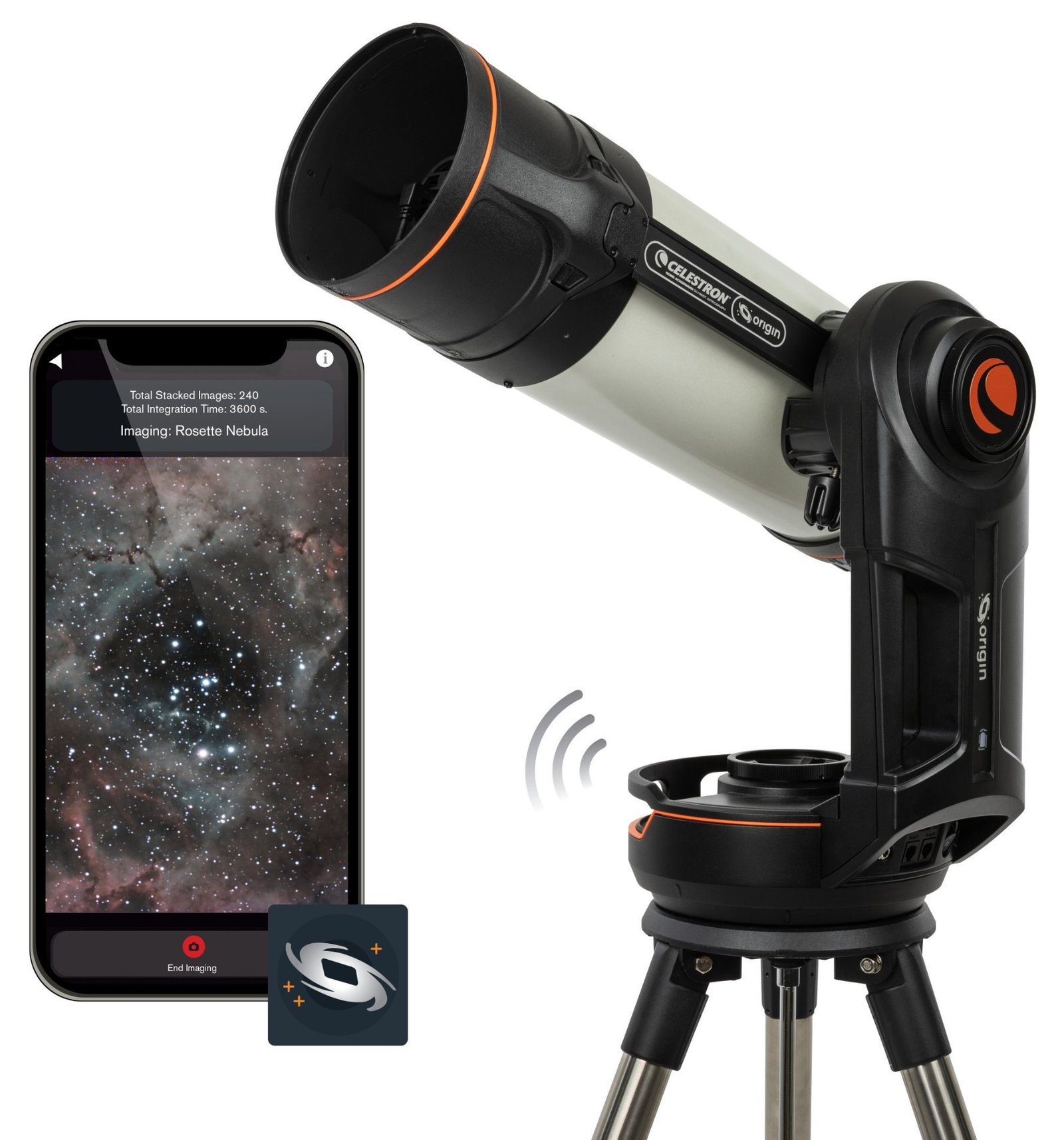
Per Celestron's own product page, the Mark II's main upgrade is the camera: the original Origin's Sony IMX178 color CMOS sensor is replaced by the new "Origin 678C" camera, built on Sony's STARVIS 2 CMOS technology (Sony IMX678), an 8.3-megapixel sensor (3856 × 2180) that Celestron describes as offering higher resolution and increased sensitivity than the original. The optical tube itself — the 152mm f/2.2 Rowe-Ackermann Schmidt Astrograph design — is unchanged between the two models, and Celestron confirms this directly: owners of the original, first-generation Origin (model #12099) with the IMX178 sensor can purchase the new 678C camera as an upgrade for their existing unit rather than needing to replace the whole telescope. In practice, that means the Mark II is best understood as an updated camera module on the same proven optical platform, not a redesigned instrument.
Technical Specifications
| Optical Design | Rowe-Ackermann Schmidt Astrograph |
| Aperture | 152mm (6") |
| Focal Ratio | f/2.2 |
| Sensor | Sony 678C, STARVIS 2 CMOS technology |
| Alignment | Fully automated, sky-recognition based |
| Mount | Integrated alt-azimuth, motorized |
| Control | iOS / Android app, Wi-Fi direct |
| Battery Life | Approx. 4 hours continuous imaging |
| Weight | 16 lbs (7.3 kg) including tripod |
| Price | Approximately $4,299 USD |
Pros and Cons
Drawing on published tests and recurring themes in buyer feedback, a few points come up consistently:
What Reviewers Praise
- Fast setup — reviewers and early buyers consistently report going from unboxing to imaging in minutes
- Excellent for deep-sky imaging, the category it's built around
- Intuitive companion app, praised even by first-time users
- Improved sensor sensitivity compared to the original Origin
- Well suited to outreach, education and star party settings
Common Criticisms
- No eyepiece — not built for traditional, look-through viewing
- A steep price point relative to the category
- Not designed for planetary imaging
- Mount uses more plastic components than some expect at this price tier
- Not an ideal first telescope for absolute beginners, mainly on cost
Editor's Verdict
Taken together, the published reviews and buyer sentiment point to a fairly consistent positioning: the Origin Mark II is aimed at people who want deep-sky images without adopting the manual-alignment learning curve as a second hobby, and by most accounts it delivers on that promise. The friction points that show up repeatedly — price, plastic in the mount, no eyepiece — are trade-offs of the category and the price tier, not surprises specific to this unit. Whether it's worth it depends less on the telescope and more on how much you value convenience over the traditional hands-on ritual.
Who It's For
Based on this editorial analysis of the available reviews and specifications — not on direct testing by ORIVON — the Origin Mark II appears to make the most sense for someone who wants deep sky images without adopting a second, highly technical hobby just to get there: newer imagers, time-constrained hobbyists, educators running outreach events, and anyone who has tried and abandoned a manual setup before. Experienced imagers chasing maximum resolution and full manual control are the group most likely to find the fixed sensor limiting.
How It Compares
| Model | Aperture | Reported Setup Time | Price |
|---|---|---|---|
| Celestron Origin Mark II | 6" | ~4 min | ~$4,299 |
| Unistellar eQuinox 2 | 4.5" | ~5 min | ~$2,499 |
| Vaonis Vespera II | 2.1" | ~3 min | ~$1,499 |
If the eQuinox 2's light-pollution focus has you weighing it against the Origin's larger aperture, see our full Origin Mark II vs. eQuinox 2 comparison. Comparing it against another premium, eyepiece-based smart telescope instead? See ORIVON's Origin Mark II vs. Unistellar Odyssey Pro comparison.
Frequently Asked Questions
No — it has no eyepiece. All viewing happens through the companion app, which is a deliberate design decision, not a limitation of the optics.
By most accounts, no — it's optimized for deep sky targets. Planetary detail is possible but a dedicated planetary imaging setup will outperform it significantly.
Reviewers and buyers in light-polluted areas commonly report usable images of brighter targets, aided by the built-in light pollution filtering — with the realistic expectation that results improve significantly under darker skies.
Mainly the camera. Per Celestron's own specifications, the Mark II uses a new "Origin 678C" camera built on Sony's STARVIS 2 sensor (8.3 megapixels), replacing the original's Sony IMX178 sensor for higher resolution and increased sensitivity. The optical tube — the 152mm f/2.2 RASA design — is unchanged, and Celestron even sells the new camera as an upgrade for existing first-generation Origin owners.