
Best Beginner Telescope: What Actually Matters
This article contains affiliate links. If you buy through them, ORIVON may earn a commission at no extra cost to you.
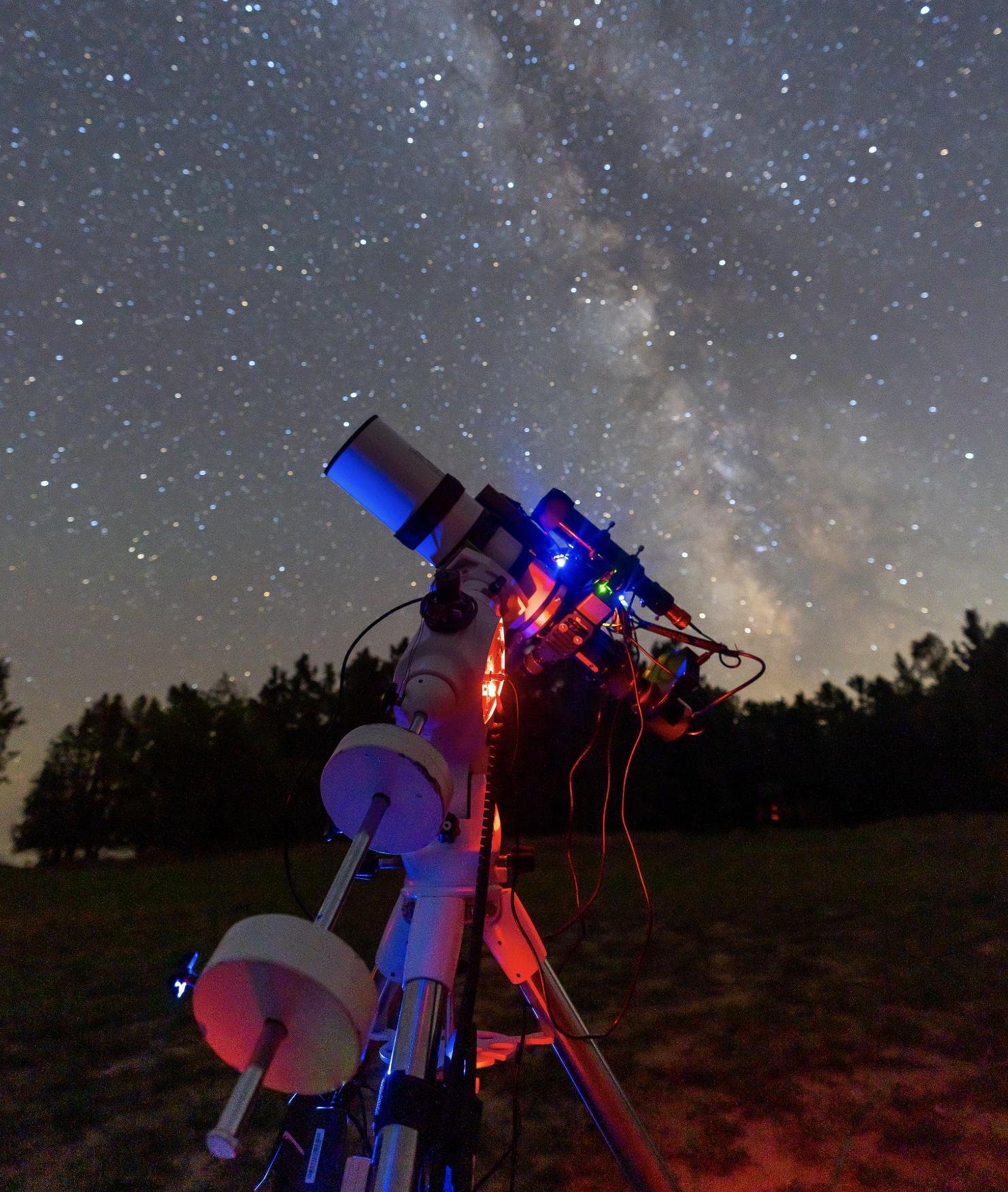
A well-matched beginner setup, tracking under a dark sky. Illustrative photo — not a specific model reviewed above.
The Three Things That Actually Matter
Most beginner telescope guides lead with magnification. Ignore magnification entirely — any telescope can be sold with an eyepiece that promises absurd power, and it will produce a blurry, useless image. What actually determines whether you'll use your telescope past the first month comes down to three things.
1. Aperture
Aperture — the diameter of the main lens or mirror — determines how much light the telescope gathers. More light means fainter objects become visible and existing objects show more detail (see understanding telescope aperture for the full picture on why this matters more than the magnification number on the box). For a first telescope, we recommend a minimum of 4.5 inches (114mm) of aperture, with 6 inches being a sweet spot for portability versus performance.
2. Mount Stability
A wobbly mount ruins even an excellent optical tube — every tap of the focuser sends the image shaking for several seconds. This is the single most common reason beginner telescopes end up in a closet. Prioritize mount stability over almost any other spec.
3. Realistic Expectations
Deep sky objects will not look like Hubble images through an eyepiece — they appear as soft grey smudges with detail, not vivid color. Planets show real detail (Saturn's rings, Jupiter's bands) but at a scale that rewards patience over a single glance.
Our Recommendations by Budget
| Under $250 |
A 4.5" tabletop reflector on a Dobsonian-style mount — the best aperture-to-dollar ratio available. Celestron StarSense Explorer 114AZ View at Retailer |
| $250 – $500 |
A 6" Dobsonian reflector — our overall pick for most first-time buyers. (If you'd rather go fully manual and tabletop, see ORIVON's Sky-Watcher Heritage 150P review.) Celestron StarSense Explorer 150AZ View at Retailer |
| $500 – $1,000 |
An 8" Dobsonian, or a smart telescope if imaging matters more than visual observing to you. Celestron StarSense Explorer 8-inch View at Retailer |
Mistakes to Avoid
- Buying based on advertised magnification numbers on the box
- Choosing a large aperture on a mount too flimsy to support it
- Skipping a red-dot or finder scope — you will need one to locate targets
- Expecting color and detail equivalent to space telescope photography
Frequently Asked Questions
For imaging-focused beginners, yes. For those who want the traditional experience of observing through an eyepiece, a Dobsonian remains the better first purchase.
No — learning to star-hop manually builds sky knowledge that GoTo mounts let you skip. It's a worthwhile first-year skill, not a requirement.