
Unistellar Odyssey Pro Review: What Buyers and Critics Are Saying
This article contains affiliate links. If you buy through them, ORIVON may earn a commission at no extra cost to you.
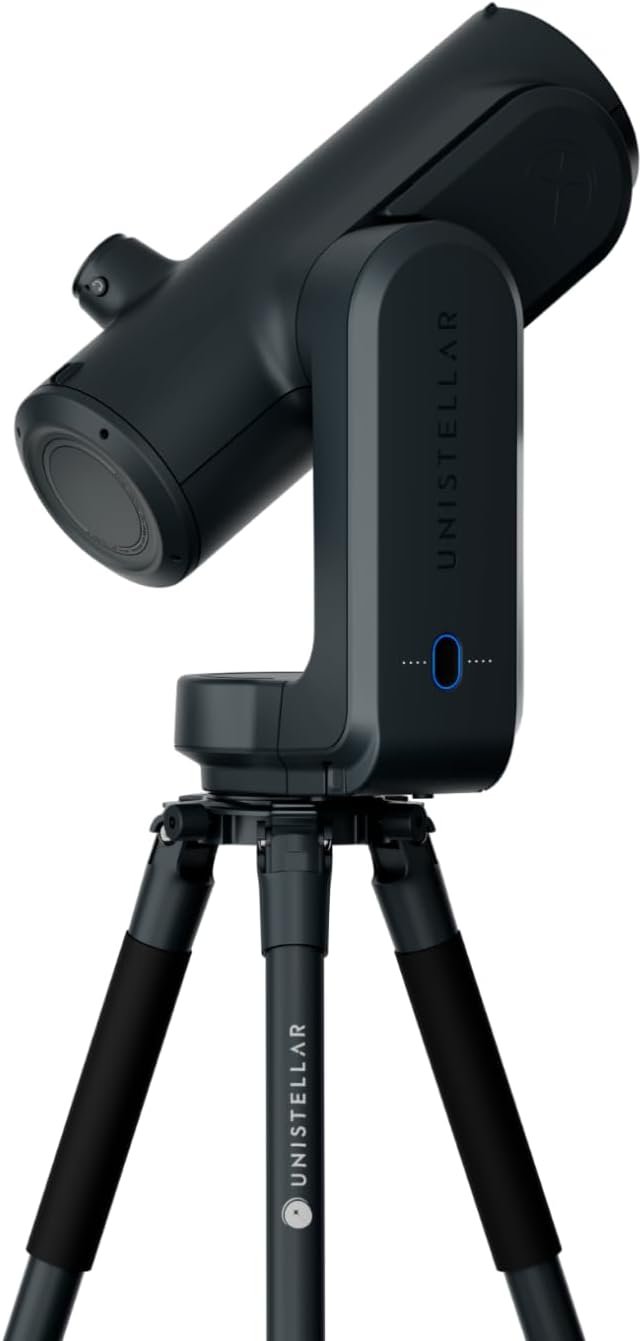
Credit: Unistellar
Overview
The Odyssey Pro sits at the premium end of Unistellar's lineup, and its standout feature is one no other smart telescope in this roundup offers: a genuine Nikon optical eyepiece, built directly into the unit alongside the usual app-based imaging. That single design decision changes what kind of device the Odyssey Pro actually is — not just an imaging system with a screen, but a telescope you can still put your eye to, the way observers did before the smart-telescope category existed.
This assessment draws on the Odyssey Pro's manufacturer specifications and recurring patterns across published reviews and buyer feedback, organized around the questions someone actually comparing smart telescopes would ask. We've also compared it directly against the Celestron Origin Mark II in a dedicated head-to-head, using the same specifications referenced here.
Technical Specifications
| Aperture | 85mm |
| Focal Ratio | f/3.9 |
| Focal Length | 320mm |
| Field of View | 33.6 × 45 arcmin |
| Limiting Magnitude | 17.2 |
| Eyepiece | Genuine Nikon optical eyepiece included |
| Battery Life | Approximately 5 hours |
| Onboard Storage | Approximately 64GB |
| Price | $4,599 USD (official Unistellar store, checked August 27, 2026) |
Pros and Cons
Drawing on published tests and recurring themes in buyer feedback, a few points come up consistently:
What Reviewers Praise
- The Nikon eyepiece, consistently singled out as a genuine differentiator — no other smart telescope in this category offers real look-through viewing at this level of optical quality
- A more portable form factor than the larger Origin Mark II, without giving up the smart-imaging feature set
- Unistellar's citizen science partnerships, carried over from the eQuinox 2 and cited by owners as a meaningful extra
- Strong build quality reviewers describe as matching its premium price point
Common Criticisms
- A smaller aperture (85mm) than the Origin Mark II (152mm), meaning slower light gathering for deep-sky targets
- A high price point even before accounting for retailer variation
- The eyepiece adds bulk and cost that buyers who only care about app-based imaging don't need
Editor's Verdict
Taken together, the published reviews and buyer sentiment frame the Odyssey Pro as the smart telescope for buyers who aren't ready to give up traditional eyepiece viewing entirely — the Nikon optics are described consistently as a real feature, not a token inclusion. Buyers chasing maximum aperture and the fastest possible imaging are better served by the Origin Mark II; buyers who want a foot in both the traditional and app-based observing worlds are the ones the Odyssey Pro is built for.
Who It's For
Based on this editorial analysis of the available reviews and specifications — not on direct testing by ORIVON — the Odyssey Pro appears to make the most sense for buyers who want a premium smart telescope but aren't willing to fully abandon look-through visual observing to get one. Buyers prioritizing maximum deep-sky aperture and imaging speed above all else are likely better served by the Origin Mark II.
How It Compares
| Model | Aperture | Eyepiece | Price |
|---|---|---|---|
| Unistellar Odyssey Pro | 85mm | Yes (Nikon) | $4,599 |
| Celestron Origin Mark II | 152mm (6") | No | ~$4,299 |
| Unistellar eQuinox 2 | 114mm | No | ~$2,499 |
Frequently Asked Questions
Among the models covered on ORIVON, yes — the Origin Mark II, eQuinox 2, Vespera II, Dwarf 3 and Seestar S30 Pro are all app-only, with no traditional look-through viewing.
The Origin Mark II has significantly more aperture and a faster optical system for deep-sky imaging, while the Odyssey Pro trades some of that light-gathering power for a genuine eyepiece and a more portable form factor. See our full head-to-head comparison for the complete breakdown.
Reviewers note it's frequently discounted from its list price depending on retailer and bundle, which is why we cite a range rather than a single fixed figure.