
ORIVON Sightline
Know what's worth observing tonight.
What’s up right now
Moon Tonight
Planets Tonight
Best Target Tonight
Tonight's Forecast
Set your location to load tonight's forecast.
Ranked for your location, right now
Expand any target for its live altitude chart, compass direction, rise/transit/set times and why we recommend it.
Set your location above to calculate tonight’s sky.
This Month's Sky
A dark first half and a bright second half. The New Moon on November 9 opens the best evenings of the month for faint targets, Mars and Jupiter line up just over a degree apart before dawn on November 15 and 16, and the Leonids peak on the night of the 17th into the 18th. A supermoon Full Moon on November 24 then brightens the late-month sky.
Last verified: November 7, 2026.
Where to point your optics this month
The darkest evenings run from about November 3 to 14: the Moon rises after midnight early in the window, and by the 14th it sets before 9 PM at mid-northern latitudes, with the New Moon on November 9 in between. After First Quarter on November 17 the Moon lights the evening sky; it sets around local midnight on the Leonid night, so the dark hours are the ones before dawn. The Full Moon on November 24 washes out faint detail for several nights.
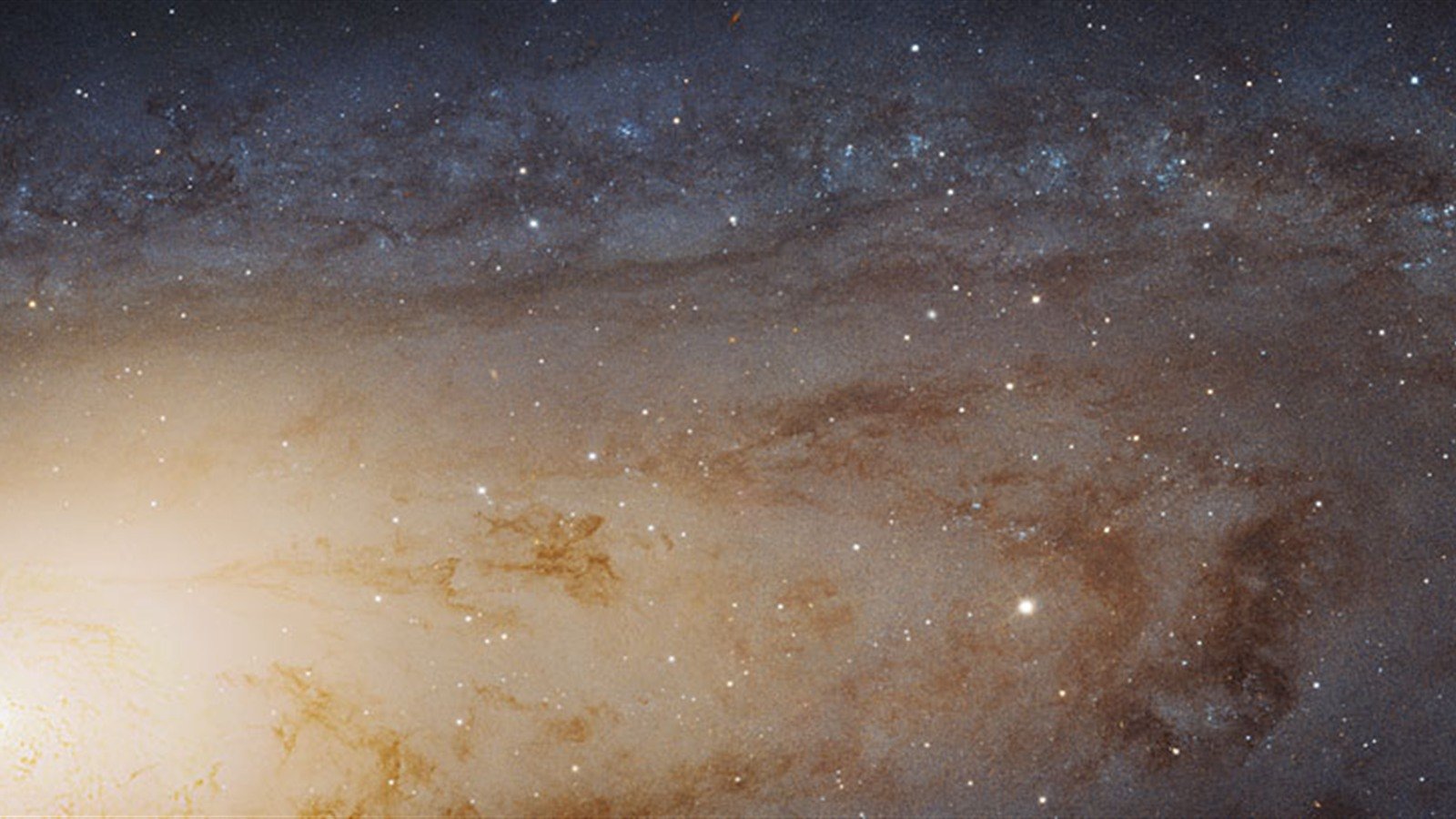 Galaxy
Andromeda Galaxy (M31)
M31 / NGC 224 · Andromeda · Beginner
Binoculars or any telescope; naked eye from a dark site — Nearly overhead around 9 PM local time, still about 55° up at midnight. Best from the Northern Hemisphere.
Credit: NASA, ESA, J. Dalcanton, B. F. Williams, L.C. Johnson (University of Washington)
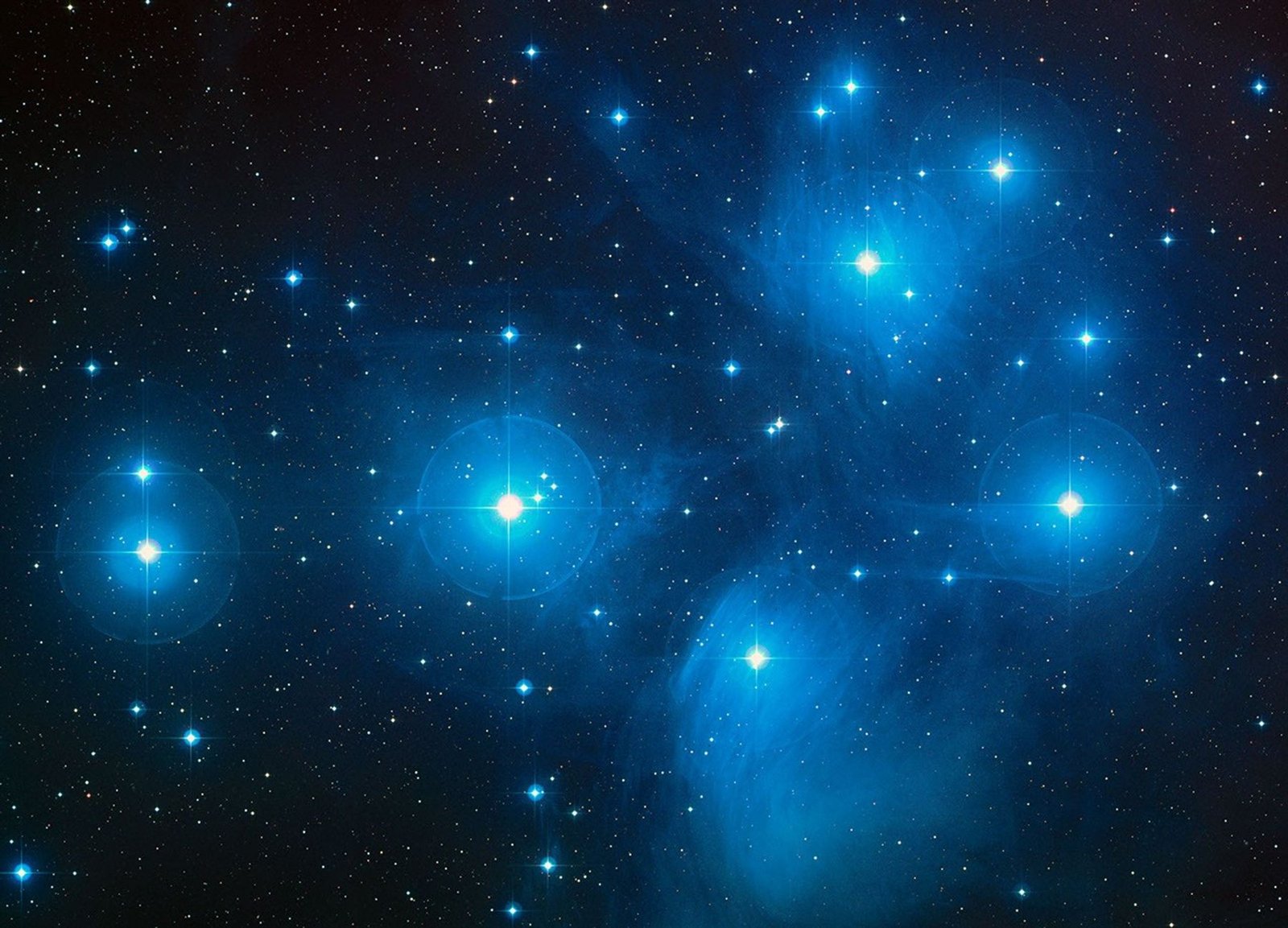 Cluster
The Pleiades (M45)
M45 · Taurus · Beginner
Naked eye, binoculars or a wide-field telescope — Well up by 9 PM and highest around midnight, about 70° up from mid-northern latitudes. Both hemispheres.
Credit: NASA, ESA and AURA/Caltech
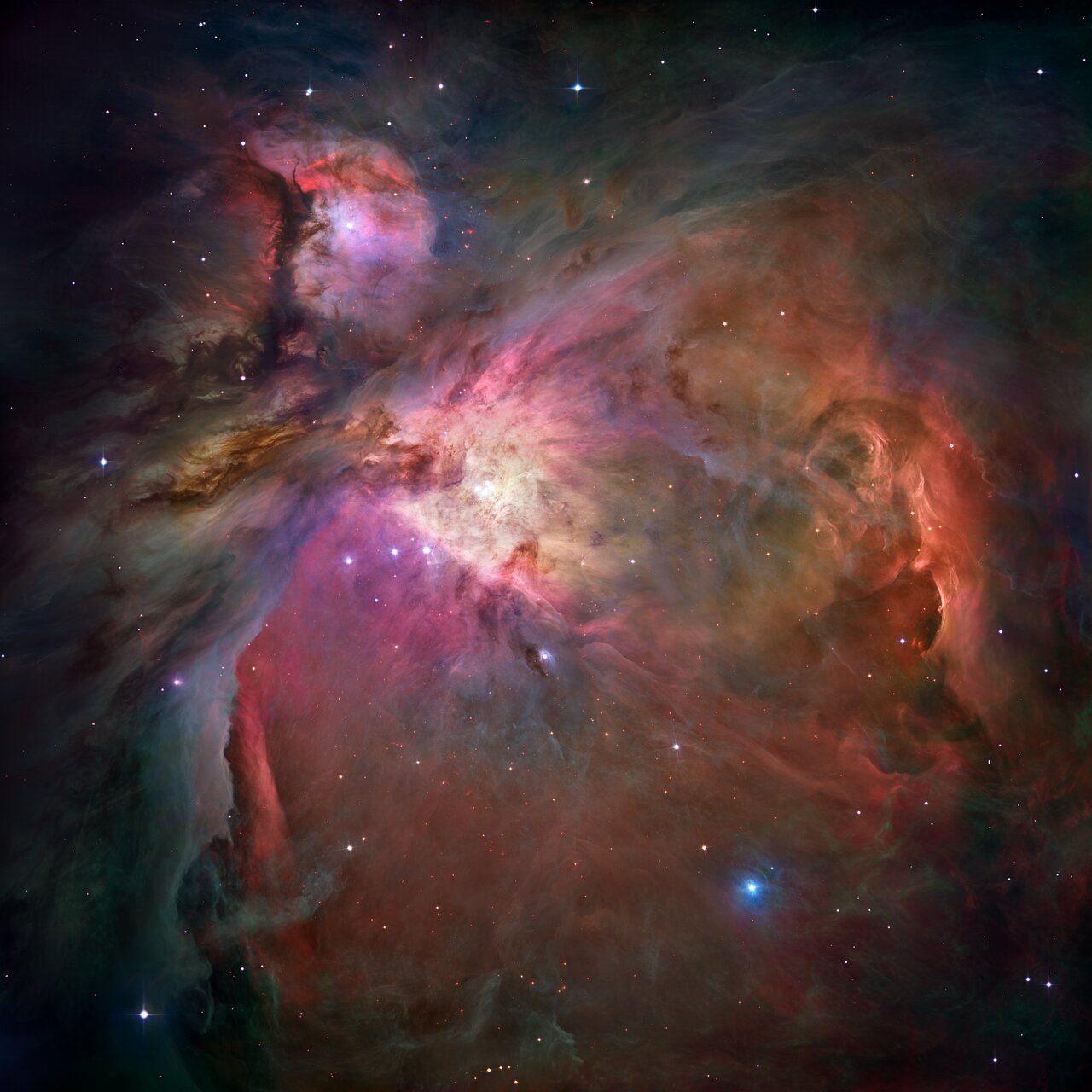 Nebula
The Orion Nebula (M42)
M42 / NGC 1976 · Orion · Beginner
Binoculars or any telescope; a nebula filter helps from town — Rises around 9 PM, clear of the horizon haze by 11 PM and highest around 2 AM. Both hemispheres.
Credit: NASA, ESA, M. Robberto (Space Telescope Science Institute/ESA) and the Hubble Space Telescope Orion Treasury Project Team
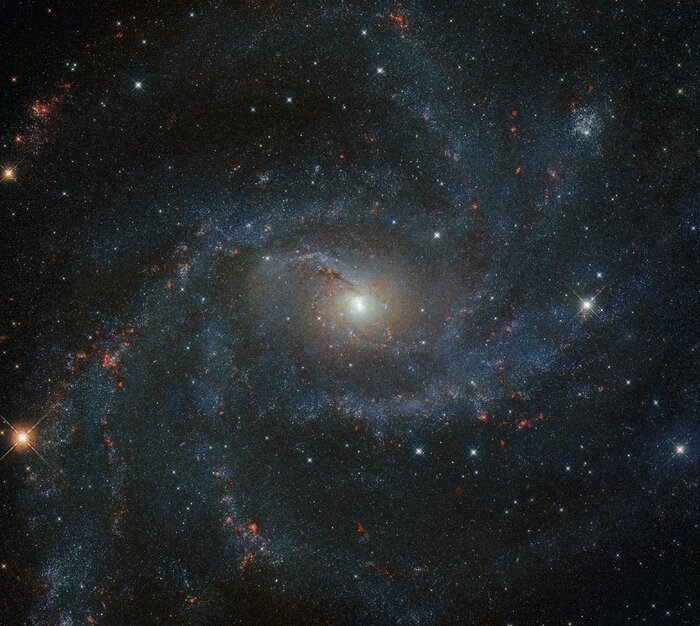 Galaxy
NGC 6946 — the "Fireworks Galaxy"
NGC 6946 · Cepheus · Advanced
Larger aperture and dark skies; the New Moon window is the time for it — Best in the evening, about 55° up at 8 PM and 40° at 10 PM from mid-northern latitudes. Northern Hemisphere only.
Credit: NASA/ESA Hubble
Solar & Lunar Eclipses
No solar or lunar eclipses occur this month.
Monthly Astronomy Calendar
Sky Events
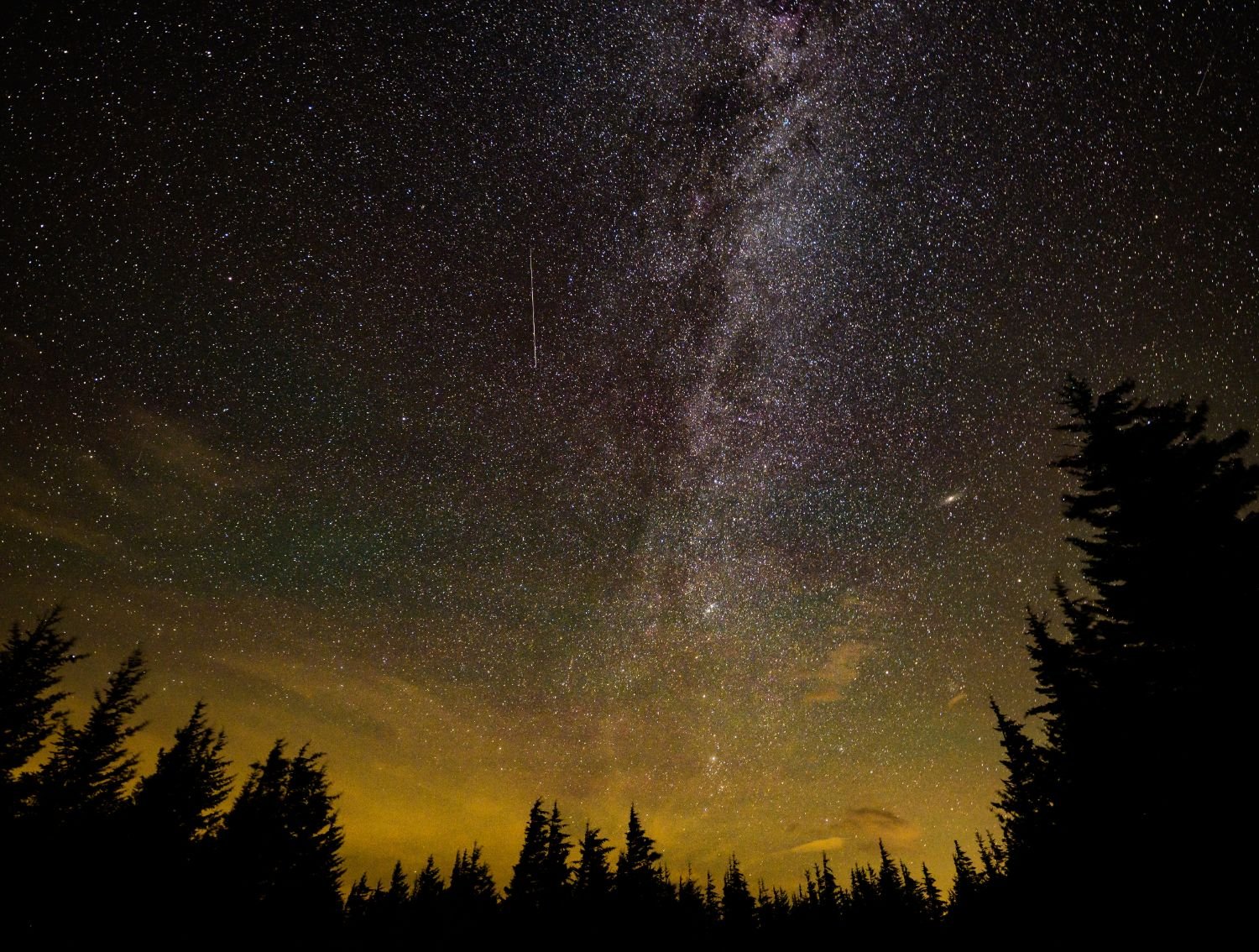
Illustrative photo from a previous meteor shower. Credit: NASA/Bill Ingalls
What matters heading into November
Japan's MMX Probe Is on Its Way to Mars's Moons
JAXA's Martian Moons eXploration spacecraft launched on time on an H3 rocket from Tanegashima at 4:41:03 a.m. JST on October 20 (19:41 UTC on October 19) and is now on its way to Mars. JAXA's schedule has the journey taking about a year, then 2027 to 2030 at Phobos, including two soft landings to collect a sample of about 10 grams, and a capsule returning to Earth in 2031.
October 20, 2026 (JST)
Voyager 1 Reaches One Light-Day From Earth
NASA says Voyager 1 will cross one light-day at 5:16:07 a.m. EST on November 18 (10:16:07 UTC), about 26 billion kilometers (16 billion miles) away. No other human-made object has been that far. A radio signal takes 24 hours to reach it and another 24 hours to bring the reply back, so a command and its answer take two days.
November 18, 2026
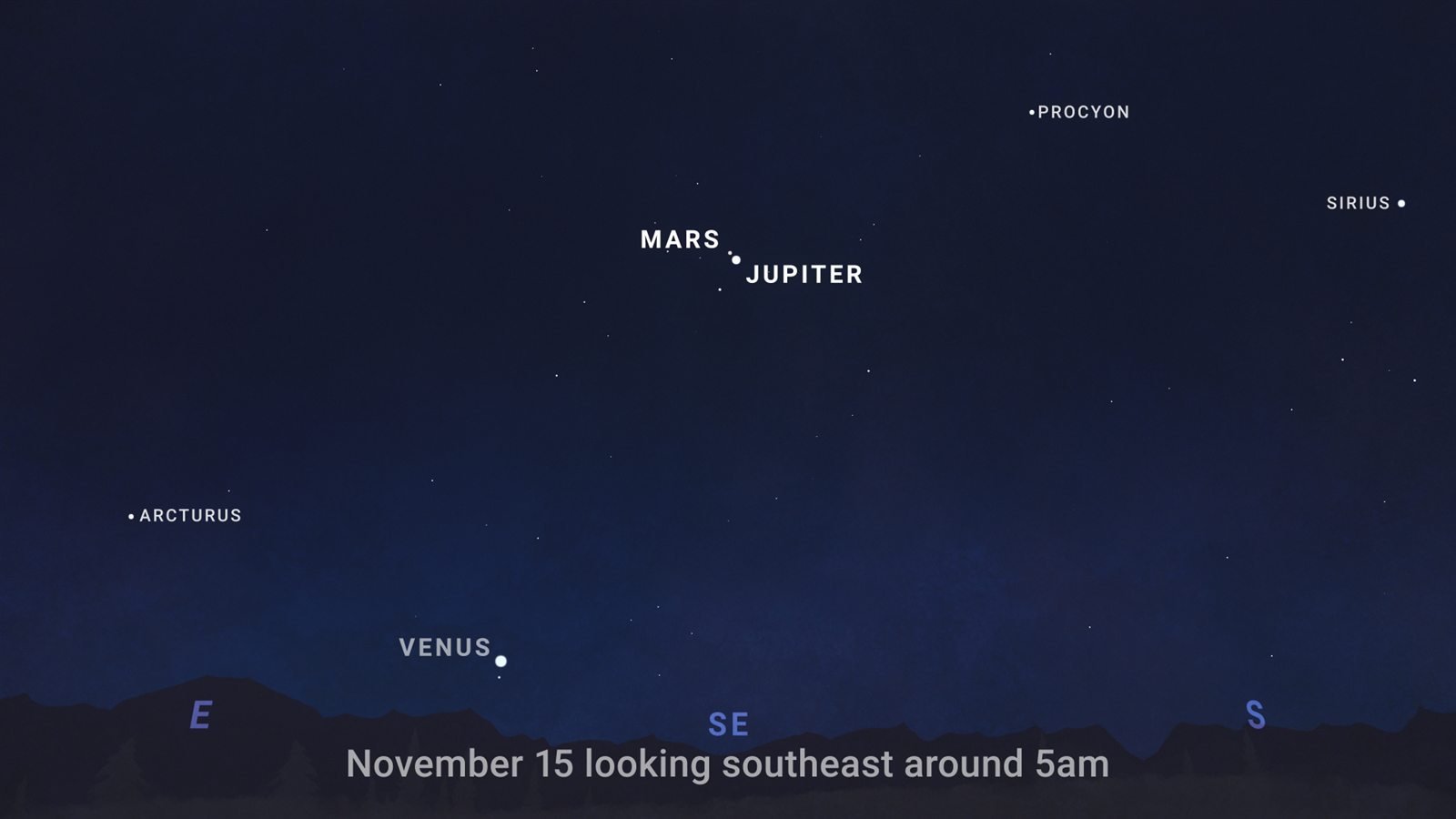
Mars and Jupiter, side by side before dawn on November 15 and 16
NASA/JPL's chart for the morning of November 15 shows Mars and Jupiter about 1.2° apart in the southeast before sunrise, with Venus low near the horizon. Jupiter is the brighter of the pair, with reddish Mars right beside it. Binoculars show both in one field of view, and the pairing is just as close the next morning.
Sky chart from NASA/JPL's What's Up: November 2026 (science.nasa.gov). Credit: NASA/JPL-Caltech
"The best night I had this month wasn't the clearest one — it was the one where I finally slowed down enough to actually look, instead of just capturing."
— Santiago Iván Miró, founder and editor of ORIVON
Tell us what you're working with
Tonight's Session
1. What are you doing?
Observe prioritizes visual visibility and suitability for your optics.
2. Equipment
3. Sky
4. Time available
5. Start
6. Interested in