Photographing the Andromeda Galaxy
This article contains affiliate links. If you buy through them, ORIVON may earn a commission at no extra cost to you.
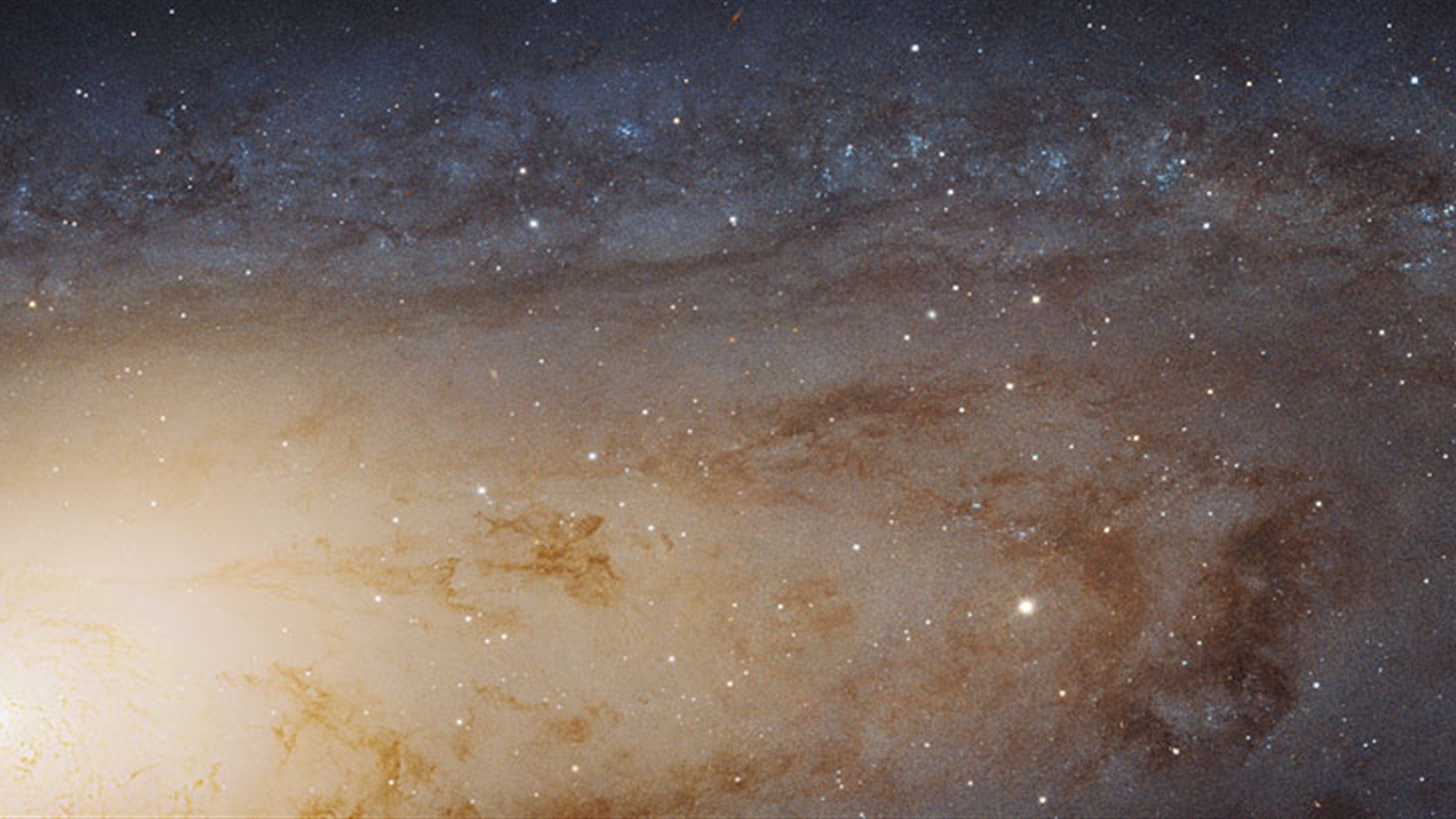
Credit: NASA, ESA, J. Dalcanton, B. F. Williams, L.C. Johnson (University of Washington)
Big, Bright, and Bigger Than You Expect
The Andromeda Galaxy (M31) is the closest large spiral galaxy to our own, and it's bright enough to see with the naked eye from a reasonably dark site — which makes it one of the more approachable galaxy targets for a newer imager. The catch that surprises most first-timers: it's enormous. At roughly six times the apparent width of the full Moon, M31 is far too large to fit in the field of view of most telescopes, and framing it correctly is the first real decision to get right.
Framing: Camera Lens, Not Telescope
A telephoto camera lens in the 200–400mm range, or a small refractor under about 500mm of focal length, comfortably frames the full galaxy including its two brighter companion galaxies, M32 and M110, which sit close enough to appear in the same shot. Anything longer starts cropping into the galaxy's outer disk, which is where a large share of its faint structure actually lives. This is squarely a widefield target, not a long-focal-length deep-sky one.
Realistic Integration Time
M31's bright core registers quickly, but the extended disk and dust lanes are considerably fainter and reward total integration time measured in hours rather than minutes. A total of 2–3 hours of stacked exposures on a basic tracked setup starts to reveal the dust lane structure visible in the photograph above; entry-level results with real detail are achievable with as little as 60–90 minutes of total integration, stacked and processed.
What Detail to Actually Expect
With an entry-level tracked camera setup, expect a recognizable galaxy with a bright core, a visible disk, and the beginnings of dust lane structure once stacked and stretched. The dramatic mottled detail in professional and observatory images — individual star-forming regions, sharply defined dust lanes — generally requires a dedicated astro camera, a longer total integration time, and narrower-band data layered in, well beyond a first attempt. Managing that gap in expectations up front avoids the most common disappointment with this target.
Timing
Andromeda is a Northern Hemisphere autumn-through-winter target, well-placed high in the evening sky from roughly September through February, which gives a long observing season compared to many other deep-sky targets.
Frequently Asked Questions
No — a telephoto camera lens on a tracking mount is actually the better tool here, since M31 is too large for most telescopes' field of view.
The core is much brighter than the outer disk, so a single exposure length tuned for the faint outer structure will often overexpose the center — the same dynamic-range tension covered in our Orion Nebula guide, solved the same way, with a blend of exposure lengths.