DwarfLab Dwarf 3 Review: What Buyers and Critics Are Saying
This article contains affiliate links. If you buy through them, ORIVON may earn a commission at no extra cost to you. This does not affect our editorial conclusions.
Save 5% at DWARFLAB with code ORIVON.
Credit: DwarfLab
Overview
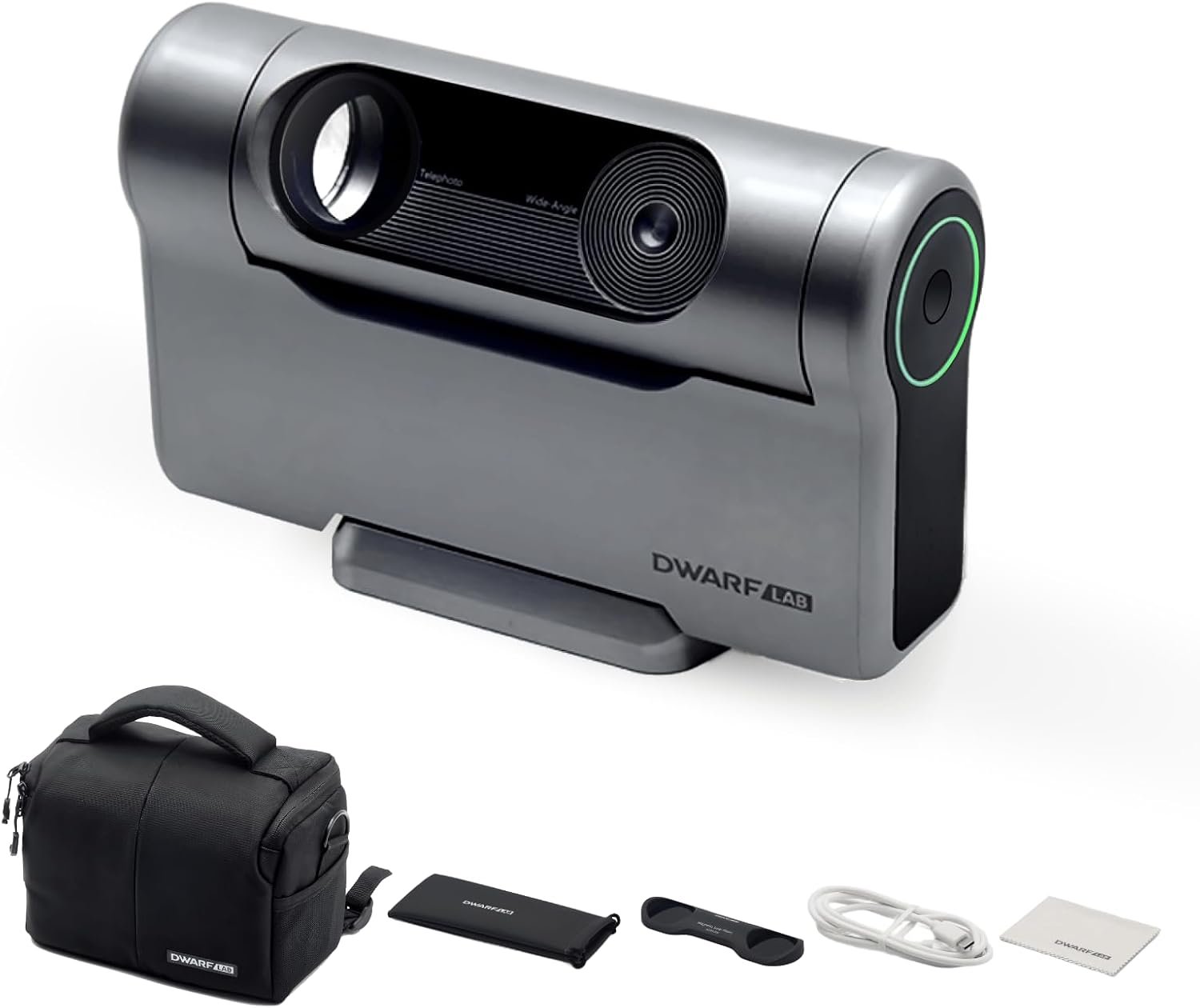
The Dwarf 3 is DwarfLab's answer to a question most smart telescopes don't bother asking: what if the same device could shoot both the night sky and a landscape in daylight? Its defining feature is a dual-lens design — a telephoto lens built for deep-sky imaging paired with a separate wide-angle lens for daytime, wide-field and Milky Way shots — a combination reviewers consistently describe as the most distinctive thing about the category's newest entrant.
This assessment draws on the Dwarf 3's manufacturer specifications and recurring patterns across published reviews and buyer feedback, organized around the questions someone actually comparing smart telescopes would ask.
Technical Specifications
| Optical Design | Dual-lens: telephoto + wide-angle |
| Telephoto Aperture | Approximately 24mm |
| Telephoto Focal Length | Approximately 150mm |
| Telephoto Sensor | Sony IMX678 |
| Wide-Angle Lens | Separate lens for daytime, landscape and wide-field night sky shots |
| Weight | Approximately 1.3kg with included mini tripod |
| Battery Life | Approximately 4–6 hours, depending on use |
| Price | Approximately $549 USD |
Pros and Cons
Drawing on published tests and recurring themes in buyer feedback, a few points come up consistently:
What Reviewers Praise
- The dual-lens design, described as a genuinely unique capability rather than a marketing gimmick — one device covers deep-sky imaging and daytime or wide-field shooting
- Compact and lightweight relative to single-purpose deep-sky smart telescopes
- Competitive pricing relative to premium single-lens competitors
- Straightforward app-based setup, consistent with the rest of the category
Common Criticisms
- Smaller telephoto aperture than dedicated deep-sky models like the Origin Mark II or eQuinox 2, which limits faint-target performance
- Switching between the two lenses adds a layer of complexity single-lens competitors don't have
- A newer brand with a shorter track record than established names like Celestron, ZWO or Unistellar
Editor's Verdict
Taken together, the published reviews and buyer sentiment position the Dwarf 3 as the most versatile option in this lineup rather than the most powerful one — its dual-lens design covers use cases the single-lens competition simply can't address with the same device. Buyers chasing maximum aperture and deep-sky depth are better served elsewhere; buyers who want one compact unit that also works for daytime and wide-field shooting are the group the Dwarf 3 seems built for.
Who It's For
Based on this editorial analysis of the available reviews and specifications — not on direct testing by ORIVON — the Dwarf 3 appears to make the most sense for buyers who want a single, portable device that covers both deep-sky imaging and general-purpose wide-field or daytime shooting, without carrying separate equipment for each. Buyers focused purely on maximum deep-sky aperture are likely better served by a larger single-lens model.
How It Compares
| Model | Aperture | Weight | Price |
|---|---|---|---|
| DwarfLab Dwarf 3 | ~24mm (telephoto) | ~1.3 kg | ~$549 |
| Vaonis Vespera II | 50mm | 5 kg | ~$1,590 |
| ZWO Seestar S30 Pro | ~30mm | Compact, ~1.65kg | ~$699 |
Frequently Asked Questions
Yes — that's the core of its dual-lens design. The telephoto lens is built for deep-sky imaging, while the separate wide-angle lens handles daytime, landscape and wide-field night sky shooting.
The Vespera II has a larger single aperture focused purely on deep-sky imaging, while the Dwarf 3 trades some deep-sky depth for the added versatility of a second, wide-angle lens.
No — like most smart telescopes in this category, it has no eyepiece. All viewing and imaging happens through DwarfLab's companion app.