DWARFLAB DWARF Mini Review (2026): Is It Worth It?
This article contains affiliate links, including to DWARFLAB and as an Amazon Associate. ORIVON may earn a commission from qualifying purchases at no extra cost to you. This does not affect our editorial conclusions.
Save 5% on select DWARFLAB gear
Use code ORIVON to save 5% on the DWARF Mini. The offer also applies to the DWARF 3, DWARFLAB Tripod and Mini Bag.
Discount eligibility confirmed by DWARFLAB.
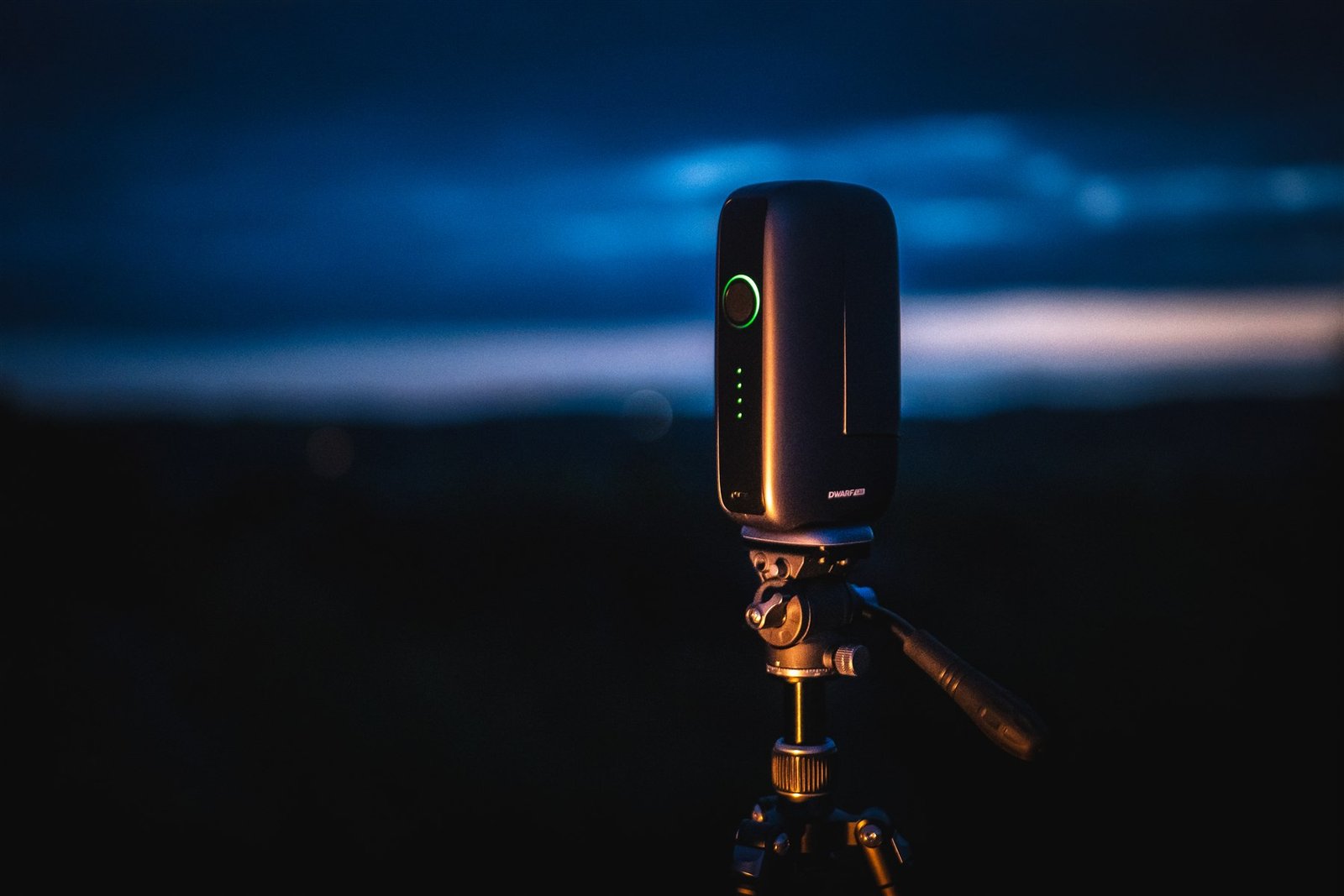
Credit: DWARFLAB. Used with permission.
The DWARF Mini's whole pitch is portability first: a smart telescope light enough to disappear into a jacket pocket, priced at the accessible end of the category, with EQ mode included rather than sold as an add-on. That combination is real, and hands-on reviewers back it up. What it isn't is a high-resolution imaging system — a 30mm aperture and a 2-megapixel sensor are genuine limits, not marketing fine print. Whether it's worth buying comes down to a fairly specific trade: do you want the smallest, most automated setup you can carry, even if that means less detail than a larger, pricier smart telescope would show you?
Review Methodology
This review is an independent editorial analysis built from DWARFLAB's official specifications and documentation, professional hands-on testing, published imaging results and recurring owner feedback. Throughout this piece we separate four kinds of evidence: manufacturer specifications (what DWARFLAB states officially), independent hands-on findings (what reviewers who actually used a unit reported), recurring owner feedback (patterns across multiple buyers, not one isolated complaint), and ORIVON's own editorial analysis connecting those pieces together. Where sources disagree, we've said so rather than picking one silently.
Price and availability re-verified September 14, 2026 (unchanged since first checked August 5, 2026). Retail pricing, bundles and software features may change.
Quick Verdict
Best for: beginners, travelers and space-constrained buyers who want automated astrophotography in an extremely portable, sub-kilogram body.
Avoid if: you want maximum resolution, serious planetary detail, or a modular system you can upgrade over time.
Current official price: $419 USD (DWARFLAB US store, re-verified September 14, 2026).
Main strength: genuinely tiny at 840g, with EQ mode included and one of the more approachable app workflows reviewers have tested.
Main limitation: a 2-megapixel sensor and 30mm aperture that cap fine detail well below larger, pricier smart telescopes.
The DWARF Mini can be a good entry point for beginners, travelers and space-constrained buyers who want automated astrophotography in an extremely portable format. Its small 2MP sensor, 30mm aperture and limited planetary capability mean it shouldn't be bought expecting the detail of a larger or pricier system.
Pros and Cons
What Reviewers Praise
- 840g — genuinely one of the smallest, most packable smart telescopes reviewed
- Automated GoTo, plate-solving and tracking through the DWARFLAB app
- EQ mode included standard, supporting exposures up to 90 seconds
- Built-in dual narrowband filter that helps against light pollution on emission targets
- FITS, TIFF and JPG export for buyers who want to process outside the app
- Astro Mosaic and multi-night stacking for extending framing and integration time
- Included magnetic neutral-density solar filter for daytime solar imaging
- Works for solar, lunar, deep-sky, Milky Way, star trail and daytime terrestrial shooting
- Standard 1/4-inch tripod thread, compatible with widely available tripods
- Relatively accessible entry price for the category
Common Criticisms
- 2-megapixel resolution, a real limit on fine detail and large-monitor viewing
- 30mm aperture, the ceiling on how much faint light it can gather
- No eyepiece — every session runs through the phone app
- Not designed or optimized for planetary imaging, per DWARFLAB's own manual
- 64GB of storage, with less actually available once the system reserves its share
- Tripod sold separately in the standard package
- At least one reviewer reported the wide-angle lens can't be focused, unlike the telephoto lens
- Reported battery life varies noticeably between sources — roughly four hours officially, with at least one hands-on account reporting shorter real-world runtime
- Visible purple chromatic aberration on bright stars, per at least one detailed test
- No modular upgrade path — the optics and sensor are fixed for the life of the unit
What the DWARF Mini Actually Is
The DWARF Mini bundles a small apochromatic telephoto lens, a separate wide-angle lens, a dedicated astronomy camera, a motorized mount with GoTo and tracking, an autofocus system, a built-in filter set, a battery, onboard storage and processing, and a companion phone app into one integrated body. There's no eyepiece anywhere in that chain. Every image — whether it's a single frame or a live stack building over several minutes — is composed, focused and viewed on a phone or tablet screen, never through the instrument itself.
Specifications
| Telephoto aperture | 30mm |
| Telephoto focal length / ratio | 150mm / f/5 |
| Telephoto field of view | ~3.5° |
| Main sensor | Sony IMX662, 1/2.8", 2.9μm pixels |
| Main resolution | 2MP (1920 × 1080) |
| Wide-angle camera | Separate fixed-focus lens, ~50° field of view |
| Filters | Dark-frame (thermal calibration), astro (430–690nm), dual narrowband (Hα 656.3nm / OIII 500.7nm) |
| Solar filter | Magnetic neutral-density filter, included standard per hands-on reviewers |
| Tracking modes | Alt-azimuth (default) and EQ mode |
| Maximum exposure | Up to 90 seconds in EQ mode (official); shorter in alt-az |
| Storage | 64GB internal eMMC |
| Battery | 7000mAh, rated ~4 hours under specific conditions |
| Weight | 840g |
| Dimensions | ~10 × 18.3 × 6cm |
| Connectivity | Wi-Fi (2.4/5GHz), Bluetooth, NFC, USB-C |
| Image formats | JPG, TIFF, FITS |
| Tripod thread | Standard 1/4-inch |
| Included tripod | Not included — sold separately |
Specifications sourced from DWARFLAB's official product pages and manual, cross-checked against independent hands-on reviews. Box contents can vary by bundle — confirm your specific SKU before buying.
Design and Portability
At 840g, the DWARF Mini is light enough that reviewers routinely describe it disappearing into a jacket pocket or the corner of a daypack — a genuinely different proposition from telescopes measured in kilograms rather than grams. The body allows 360° lens barrel rotation and unrestricted gimbal movement, which helps with framing across a range of tripod heights and angles. Build quality is generally described as solid for the size class, though the metal housing and small footprint mean a gust of wind or an uneven surface has more relative effect on stability than it would on a heavier instrument — worth keeping in mind on an exposed hilltop rather than a sheltered backyard. The unit doesn't ship with a tripod or a carrying case in the standard package; it uses a common 1/4-inch thread, so most existing camera or travel tripods will work, but budget for one if you don't already own a suitable one. Physical controls are minimal by design — nearly everything routes through the app over USB-C, Wi-Fi, Bluetooth or NFC.
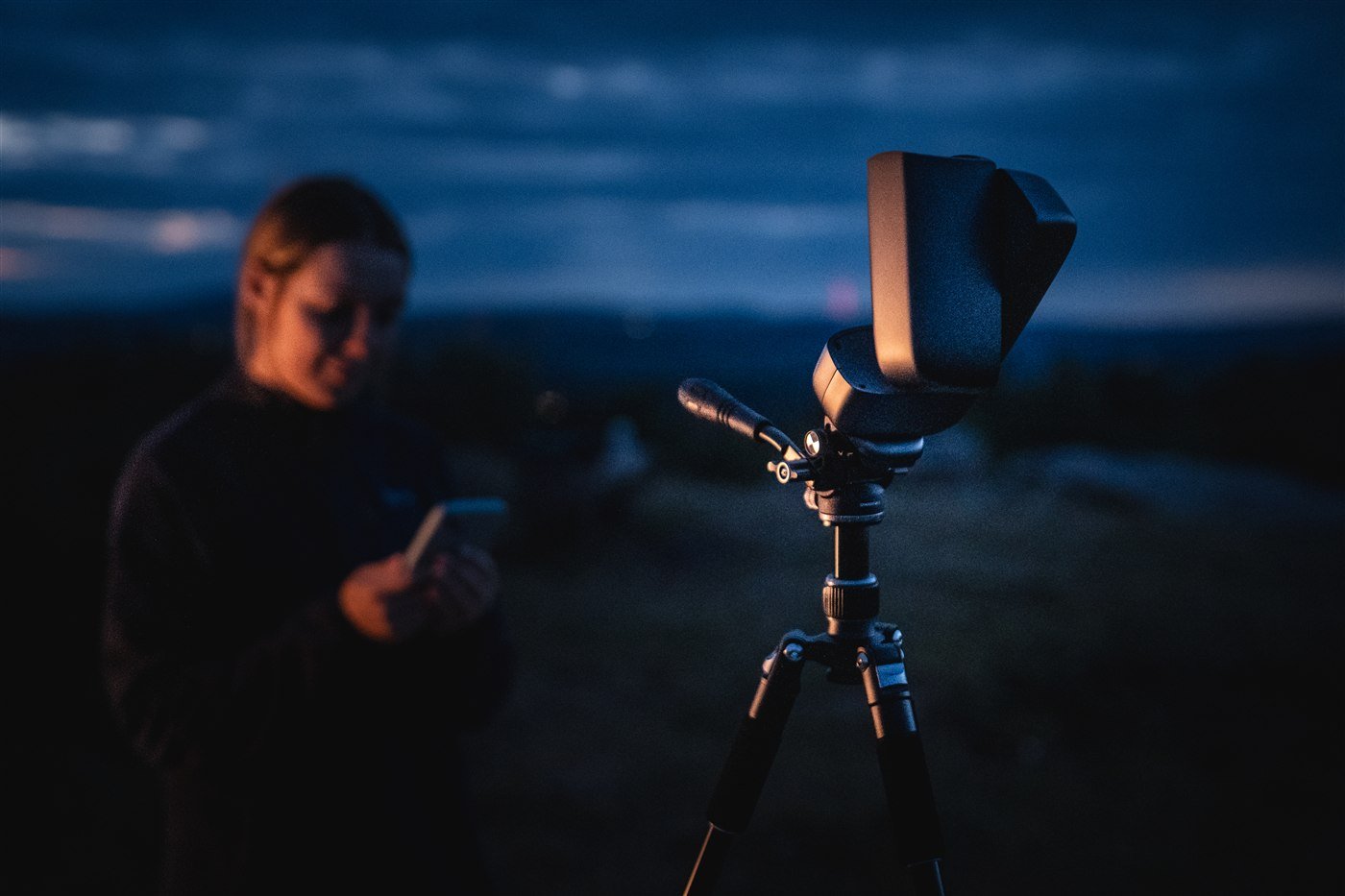
Credit: DWARFLAB. Used with permission.
Setup and App Experience
The typical session, based on how reviewers describe it: power on, connect via NFC or Wi-Fi, let the app initialize, pick a target through the built-in Sky Atlas or the SkyFinder identification feature, and let the mount slew, plate-solve and begin live stacking automatically. One detailed hands-on account called it possibly the best target-selection workflow of any smart telescope tested, thanks to an integrated planetarium-style atlas. Initial setup is reported as fast — around five minutes in one account — though the sky atlas requires a sizeable download best done over Wi-Fi before heading out, and at least one reviewer noted connectivity was smoother on Android than iPhone at the time of testing.
Beyond basic capture, the app exposes Schedule Shooting (queuing an unattended sequence, useful for overnight sessions), Astro Mosaic (stitching wider frames from multiple pointings), Mega Stack (combining exposures across multiple nights into one deeper image), and Stellar Studio, DWARFLAB's in-app processing tool. Reviewers describe Stellar Studio's automatic enhancement as convenient but sometimes slow, and note that comprehensive written instructions for the full feature set were still thin as of their testing — expect some self-directed exploration of the interface. Polar alignment for EQ mode is handled through the app and was described by one reviewer as impressively simple to set up, though it still requires a manual step each session rather than running automatically.
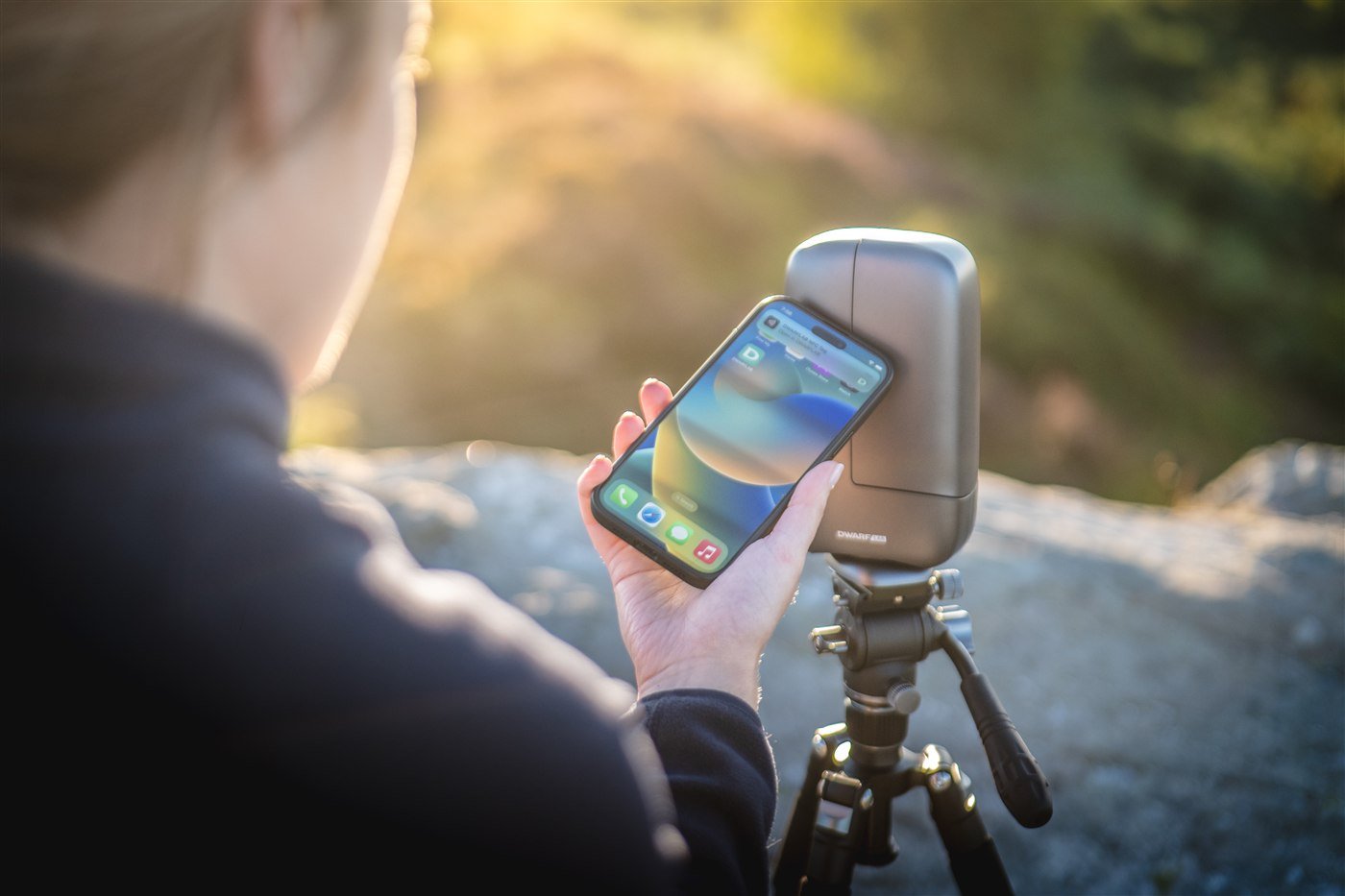
Credit: DWARFLAB. Used with permission.
Image Quality
Emission Nebulae
This is where the built-in dual narrowband filter earns its keep — reviewers reported vividly colorful results on targets like the Orion Nebula from more than a hundred stacked short exposures, and detailed results on fainter regions like the Horsehead Nebula area with longer accumulated integration. The filter isolates hydrogen-alpha and oxygen-III wavelengths specifically, which is why it helps emission nebulae more than other target types.
Galaxies
Larger, brighter galaxies are within reach given enough time — one detailed test showed real structure in objects like M101 and Markarian's Chain after 10 to 30 hours of combined integration, aided by DWARFLAB's multi-night stacking feature. Don't expect fine structural detail on smaller or fainter galaxies: a 30mm aperture and 2-megapixel sensor gather and resolve meaningfully less than larger-aperture, higher-resolution competitors.
Open and Globular Clusters
Open clusters, spread out and comparatively bright, suit the DWARF Mini's field of view well. Small, dense globular clusters are a tougher target — resolving individual stars near a globular's core benefits from more aperture and focal length than a 30mm, 150mm system provides.
Moon
Lunar imaging is a strong, forgiving use case — reviewers describe results as sharp and well-defined, including at least one documented lunar eclipse sequence. This is a target where the DWARF Mini's limitations matter least, since the Moon is bright and high-contrast even at modest resolution.
Sun
Solar imaging is possible only with the included magnetic neutral-density solar filter properly installed, and only by following DWARFLAB's manual exactly — the astro and dual narrowband filters built in for nighttime imaging are not a substitute for dedicated solar protection. With the correct filter in place, reviewers report the DWARF Mini can resolve sunspots, though at least one detailed test found it couldn't resolve finer solar detail like granulation, given its 30mm aperture and pixel sampling. If you're photographing the Sun with this or any instrument, read ORIVON's eclipse and solar safety guide first.
Planets
Be clear-eyed about this one: DWARFLAB's own manual states the DWARF Mini is not designed or optimized for planetary imaging, and independent reviewers back that up directly, describing it as simply not equipped for close-up planetary detail like Jupiter's Great Red Spot. Jupiter and Saturn are realistically visible as small points of light or a modest disc rather than a detailed target — Jupiter's brightest moons may register, and Saturn's rings may be hinted at under good conditions, but this is not a substitute for a telescope built around a longer focal length and larger aperture for planetary work specifically.
Milky Way, Star Trails and Wide-Angle
The separate wide-angle lens is where the "dual camera" framing earns its keep beyond the telephoto system — built for Milky Way shots, star trail sequences and general nightscape framing that the narrow telephoto field can't capture. It's worth noting at least one reviewer found this wide-angle lens fixed-focus rather than adjustable, unlike the telephoto lens, which is a real design trade-off to know about going in.
Light Pollution Performance
The dual narrowband filter is a genuine, tested advantage for emission nebulae under bright skies — one detailed account reported usable imaging under Bortle 5 conditions when combined with the broadband astro filter. That advantage narrows for broadband targets: galaxies, open clusters and reflection nebulae don't benefit from a narrowband filter the same way, and a darker sky still produces meaningfully better results regardless of what filter is installed. Moonlight, humidity, atmospheric transparency and nearby light sources all continue to matter no matter which filter is in place.
Alt-Azimuth vs. EQ Mode
By default, the DWARF Mini operates alt-azimuth, which is simpler to start with but introduces field rotation that limits how long any single exposure sequence can run before stars begin to smear at the frame's edges — a common limitation across this whole product category, not specific to this model. EQ mode addresses that by tracking in line with the sky's actual rotation, officially supporting exposures up to 90 seconds — notably longer than the roughly 15-second alt-az limit one reviewer measured, and more than most competing smart telescopes offer without an additional accessory. DWARFLAB's own documentation doesn't describe needing a separate wedge for this, unlike some competitors, though the mount still needs to be tilted and aligned each session — not a feature that runs with zero setup. At least one independent reviewer found the mount could technically track longer than 90 seconds before visibly degrading, but settled on roughly 60-second subframes as the more reliably sharp real-world choice with good alignment — a useful reminder that official specifications and field results won't always match exactly. A first-time buyer can get real value from the telescope in standard alt-az mode without ever touching EQ mode.
Battery and Storage
DWARFLAB's 7000mAh battery is officially rated at approximately four hours under specific conditions the company defines — treat that as a target rather than a guarantee, since reported real-world results vary: one hands-on account found roughly four hours reliable, while another reported closer to two hours before needing external power, such as a USB-C power bank. Cold weather, active Wi-Fi, and continuous tracking and processing will all draw a session down faster than an idle unit. The 64GB of internal eMMC storage sounds generous for 2-megapixel frames, but usable space is somewhat less once the system reserves its own portion — for long multi-night stacking sessions or extensive FITS export, plan to offload files regularly over Wi-Fi or USB-C rather than assuming the full 64GB is available.
DWARF Mini vs. DWARF 3 vs. Seestar S30
These occupy different points in the smart telescope market rather than a strict "better/worse" ladder.
| Model | Price (official) | Aperture | Sensor | Weight | Storage |
|---|---|---|---|---|---|
| DWARFLAB DWARF Mini | $419 | 30mm (150mm, f/5) | Sony IMX662, 2MP | 840g | 64GB |
| DWARFLAB DWARF 3 | ~$549 | ~24mm (telephoto) | Sony IMX678 | ~1.3kg | Not specified by DWARFLAB |
| ZWO Seestar S30 | $399 | 30mm | Sony IMX662, single camera | 1.65kg | 64GB |
Prices as officially listed, re-verified September 14, 2026. See ORIVON's full DwarfLab Dwarf 3 review for its complete specifications.
The DWARF Mini is the lightest and least expensive of the three, and the only one here with EQ mode included at this price. The DWARF 3 is DwarfLab's larger, more capable sibling — bigger telephoto aperture and a higher-resolution sensor, in a heavier body at a higher price. The Seestar S30 shares the same 30mm aperture and even the same sensor as the DWARF Mini, but in a single-camera body nearly twice the weight, without EQ mode built in at that price point. None of the three is a universal winner — the right pick depends on how much you weight portability and EQ mode against sensor resolution and overall system maturity.
Is the DWARF Mini Worth Its Current Price?
As a complete, self-contained system, the case for the DWARF Mini is straightforward: automated GoTo and tracking, EQ mode without an extra accessory purchase, a genuinely tiny footprint, an included solar filter, and an app workflow reviewers rate among the more approachable in the category. At $419 officially, it undercuts DwarfLab's own larger DWARF 3 and sits close to ZWO's base Seestar S30 — reasonable company for what it does.
Where the case weakens is resolution and aperture: a 2-megapixel sensor and 30mm aperture put a hard ceiling on fine detail that no amount of stacking or processing fully removes, and the tripod you'll likely need is an extra purchase on top of the listed price. Compared to assembling an equivalent traditional imaging setup — a mount, a dedicated astro camera, guiding gear and separate optics bought individually — the DWARF Mini is simpler and typically cheaper to get started with, but it isn't modular: you can't swap its sensor, upgrade its optics, or grow it into a more capable rig the way you could with individual components. It's worth its price specifically for the portability and automation it delivers, not as a value benchmark against every other way to get into astrophotography.
Who Should Buy It?
- Beginners who want an approachable, automated way into astrophotography
- Travelers and hikers who prioritize weight and packed size above all else
- Buyers with limited storage space at home for a larger instrument
- Existing smart telescope owners who want a second, ultra-portable unit
- Urban imagers specifically interested in emission nebulae, where the narrowband filter helps most
- Content creators who want shareable results without a large setup
Who Should Skip It?
- Anyone who wants to look through an eyepiece — this and every smart telescope on ORIVON has none
- Buyers primarily interested in planetary detail
- Anyone who wants the highest resolution or largest aperture available in this category
- Buyers who want a modular, upgradeable imaging platform
- Users who don't want to depend on a phone app for every session
- Current DWARF 3 owners expecting the Mini to be a straightforward upgrade — it trades aperture and resolution for size and price, not a strict improvement
Accessories Actually Worth Considering
- A stable tripod — not included in the standard package; any tripod with a 1/4-inch thread will fit.
- A wedge or tilting head for EQ mode — only relevant if you plan to use EQ mode regularly and want a more precise, repeatable setup than an improvised tilt.
- A USB-C power bank — extends a session well past the roughly four-hour internal battery figure.
- A padded carrying case — reasonable given the telescope's specific selling point is portability.
- A phone or tablet with reliable Wi-Fi, Bluetooth and enough storage — the entire workflow depends on it, including a sizeable initial Sky Atlas download.
None of these are strictly required to use the telescope — treat this as optional, not a shopping list.
Final Verdict
The DWARF Mini is worth buying for a specific buyer: someone who wants the smallest, most automated smart telescope they can carry, who values EQ mode being included rather than an extra purchase, and who accepts a 2-megapixel sensor and 30mm aperture as the price of that portability. Its biggest strength is genuinely how little space and weight it demands for a fully automated imaging system. Its biggest limitation is resolution and aperture — the same 2MP ceiling shows up across nebulae, galaxies and especially planets, where DWARFLAB's own manual is explicit that this isn't the tool for the job. If aperture, resolution or planetary detail matters more to you than pocketability, DWARFLAB's own DWARF 3 or ZWO's Seestar S30 are the more capable — if less portable — alternatives to weigh against it.
Frequently Asked Questions
For a buyer who specifically wants an automated, sub-kilogram imaging system and values portability and EQ mode over resolution and aperture, hands-on reviewers generally say yes at its current price. It's a weaker fit for anyone who wants maximum detail or plans to grow into a modular setup.
Yes — reviewers consistently describe its app-guided setup, automatic plate-solving and target selection as approachable, with one reviewer calling it possibly the best target-selection workflow of any smart telescope tested.
No. Like every smart telescope ORIVON covers, it has no eyepiece — all framing, focusing and imaging happen through the DWARFLAB app on a phone or tablet.
No. DWARFLAB's own manual states it isn't designed or optimized for planetary imaging, and hands-on reviewers confirm it lacks the aperture and focal length for meaningful planetary detail.
It can capture larger, brighter galaxies with enough integration time, and at least one reviewer showed real structure in objects like M101 after 10-30 hours of combined exposure. Its 30mm aperture and 2-megapixel sensor limit how much fine detail it resolves compared to larger-aperture systems.
Its built-in dual narrowband filter helps with emission nebulae under bright skies, with one reviewer reporting usable results under Bortle 5 conditions. It does less for broadband targets like galaxies and star clusters, where darker skies still produce better results.
Yes, alongside its default alt-azimuth mode. DWARFLAB's own documentation doesn't describe a separate wedge accessory for it, though the mount still needs to be tilted and aligned each session.
DWARFLAB's official specifications cite up to 90 seconds. At least one independent reviewer reported the mount technically running longer before tracking noticeably degraded, but found 60-second subframes more reliably sharp in practice — treat 90 seconds as the official figure and real-world results as dependent on alignment quality.
No. Multiple sources confirm the tripod is sold separately; the telescope uses a standard 1/4-inch thread compatible with most basic tabletop or travel tripods.
Yes — a neutral-density solar filter that magnetically attaches to the front of the optic ships with the standard unit, according to hands-on reviewers. Always follow DWARFLAB's manual exactly when imaging the Sun.
64GB of internal eMMC storage, with somewhat less available in practice once the system reserves its own space.
The DWARF Mini is smaller, lighter and less expensive, with a smaller telephoto aperture and a lower-resolution 2-megapixel sensor. The DWARF 3 has a larger telephoto aperture, a higher-resolution sensor and a bigger body, at a higher price — DWARFLAB's more capable, less pocketable option.
Neither is a universal upgrade over the other. The DWARF Mini is lighter and cheaper with EQ mode included; ZWO's standard Seestar S30 has a higher-resolution single-camera sensor. Which is "better" depends on whether portability and EQ mode or sensor resolution matters more to the buyer.