How to Observe a Solar or Lunar Eclipse Safely
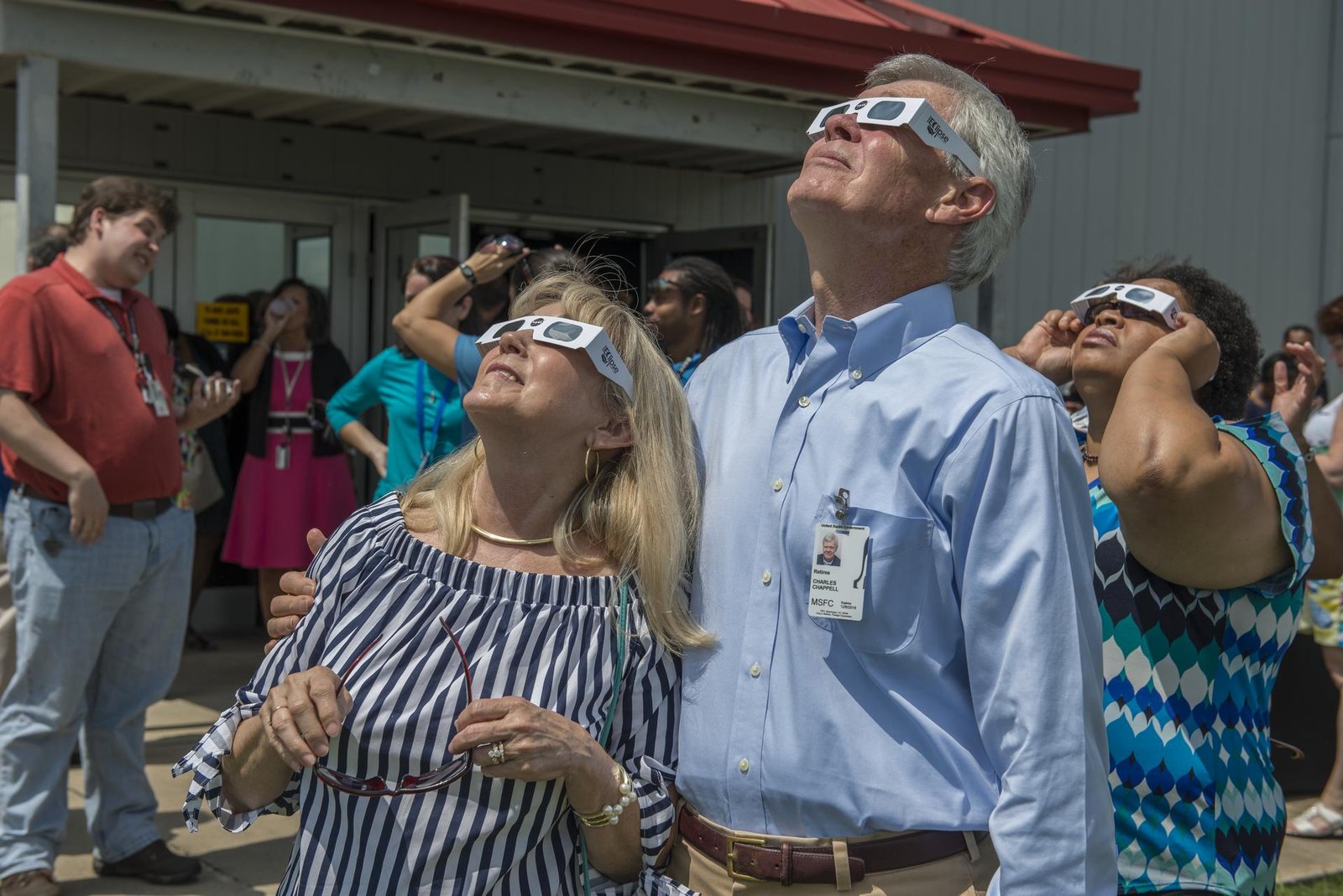
Certified eclipse glasses in use during a solar eclipse viewing event. Credit: NASA
Solar and Lunar Eclipses Are Not the Same Kind of Event
The two get lumped together, but the safety rules could not be more different. A solar eclipse puts the Sun's full brightness directly in your field of view for as long as you're willing to look, which can cause permanent retinal damage in seconds — with no pain to warn you it's happening. A lunar eclipse is just moonlight, dimmer than usual, and entirely safe to watch with nothing but your eyes. Knowing which one you're dealing with is the first and most important step.
Solar Eclipses: Never Look Without Certified Protection
Ordinary sunglasses, smoked glass, and stacked camera filters do not block enough infrared and ultraviolet light to protect your eyes, no matter how dark they look. The only safe way to view a partial or annular solar eclipse directly is through eclipse glasses or a handheld solar viewer certified to the ISO 12312-2 international safety standard. Check the glasses for that certification printed on the frame, and inspect the filter material for scratches or punctures before every use — a damaged filter is not safe, regardless of certification.
If you're using binoculars or a telescope to view the Sun, the same rule applies to the optics: a proper solar filter must cover the front of the instrument, not the eyepiece. A filter at the eyepiece end can crack from concentrated heat and cause instant, severe eye damage. Never look at the Sun through unfiltered binoculars or a telescope under any circumstances.
The one exception is totality during a total solar eclipse — the brief window when the Moon fully covers the Sun's disc and only the faint corona is visible. During totality alone, it is safe to remove eclipse glasses and view the corona directly. The instant any sliver of the Sun's surface reappears, protection must go back on immediately. Outside of a total eclipse's totality window — including the entirety of a partial or annular eclipse — protection is required at all times.
Lunar Eclipses: Safe to Watch With the Naked Eye
A lunar eclipse happens when the Earth passes between the Sun and the Moon, casting its shadow across the lunar surface. Because you're looking at reflected moonlight rather than a light source, there is no eye safety concern at any point in the event — no glasses, filters, or special equipment required. Binoculars or a telescope will reveal more detail in the reddish "blood moon" coloring during totality, but they're a comfort upgrade, not a safety requirement.
What You'll Actually Need
- For a solar eclipse: ISO 12312-2 certified eclipse glasses or handheld viewers, one pair per person. A pinhole projector is a safe, equipment-free alternative that projects an image of the eclipse rather than requiring you to look at the Sun at all.
- For a lunar eclipse: Nothing required. Binoculars or a telescope improve the view but add nothing to safety.
- For photographing either: A phone camera aimed at an unfiltered Sun can damage its sensor the same way unfiltered optics damage eyes — use a certified solar filter over the lens for solar eclipse photography. No filter is needed for lunar eclipse photography.
Planning Ahead
Confirm the exact local start and end times for your location — eclipse timing shifts by location and totality paths for solar eclipses can be just a narrow band a few hundred kilometers wide. Check cloud cover forecasts in the days leading up to the event, and have a backup viewing location in mind if your primary spot looks likely to be clouded out. For the specific eclipses coming up this year, see this month's ORIVON Sightline briefing.
Mistakes to Avoid
- Assuming a partial eclipse is "safer" than a total one because less of the Sun is covered — any visible sliver of the Sun's surface is unsafe to view directly
- Reusing scratched, punctured, or several-years-old eclipse glasses without inspecting the filter material first
- Looking through binoculars or a telescope's eyepiece with only a smartphone solar filter designed for naked-eye viewing — optical instruments need dedicated full-aperture filters
- Keeping eclipse glasses on during totality — you'll see nothing, since the corona is far too faint to pass through a solar filter
Frequently Asked Questions
No, even very dark sunglasses. Only glasses or viewers certified to the ISO 12312-2 standard block enough light to be safe.
Yes, completely. A lunar eclipse is just dimmed reflected moonlight and carries no eye safety risk at any stage.
Only during the actual totality window of a total solar eclipse, when the Moon fully covers the Sun. The moment any part of the Sun's surface becomes visible again, protection is required immediately.