Best Solar Filters for the August 12, 2026 Eclipse
This article contains affiliate links. If you buy through them, ORIVON may earn a commission at no extra cost to you.
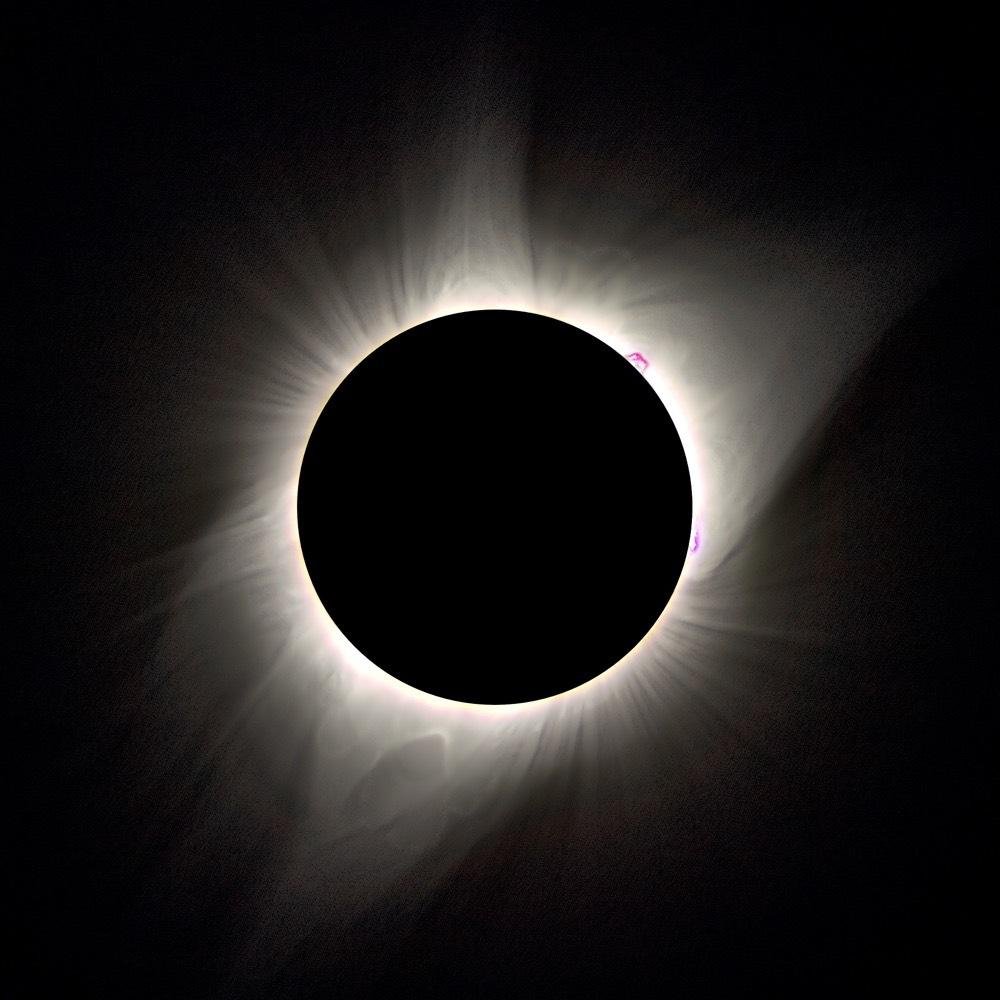
Total solar eclipse, August 21, 2017. Credit: NASA / Carla Thomas
One Day, Two Once-a-Year Events
On August 12, 2026, the Moon's shadow sweeps across the Arctic, Greenland, Iceland and northern Spain in the first total solar eclipse visible from mainland Europe since 1999. Outside that narrow path of totality, most of the rest of Europe still sees a substantial partial eclipse. Then, once the Sun sets, the Perseids reach their peak the same night, under a new moon that leaves the sky about as dark as it gets — a rare pairing of a daytime eclipse and one of the year's best meteor showers on a single date.
Watching the eclipse safely — at any stage other than totality itself, and only if you're actually standing inside the path of totality — requires a solar filter appropriate to how you're watching: eclipse glasses certified to the ISO 12312-2 standard for the naked eye, or a dedicated front-mounted filter for a telescope, camera or binoculars. The Perseids that follow after dark need nothing at all, just your eyes and a clear horizon. This guide covers four certified filter options for the daytime half of that pairing, matched to different telescopes, cameras and viewing styles.
Comparing the Options
| Product | Type | Compatible With | Direct-Viewing Certified (ISO 12312-2) | Price |
|---|---|---|---|---|
| Celestron EclipSmart | Pre-mounted film, hook-and-loop fit | Telescopes, spotting scopes, DSLR lenses (75–100mm OD) | No — optics filter | ~$25 |
| Thousand Oaks 8"x8" Sheet | Raw film sheet, DIY mount required | Any optic you build a cell for | No — optics filter | ~$20 |
| Baader AstroSolar Glasses (10-pack) | Pre-mounted film, cardstock glasses | Naked eye only | Yes | ~$25 for 10 |
| Baader AstroSolar 80mm | Pre-mounted film, aluminum cell | Small telescopes, spotting scopes (~80–126mm tube OD) | No — optics filter | ~$69 |
Prices are approximate and move with retailer stock — confirm the current price at checkout before buying.
Which One Fits Your Setup
You Own a Larger Telescope, Spotting Scope or DSLR With a Long Lens
| Product | Celestron EclipSmart Universal Solar Filter |
| Filter Aperture | 60mm |
| Fits Optics | 75mm–100mm outer diameter |
| Material | Solar Safe film, blocks 99.999% of visible light plus IR/UV |
| Mounting | Adjustable card-stock wrap, secured with hook-and-loop fasteners |
Celestron's EclipSmart is the straightforward pick for anyone pointing a telescope, spotting scope, or a DSLR with a longer lens at the Sun. It wraps around the front of the optic rather than sitting at the eyepiece — the correct and only safe placement for a solar filter on any instrument with magnification — and folds flat into a reusable pouch when the eclipse is over.
View at RetailerYou Want to Build Your Own Filter, for Any Optic
| Product | Thousand Oaks Optical Solar Filter Sheet, 8"x8" |
| Format | Raw film sheet, no mount included |
| Material | Solar safety polymer film, 99.999% visible light blocked, 100% UV/IR blocked |
| Best for | Binoculars, camera lenses, or telescopes needing an aperture the pre-mounted options don't cover |
An 8"x8" sheet of certified film is the cheapest way to protect more than one instrument, or an instrument that doesn't match a pre-mounted filter's size range. Cut it to size and mount it in cardboard, plastic, or a 3D-printed cell in front of any optic's full aperture. It takes more effort than a ready-made filter, but the underlying film meets the same optical safety standard.
View at RetailerYou're Watching With the Naked Eye or Binoculars
| Product | Baader AstroSolar Eclipse Glasses, Pack of 10 |
| Optical Density | OD 5.0 |
| Protection | 100% UV and IR blocked, 99.999% of visible light blocked |
| Format | Cardstock glasses frame, one size, printed safety instructions in four languages |
For direct, unaided viewing — whether that's just your own eyes or a family and friends watching together — certified glasses are the simplest and cheapest option on this list. A pack of 10 covers a small group at once, which matters for an event this rare: the next total solar eclipse visible from mainland Europe won't happen again for years. Binocular users should hold the glasses over their eyes, never mount them on the binoculars themselves — a full-aperture filter belongs on the front of the optic, not improvised from eyewear.
View at RetailerYou Own a Small Telescope or Spotting Scope
| Product | Baader AstroSolar 80mm Spotter Filter (ASSF-80) |
| Filter Aperture | 80mm clear aperture |
| Material | Original Baader AstroSolar Safety Film, OD 5.0, cell-mounted |
| Mounting | Aluminum front frame with adjustable centering screws; fits a range of tube diameters — confirm your OTA's outer diameter before ordering |
Where the EclipSmart is built for a broad range of optics with a soft wrap-around fit, the Baader 80mm is a more rigid, precisely centered mount aimed specifically at smaller refractors and spotting scopes. Baader recommends it for magnifications up to roughly 120x; beyond that, they point buyers toward their higher-grade ASTF telescope filters instead.
View at RetailerA Genuine Safety Note, Not a Disclaimer
- Never look at the Sun with the naked eye without eclipse glasses certified to ISO 12312-2, and never look through any optic without a dedicated front-mounted solar filter. Regular sunglasses, smoked glass, and exposed camera film are not safe substitutes, regardless of how dark they look.
- Inspect your filter for scratches, pinholes, or tears before every single use — hold it up to a bright light and check the entire surface. A damaged filter, certified or not, is not safe to use.
- Never remove a solar filter except during the totality phase of a total solar eclipse, and only if you are physically located inside the path of totality. The instant any sliver of the Sun reappears, protection goes back on immediately.
- On telescopes and binoculars, the filter always goes over the front of the optic, never at the eyepiece — an eyepiece-mounted filter can crack from concentrated heat and cause severe, instant eye damage.
Frequently Asked Questions
Yes, everywhere outside the narrow path of totality, and even inside it for every moment except totality itself. Most of Europe only sees a partial eclipse, which requires certified eye protection for the entire event.
Only if you are physically inside the path of totality in Greenland, Iceland, or northern Spain, and only during the brief totality window when the Moon fully covers the Sun. Everywhere else, and at every other moment even within the path of totality, filters must stay on.
No, but both can be safe. All four filters in this guide use polymer or resin safety film rather than glass — film is lighter and less expensive, and when it's made to the same optical safety standard and undamaged, it's just as safe as a certified glass filter.
Solar filters are only relevant during daylight hours around the eclipse itself. The Perseids peak after dark the same night and require no filter of any kind — just your eyes and a dark sky.