
Unistellar eQuinox 2 Review: What Buyers and Critics Are Saying
This article contains affiliate links. If you buy through them, ORIVON may earn a commission at no extra cost to you.
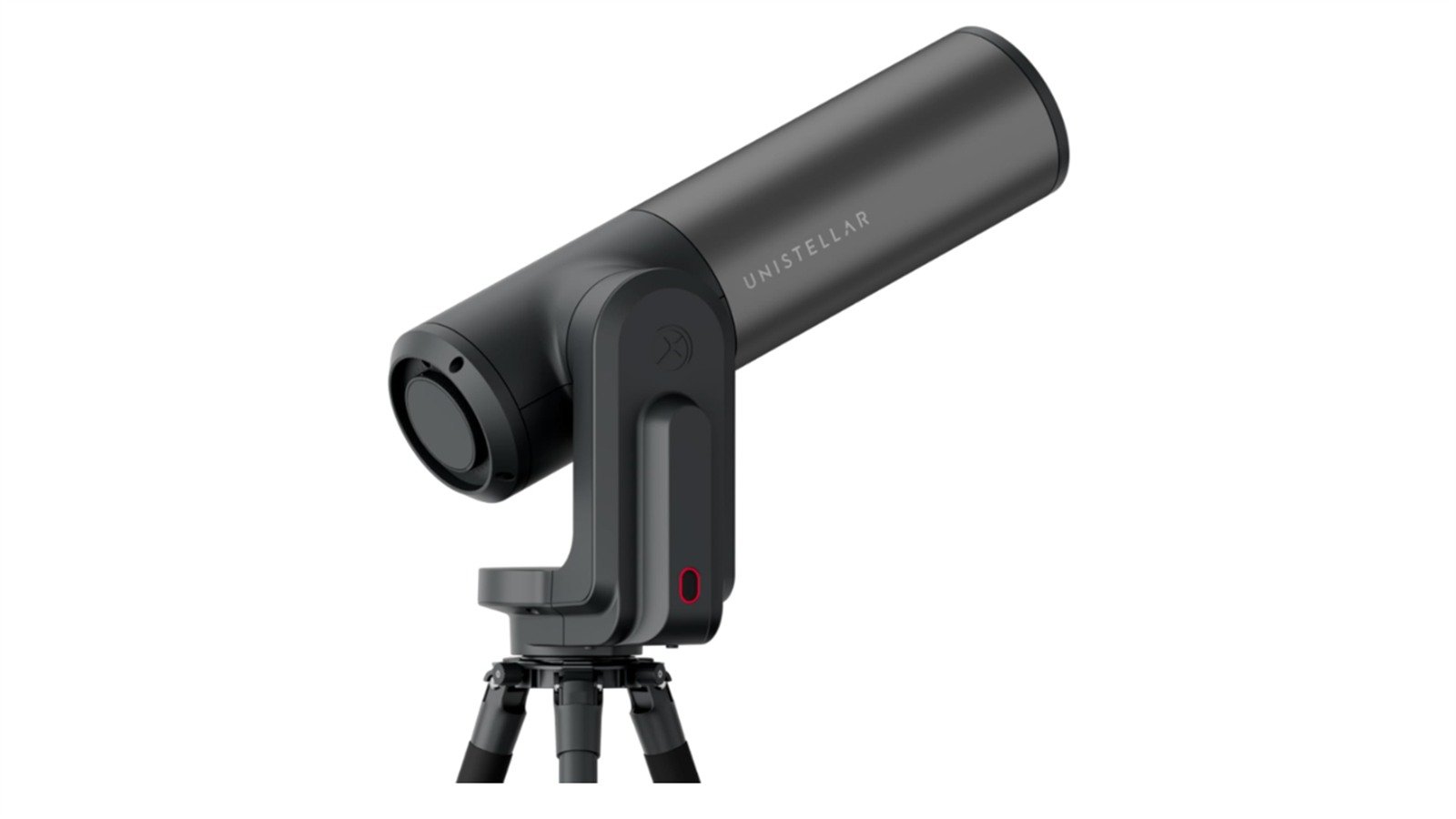
The Unistellar eQuinox 2, a smart telescope built around automatic light pollution reduction.
Credit: Unistellar
Overview
The eQuinox 2 is Unistellar's mid-tier smart telescope, positioned around a specific promise: usable deep sky views from skies most traditional telescopes struggle with. Its automatic light pollution reduction processing is the headline feature, built and marketed for observers who don't have the luxury of a dark-sky site nearby. Like other smart telescopes in this category, it replaces the eyepiece entirely — everything is viewed and captured through the companion app.
This assessment draws on the eQuinox 2's manufacturer specifications and recurring patterns across published reviews and buyer feedback, organized around the questions someone actually comparing smart telescopes would ask.
Technical Specifications
| Optical Design | 114mm mirror, f/4 |
| Focal Length | 450mm |
| Sensor | 6.2 MP |
| Field of View | 34.2 × 45.6 arcmin |
| Limiting Magnitude | Approximately 18.2 |
| Battery Life | Approx. 11 hours |
| Storage | 64GB internal |
| Eyepiece | None — 100% app-based viewing |
| Price | $2,899 USD (official Unistellar store, checked August 27, 2026; has been discounted at times in the past — confirm the current listed price before buying) |
Pros and Cons
Drawing on published tests and recurring themes in buyer feedback, a few points come up consistently:
What Reviewers Praise
- Very effective automatic light pollution reduction, specifically engineered for urban skies
- A catalog of more than 5,000 objects with automatic recognition and framing
- Participation in citizen science programs alongside organizations like NASA and SETI, cited as a genuine differentiator
- A mature, consistently updated app, according to long-term owners
Common Criticisms
- A high price point, even before accounting for how often it's discounted
- No traditional eyepiece — a dealbreaker for buyers who want direct visual observation
- Some professional reviews describe the camera as slightly less detailed than newer competition
- Relatively heavy at roughly 9kg (20 lbs), which tempers the portability some buyers expect
Editor's Verdict
Taken together, the published reviews and buyer sentiment position the eQuinox 2 as one of the strongest options specifically for imagers who observe primarily from light-polluted, urban locations — the automatic light pollution reduction is described as a real, working feature rather than a marketing claim. Buyers expecting a lightweight, grab-and-go unit, or anyone unwilling to give up a traditional eyepiece, are the ones most likely to come away disappointed.
Who It's For
Based on this editorial analysis of the available reviews and specifications — not on direct testing by ORIVON — the eQuinox 2 appears to make the most sense for city and suburban observers who want deep sky results despite significant light pollution, and for anyone drawn to its citizen science partnerships as part of the appeal. Buyers who prioritize portability above all else, or who want the option of looking through an eyepiece, are likely better served by a different model — and anyone chasing maximum aperture and imaging speed above all else should look at the Celestron Origin Mark II instead.
How It Compares
| Model | Aperture | Weight | Price |
|---|---|---|---|
| Unistellar eQuinox 2 | 114mm | 9 kg | $2,899 |
| Celestron Origin Mark II | 152mm (6") | 7.3 kg | ~$4,299 |
| Vaonis Vespera II | 50mm | 5 kg | ~$1,590 |
Weighing the eQuinox 2's price and light-pollution focus against the Origin's larger aperture? See our full Origin Mark II vs. eQuinox 2 comparison.
Frequently Asked Questions
No — like most smart telescopes, it has no eyepiece. All observing and imaging happens through the companion app.
Reviewers and buyers in urban settings consistently report it as effective, describing it as the main reason they chose the eQuinox 2 over other smart telescopes.
Unistellar partners owners' telescopes with professional research efforts — including asteroid occultation timing and exoplanet observation campaigns — a feature reviewers frequently cite as a unique selling point.