
Celestron Origin Mark II vs. Unistellar eQuinox 2: Which Premium Smart Telescope Should You Choose?
This article contains affiliate links. If you buy through them, ORIVON may earn a commission at no extra cost to you.
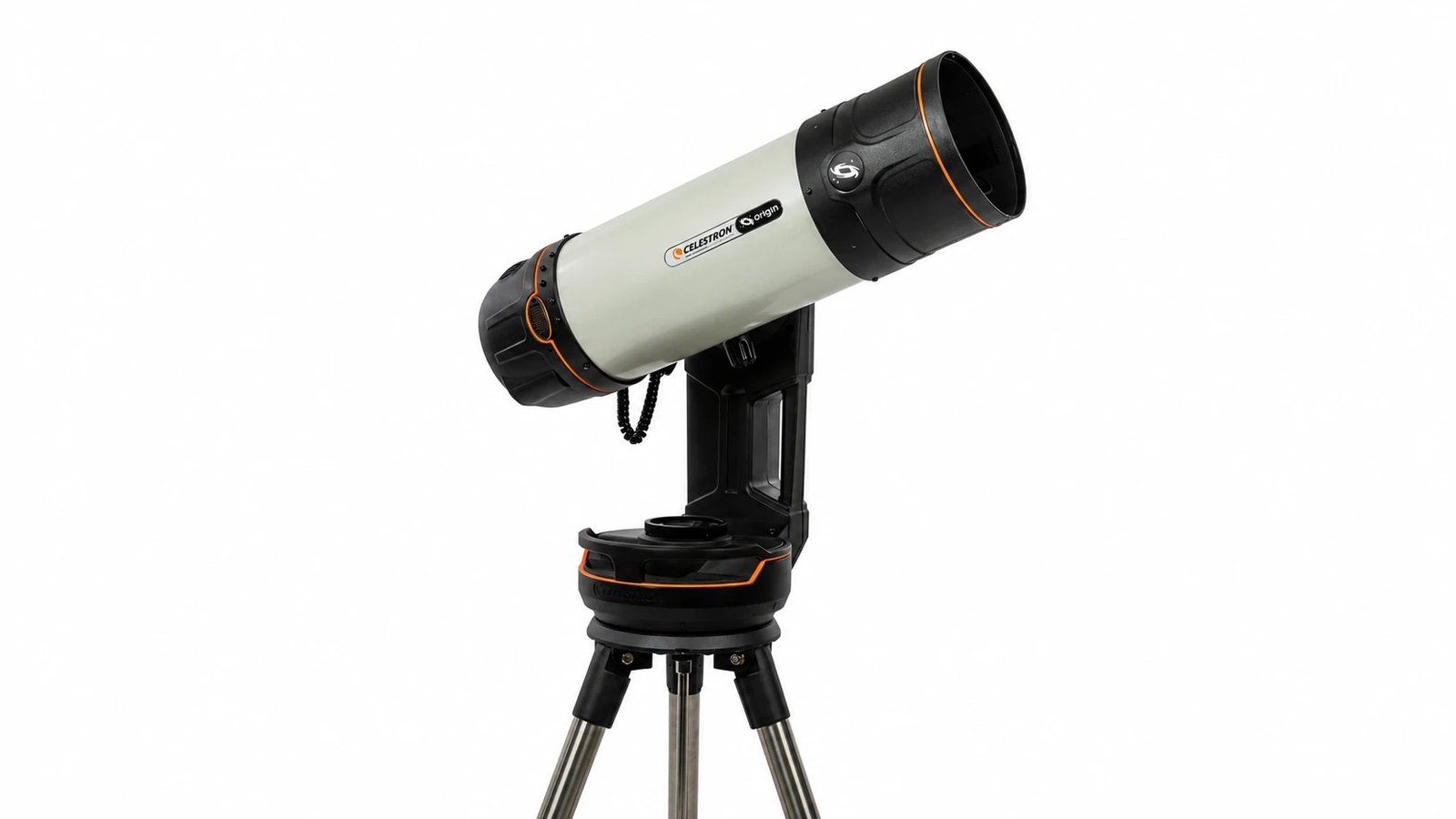
Credit: Celestron
The Short Answer
If you want the most aperture and the fastest optics available in a smart telescope, and you're comfortable paying nearly double for it, the Origin Mark II is the stronger instrument. If you're observing mainly from a light-polluted city or suburb and want the best result for meaningfully less money, the eQuinox 2 is built specifically around that problem and, by most accounts, solves it well. Neither is a bad choice — they're aimed at different budgets and different skies.
A note on how this comparison was researched: ORIVON has covered both telescopes in depth — full specifications, published reviews and buyer sentiment — in our dedicated Origin Mark II review and our dedicated eQuinox 2 review. This comparison draws directly on that existing research, cross-referenced against each manufacturer's current published specifications, rather than introducing a separate analysis. ORIVON has not tested either telescope directly.
Quick Verdict
Choose the Origin Mark II if:
- Maximum aperture and the fastest possible optics matter more than price.
- You image mostly from a reasonably dark or suburban sky.
- You want the deepest, most detailed results the smart telescope category currently offers.
Choose the eQuinox 2 if:
- You observe primarily from a light-polluted city or suburb.
- Getting a strong result for meaningfully less money matters more than raw aperture.
- The citizen-science partnerships (asteroid occultations, exoplanet campaigns) genuinely appeal to you.
Technical Specifications
| Celestron Origin Mark II | |
| Optical Design | Rowe-Ackermann Schmidt Astrograph (RASA) |
| Aperture | 152mm (6") |
| Focal Ratio | f/2.2 |
| Sensor | Sony 678C, STARVIS 2 CMOS |
| Battery Life | Approx. 4 hours continuous imaging |
| Weight | 16 lbs (7.3 kg) including tripod |
| Price | Approximately $4,299 USD |
| Unistellar eQuinox 2 | |
| Optical Design | 114mm Newtonian reflector |
| Focal Ratio | f/4 |
| Focal Length | 450mm |
| Sensor | Sony CMOS, 6.2 MP |
| Field of View | 34.2 × 45.6 arcmin |
| Battery Life | Approx. 11 hours |
| Weight | Approx. 9 kg (20 lbs) |
| Price | $2,899 USD (official Unistellar store, checked August 27, 2026) |
A note on pricing: smart telescope pricing moves, and the eQuinox 2 in particular is discounted often. The figures above reflect list pricing at the time of publication — always confirm current pricing at checkout before buying either telescope.
| Spec | Origin Mark II | eQuinox 2 |
|---|---|---|
| Aperture | 152mm (6") | 114mm (4.5") |
| Focal Ratio | f/2.2 | f/4 |
| Weight | 7.3 kg | ~9 kg |
| Battery Life | ~4 hours | ~11 hours |
| Eyepiece Included | No | No |
| Price | ~$4,299 | $2,899 |
Optics & Light Gathering
The Origin's 152mm aperture is roughly a third larger than the eQuinox 2's 114mm, and its f/2.2 optical system is substantially faster than the eQuinox 2's f/4 — between a bigger light-collecting surface and a faster focal ratio, the Origin gathers considerably more light per unit of exposure time (see why aperture matters more than magnification for the underlying principle). In practice, that means shorter integration times to reach a clean, usable image on the same faint target. The eQuinox 2 isn't a small telescope by smart-telescope standards, but structurally, the Origin is working with a meaningfully bigger light bucket.
Imaging System & Sensor
Both telescopes build their entire experience around the sensor rather than an eyepiece. The Origin's Sony STARVIS 2-based sensor is the newer of the two designs and, combined with the faster f/2.2 optics, is what reviewers most consistently point to when explaining why its images resolve more signal per minute. The eQuinox 2's sensor is a capable, well-proven design in its own right — its real differentiator isn't raw sensor performance but the automatic light pollution reduction processing built around it, engineered specifically to pull a usable image out of a bright urban sky.
Setup & Automation
Both telescopes are built to remove manual alignment entirely — point them at the sky, and automated star recognition handles the rest. Reported setup times for both land in the same rough range (a few minutes from unboxing to imaging), and neither asks the owner to polar-align, focus manually or balance a mount by hand. This is the category's whole premise, and both instruments deliver on it.
Deep-Sky Performance
For deep-sky targets under reasonably dark or suburban skies, the Origin's larger aperture and faster optics give it a real, structural edge — it reaches a clean image faster on the same faint object. Under genuinely light-polluted city skies, the comparison tightens considerably: the eQuinox 2's automatic light pollution reduction is described across reviews as a real, working feature rather than a marketing checkbox, and it's specifically what lets it compete with a larger, more expensive instrument from a backyard where neither telescope has access to a truly dark sky.
Planetary & Lunar Use
Neither telescope is built primarily for planetary imaging — both are optimized around deep-sky targets, and dedicated planetary imaging setups will outperform either one significantly on Jupiter, Saturn or Mars. For the Moon, both produce usable, detailed images; this isn't a meaningful point of differentiation between the two.
App & Workflow
Both companion apps are praised in published reviews and buyer feedback for being approachable to first-time users, with Celestron's app for the Origin line and Unistellar's app for the eQuinox 2 each receiving consistent updates. Neither product supports traditional eyepiece viewing — every session on either telescope happens through the app, by design.
Portability
The Origin is the lighter of the two at 7.3 kg including its tripod, against the eQuinox 2's roughly 9 kg. Neither is the pocketable end of the smart telescope category — that distinction belongs to smaller instruments like the Vaonis Vespera II — but between these two, the Origin has a modest edge for anyone regularly carrying their setup any distance.
Price & Value
This is the widest gap in the comparison: the Origin costs roughly 70% more than the eQuinox 2 at list price, and the eQuinox 2 is frequently discounted further still. That premium buys more aperture, faster optics and a newer sensor — a real, structural upgrade, not just a brand markup. Whether it's worth it depends on how much that extra capability matters against nearly double the cost.
Who Should Buy the Origin Mark II?
Buyers who want the deepest, fastest deep-sky results the smart telescope category currently offers, and who are comfortable paying a significant premium for that headroom. It's also the better fit for anyone observing from a reasonably dark or suburban sky, where its larger aperture gets to use its full advantage rather than fighting light pollution the way it would from a bright city backyard.
Who Should Buy the eQuinox 2?
City and suburban observers who want strong deep-sky results despite significant light pollution, and who'd rather spend meaningfully less money for a telescope specifically engineered around that problem. It's also the more natural fit for anyone drawn to Unistellar's citizen-science partnerships as part of the appeal, not just the optics.
Final Verdict
Neither telescope is objectively "better" — they're built for different skies and different budgets. The Origin Mark II is the stronger instrument on paper, and that shows up directly in faster integration times and more resolved detail on faint targets. The eQuinox 2 closes a meaningful part of that gap specifically for buyers observing from light-polluted skies, at a price that's easier to justify for a lot of people. If money were no object, the Origin wins outright; for most buyers actually comparing these two, the honest answer is to buy for the sky you actually observe under, not the spec sheet.
Sources & Methodology
This comparison is built from ORIVON's existing, separately-researched reviews of each telescope — themselves combinations of manufacturer specifications, independent reviewer findings and recurring patterns in buyer feedback — cross-referenced against each other and against each manufacturer's currently published specifications to keep both sides consistent. ORIVON has not tested either telescope directly; no claim in this article should be read as a hands-on ORIVON finding.
Frequently Asked Questions
No — this comparison is built from each manufacturer's published specifications and independent reviews of both telescopes, cross-referenced against ORIVON's own dedicated reviews of each, rather than tested directly by ORIVON.
The eQuinox 2 is built specifically around this problem — its automatic light pollution reduction is the telescope's headline feature. The Origin Mark II's larger aperture also helps pull in more signal under a bright sky, but it wasn't engineered around urban observing the way the eQuinox 2 was.
That depends entirely on how much the extra aperture and faster optics matter to you. Buyers chasing the deepest, fastest deep-sky results say yes; buyers who mainly want a good image from a city backyard often find the eQuinox 2 delivers most of what they actually need for meaningfully less money.