
Best Astrophotography Cameras by Budget (2026)
This article contains affiliate links. If you buy through them, ORIVON may earn a commission at no extra cost to you.
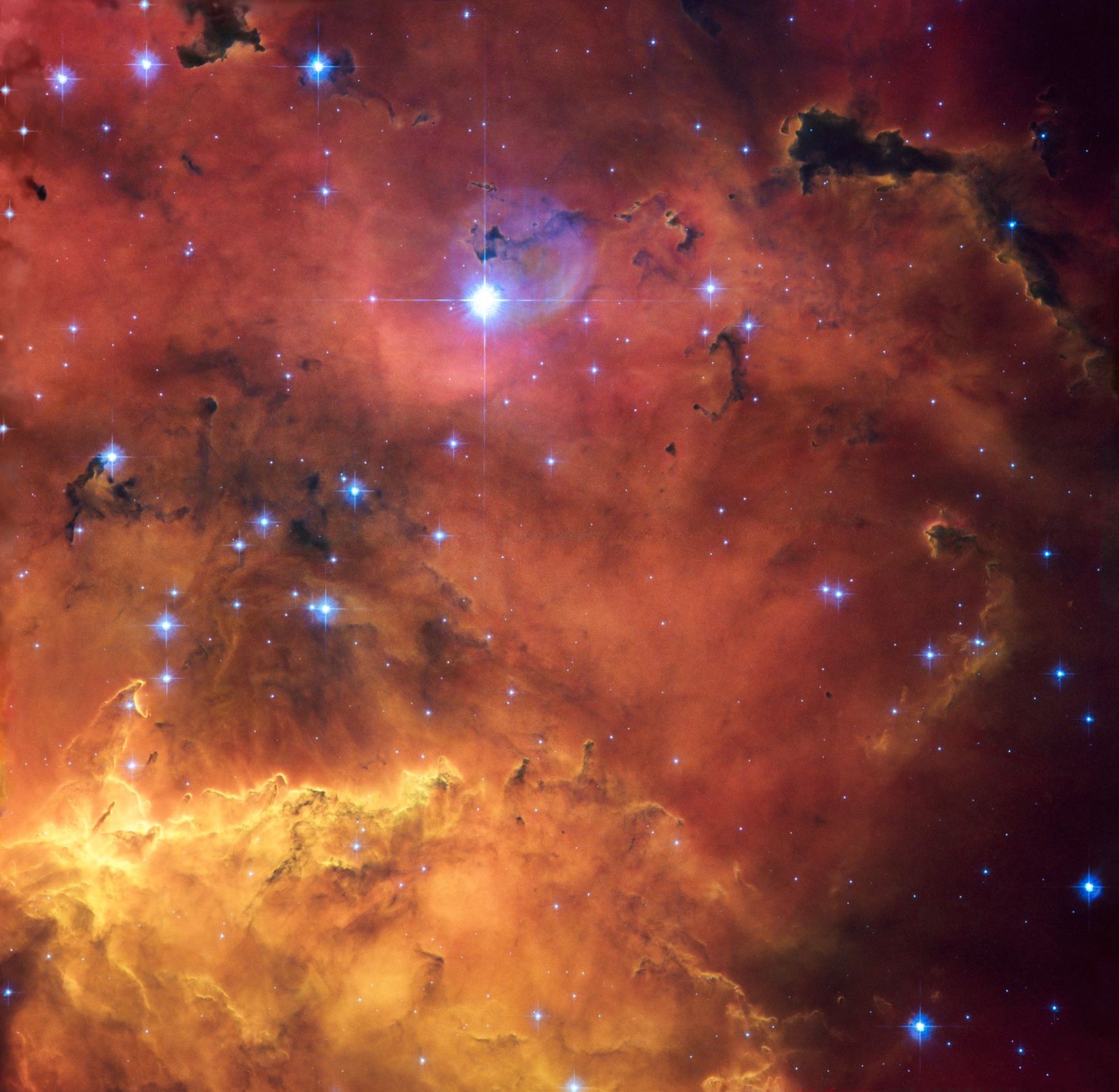
The kind of deep-sky detail a dedicated astrophotography camera is built to capture. Illustrative image.
Credit: NASA, ESA
Don't Buy a Camera Before You Need One
The single most common mistake in astrophotography purchasing is buying a dedicated camera before establishing whether you'll stick with the hobby. What follows is a tiered path — starting with equipment you likely already own, and moving up only when a specific limitation forces the upgrade.
Tier 1 — Start With What You Own
Any DSLR or mirrorless camera with a manual mode is capable of producing genuine astrophotography results, particularly for wide-field Milky Way and nightscape shots. Mounted on a simple tripod, or better, on a star tracker, an existing camera can carry a beginner through months of learning — composition, exposure stacking, basic processing — before a dedicated sensor becomes relevant. There is no product to buy at this tier, and reviewers consistently note that skipping it is the most expensive mistake newcomers make.
The point at which a dedicated camera starts to matter is when thermal noise becomes the limiting factor — when longer exposures on a stock camera introduce more grain than signal, and no amount of software noise reduction can recover the difference.
Tier 2 — First Dedicated Camera (~$300 – $350)
| Sensor | Sony IMX585, 8.3MP |
| Cooling | None (uncooled) |
| Frame Rate | Up to 47fps at full resolution |
| Notable | No amp glow reported by reviewers, a common complaint on older uncooled sensors |
The ZWO ASI585MC is the camera reviewers most often point to as the entry point into dedicated planetary and deep-sky imaging. It lacks active cooling, so thermal noise on long deep-sky exposures is still a limiting factor, but for lunar, planetary and shorter deep-sky sessions it's consistently described as a meaningful step up from a stock DSLR.
View at RetailerTier 3 — Serious Upgrade (~$600 – $1,500)
At this tier, buyers typically choose between two directions: the same sensor with cooling added, or a meaningfully larger sensor entirely. Reviewers frame this as a question of what's actually limiting your images, not which camera is objectively "better."
a) ZWO ASI585MC Pro — The Cooled Middle Ground (~$599)
| Sensor | Same Sony IMX585 as the ASI585MC |
| Cooling | Two-stage TEC, down to -35°C below ambient |
| Best for | Buyers who want longer deep-sky exposures without changing sensor size |
This is the camera reviewers describe as the natural upgrade path from Tier 2 — same resolution and pixel characteristics, but with active cooling that suppresses the thermal noise that limits long deep-sky exposures on the uncooled version. Already reviewed in depth on ORIVON, it's also become a genuinely dual-purpose pick for buyers who want deep-sky and planetary/lunar imaging in one camera.
Read the full reviewView at Retailer
b) ZWO ASI294MC Pro — The Larger Sensor (~$999 – $1,100)
| Sensor | Micro Four Thirds, 11.7MP |
| Cooling | Two-stage TEC, down to -35°C below ambient |
| Best for | Buyers prioritizing field of view and sensor size over pixel-level cost efficiency |
Already reviewed in depth on ORIVON, the ASI294MC Pro is the camera reviewers reach for when a larger sensor — not just cooling — is what's needed, typically for wider fields of view on nebulae and galaxies that don't fit comfortably in a smaller frame.
Read the full reviewView at Retailer
Mistakes to Avoid
- Buying a dedicated camera before a tracking mount, which limits exposure length regardless of sensor quality
- Assuming megapixels alone determine image quality — pixel size and read noise matter more for faint targets
- Skipping cooling for deep-sky work in warm climates, where thermal noise is most pronounced
- Overspending on Tier 3 before confirming the hobby is a long-term commitment
Frequently Asked Questions
No. Reviewers and experienced imagers consistently recommend starting with a DSLR or mirrorless camera you already own, and upgrading only once thermal noise or exposure limitations become a real constraint.
For deep-sky imaging with exposures longer than a couple of minutes, most reviewers say yes — thermal noise accumulates quickly on uncooled sensors during long sessions. For lunar and planetary imaging, cooling matters much less.
It depends on your targets. A larger sensor captures a wider field of view, useful for large nebulae and galaxies. A cooled smaller sensor is the more cost-effective way to improve deep-sky signal-to-noise without changing framing.