ZWO ASI294MC Pro Review (2026): Is It Still Worth It?
This article contains affiliate links. If you buy through them, ORIVON may earn a commission at no extra cost to you.
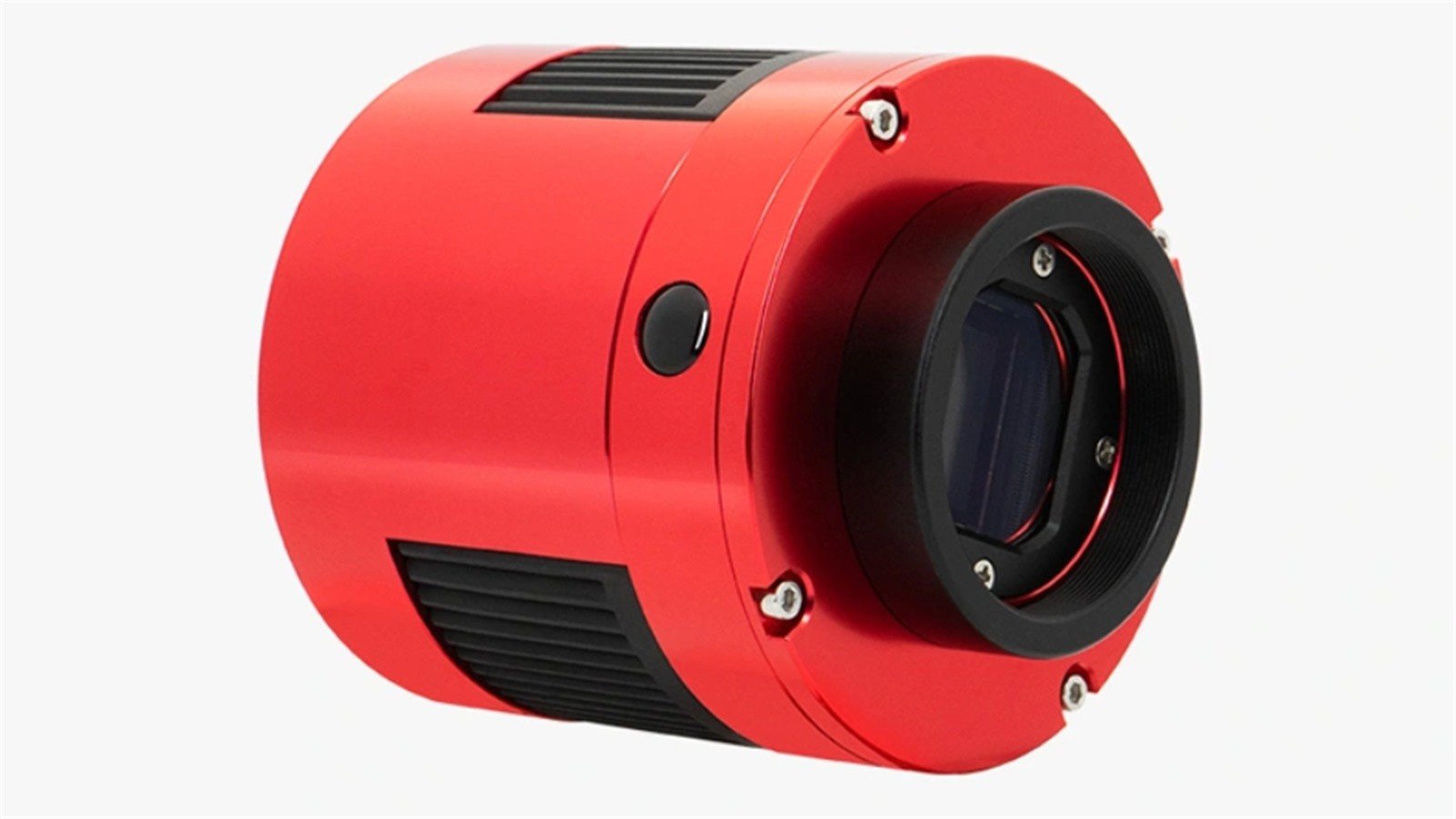
The ZWO ASI294MC Pro, a cooled one-shot-color camera built around a Micro Four Thirds sensor.
Short Answer
Yes, with a caveat. The ASI294MC Pro is an older design ZWO still sells alongside newer cameras, and at its current price — well below the figure this page used to carry — it remains a genuine, credible step up from a stock DSLR or mirrorless body for deep-sky imaging. The caveat: if a smaller sensor is fine for your telescope's focal length, the newer ASI533MC Pro now undercuts it on price with lower read noise. The ASI294MC Pro's real reason to exist in 2026 is its larger Micro Four Thirds sensor at a price still meaningfully below ZWO's APS-C options.
What the ASI294MC Pro Is
The ASI294MC Pro is a cooled, one-shot-color astronomy camera built around a Sony IMX294 sensor — meaning it captures a full-color image in a single exposure, without the filter-wheel workflow a monochrome camera requires. "Pro" in ZWO's naming specifically means cooled: an integrated two-stage thermoelectric cooler holds the sensor tens of degrees below ambient temperature through a session, which is what separates it from the cheaper, uncooled ASI294MC.
Why It Still Matters in 2026
ZWO has released newer, cheaper cooled cameras since the ASI294MC Pro launched — most notably the ASI533MC Pro and, at the entry level, the ASI585MC Pro. The ASI294MC Pro hasn't been discontinued; it's still listed on ZWO's own current product page, sitting in the middle of that lineup on both sensor size and price. Its case for existing in 2026 is narrow but real: a Micro Four Thirds sensor is physically larger than the 1″ sensor in the ASI533MC Pro, which matters directly for field of view at a given focal length and for how much larger, dimmer nebulae and galaxies fit in a single frame — without stepping up to the substantially pricier APS-C ASI2600MC Pro.
Technical Specifications
| Sensor | Sony IMX294CJK, Micro Four Thirds (4/3″, 19.1 × 13.0 mm) |
| Resolution | 11.7 MP (4144 × 2822), 4.63 µm pixels |
| ADC / Dynamic Range | 14-bit, ~13 stops |
| Full Well Capacity | 63,700 e⁻ |
| Read Noise | As low as 1.2 e⁻ (high conversion gain mode) |
| Cooling | Two-stage TEC, 35–40°C below ambient |
| Buffer | 256MB DDR3 |
| Connection | USB 3.0 (5Gbps), integrated USB 2.0 hub for accessories |
| Power | External 12V DC (11–15V range; 3A minimum recommended) |
| Price (current) | Roughly $999–$1,100 USD, standalone camera — see Price & Value below |
Sensor and Field of View
The Micro Four Thirds format is the ASI294MC Pro's defining trait. At a given telescope focal length, its 19.1 × 13.0mm sensor captures a noticeably wider field than ZWO's 1″-sensor cameras, which is why independent guides consistently position it as the pick for larger targets — big emission nebulae, galaxy pairs, wide star clusters — where a smaller sensor would crop the frame uncomfortably tight. The trade-off is a narrower field than a full-frame or APS-C sensor at the same focal length, and 11.7 megapixels that print or crop less aggressively than ZWO's higher-resolution options.
Cooling and Thermal Noise
ZWO specifies the two-stage TEC cooler as capable of 35–40°C below ambient. In practice, that means a stable, repeatable sensor temperature — typically set somewhere around −10°C to −15°C for most climates — held steady for the length of an imaging session, which is the entire point: thermal noise (dark current) roughly halves for every ~6°C drop in sensor temperature, so a cooled sensor at a fixed, cold setpoint produces dramatically cleaner long exposures than an uncooled DSLR sensor drifting with the night's ambient temperature.
Read Noise, Dynamic Range and Full Well
ZWO's current published figures put read noise as low as 1.2 e⁻ in High Conversion Gain (HCG) mode — the mode the camera automatically enables at gain settings of 120 and above — with a 63,700-electron full well capacity and roughly 13 stops of dynamic range at low gain. In plain terms: at low gain the camera can hold detail across a wide range of brightness in one exposure (useful for capturing a bright core and faint outer detail together), while HCG mode trades some of that dynamic range for a genuinely quiet noise floor, which matters most on faint, low-signal targets under narrowband or dual-band filters.
Real-World Image Quality
Independent hands-on reviewers describe the ASI294MC Pro's output in broadly consistent terms: strong sensitivity that lets a target be framed and focused in just a few seconds of live-view exposure, and a dynamic range that holds together bright cores and faint extensions in the same image better than a typical DSLR sensor. AstroBackyard's published review specifically credits the sensor's dynamic range and sensitivity for making target acquisition and framing noticeably easier than on prior consumer-camera setups.
Amp Glow and Calibration Behavior
Amp glow — a faint gradient of extra signal near the sensor's edges caused by heat from onboard electronics — is a real, documented characteristic of this camera, and independent reviewers do report seeing it in individual sub-exposures. The consistent finding, though, is that it disappears cleanly with standard dark-frame calibration during stacking; it isn't described as something that survives into a properly processed final image. What it does mean in practice is that dark frames captured at the same cooling setpoint, gain and exposure length as your lights aren't optional — skipping calibration on this camera will leave the glow visible.
Calibration Frames and Flats
One hands-on account describes a specific flat-frame routine for this camera: targeting roughly 25,000 ADU using a very short exposure (around 0.034 seconds) at unity gain (120), achievable with either a dedicated flat panel or a plain white t-shirt stretched over the aperture. This is a normal part of the workflow for any cooled astro camera, not a defect specific to this one — it's included here because calibration is exactly the kind of "hidden" workflow step that catches DSLR upgraders off guard.
Broadband Imaging
For broadband (unfiltered, or with a light-pollution filter) color imaging of galaxies, star clusters and brighter nebulae, the ASI294MC Pro's combination of sensor size and sensitivity is the scenario it's most directly built for — this is the core use case its Micro Four Thirds sensor and one-shot-color design were designed around, and where independent reviews are most consistently positive.
Dual-Band / Narrowband Use with a One-Shot-Color Sensor
Conventional wisdom holds that monochrome cameras are the "correct" tool for narrowband imaging, since a color sensor's Bayer filter blocks a meaningful fraction of narrowband light before it reaches each pixel. Independent hands-on testing of this camera specifically pushes back on that being disqualifying: one reviewer reports capturing genuinely usable images of the Eagle Nebula from Bortle 8 (heavily light-polluted suburban) skies using a duo-narrowband filter with this exact camera. It's a real, documented capability — not a substitute for a dedicated mono setup with individual Ha/OIII/SII filters, but a legitimate way to shoot emission nebulae from a light-polluted backyard without a filter wheel.
Ease of Use
This is not a plug-and-play camera. There's no viewfinder, no LCD screen, no handheld shooting mode — it exists to be connected to a computer and driven by capture software for the length of an imaging session. That's a meaningfully different workflow than a DSLR, and it's the single most consistent adjustment independent reviewers and owner discussions flag for anyone moving up from consumer gear.
ASIAIR / Software Ecosystem
ZWO's own ASIAIR devices (and the equivalent capture software running on a laptop or mini-PC — N.I.N.A. and SharpCap are common third-party choices) handle capture, cooling control, plate-solving and often autofocus and autoguiding in one interface. Because this is a ZWO-made camera, it's natively supported by ZWO's own ecosystem, which is frequently cited as one of the more approachable on-ramps into dedicated astrophotography software specifically because of that native integration.
Power Requirements and Cabling
The cooling system needs external 12V DC power (ZWO specifies an 11–15V range with a 3A minimum recommended supply) through a standard 5.5×2.1mm barrel connector — separate from the USB 3.0 data connection. In the field, that's two cables running to the camera instead of one, plus whatever powers a mount, dew heaters, and a capture device. It's a real piece of setup complexity a DSLR simply doesn't have, and it's worth planning a field power solution (a dedicated 12V power station or distribution box) before the first session rather than during it.
Who Should Buy It
Based on this editorial synthesis of current specifications and independent reviews — not on direct hands-on testing by ORIVON — the ASI294MC Pro makes the most sense for imagers who have outgrown DSLR noise levels on longer exposures, want a field of view noticeably wider than a 1″-sensor camera offers at the same focal length, and are ready to take on external power, dedicated capture software and a calibration-frame workflow in exchange for it.
Who Should NOT Buy It
If your telescope's focal length already produces a comfortable frame on a 1″ sensor, the newer ASI533MC Pro (see comparison below) does the same core job for meaningfully less money with a lower read-noise spec. Photographers who want one camera for both everyday photography and astrophotography, or who aren't ready to commit to a single-purpose imaging workflow, are still better served by a DSLR or mirrorless body.
ZWO ASI294MC Pro vs. ASI533MC Pro
The ASI533MC Pro uses a smaller, square 1″ Sony IMX533 sensor — meaningfully cheaper, with ZWO's own current listings putting it at roughly $700–$800, and independent reviewers frequently cite lower read noise than the ASI294MC Pro. Its trade-off is field of view: on the same telescope, it frames a noticeably tighter view than the ASI294MC Pro's larger sensor. For imagers whose telescope focal length already suits a smaller sensor, it's the newer, cheaper, arguably better-specified choice; the ASI294MC Pro's case rests entirely on needing the extra sensor real estate.
ZWO ASI294MC Pro vs. ASI2600MC Pro
The ASI2600MC Pro steps up to a full APS-C sensor, at a current price that runs well over double the ASI294MC Pro's — ZWO's own Pro-series listings place the broader family, standalone through filter-wheel bundles, between roughly $999 and $2,449, with the APS-C mono/color Pro cameras occupying the top of that range. It offers a materially larger imaging circle and lower read noise, at a cost and file-size jump that isn't justified for every buyer. The ASI294MC Pro remains the more accessible middle step for imagers not ready to commit to APS-C-tier pricing.
Pros and Cons
Drawing on ZWO's current specifications and recurring themes across independent hands-on reviews and owner feedback:
What Reviewers Praise
- Real, measurable noise reduction on long exposures from the two-stage cooling — not a marginal difference from an uncooled sensor
- A larger Micro Four Thirds sensor that comfortably frames bigger nebulae and galaxies a 1″ sensor would crop
- Amp glow is present in subs but reported as fully removed by standard dark-frame calibration
- Usable results with dual-band narrowband filters even from light-polluted (Bortle 8) skies, despite being a one-shot-color camera
- Native, well-integrated support in ZWO's own ASIAIR and capture-software ecosystem
Common Criticisms
- Requires external 12V power in addition to USB — one more cable, one more thing to plan for in the field
- Needs dedicated capture software running on a connected computer; it isn't plug-and-play the way a DSLR is
- A real learning curve around calibration frames, cooling setpoints and flat-frame routines
- Now sandwiched by ZWO's own newer cameras — cheaper for a smaller sensor, or a bigger sensor for more money
Current Price and Value
At the time of this August 2026 update, ZWO's own product page lists the current ASI294/ASI294 Pro series — color and monochrome, standalone through filter-wheel bundles — at roughly $999 to $2,449. The standalone cooled color camera reviewed here sits toward the lower end of that range; one independent hands-on reviewer specifically described it as "priced under $1,000" at the time of their review. Prices on third-party retailers (Amazon, Agena Astro, High Point Scientific, OPT) fluctuate around that figure and are worth checking directly before buying — this page's price estimate should not be read as a permanent number.
Final Verdict
The ASI294MC Pro is not the newest or cheapest camera in ZWO's lineup anymore, and it shouldn't be bought on the assumption that it is. What it still offers, credibly and in 2026, is a real cooled-sensor upgrade from DSLR-level noise, a sensor genuinely larger than ZWO's budget options, and a price that stays well under APS-C territory. For the specific buyer who needs that middle ground — bigger targets than a 1″ sensor comfortably frames, without APS-C pricing — it remains a sound, current recommendation.
How It Compares
| Camera | Sensor | Cooling | Current Price (est.) |
|---|---|---|---|
| ZWO ASI294MC Pro | Micro Four Thirds (4/3″) | 35–40°C below ambient | ~$999–$1,100 |
| ZWO ASI533MC Pro | 1″ | 35–40°C below ambient | ~$700–$800 |
| ZWO ASI2600MC Pro | APS-C | 35–40°C below ambient | ~$1,900–$2,449 |
Prices are current-market estimates as of August 2026, drawn from ZWO's own published Pro-series pricing range and cross-referenced against third-party retail listings. They fluctuate — always check the retailer's live price before buying.
Sources & Methodology
This review combines ZWO's current official specifications, independent hands-on reviewer findings and recurring patterns in owner feedback. ORIVON has not tested this camera directly — no claim here should be read as a hands-on ORIVON finding. Editorial synthesis (positioning, comparisons, "who should buy" guidance) is ORIVON's own analysis built on the sourced facts below, not itself an external claim.
- Official specifications: ZWO ASI294 Pro Series product page and ZWO guides & manuals (accessed August 2026)
- Independent hands-on review: AstroBackyard, "ASI294MC Pro Review" — amp glow, calibration routine, narrowband/dual-band results, real-world image quality
- Owner and long-term feedback: patterns observed across Cloudy Nights owner discussion threads and current retailer buyer reviews
- ORIVON editorial analysis: positioning against the ASI533MC Pro and ASI2600MC Pro, "who should/shouldn't buy" guidance, and current-value assessment
Frequently Asked Questions
For imagers who want a larger Micro Four Thirds sensor at a price below ZWO's full-frame options, yes — it remains in ZWO's current lineup and independent reviewers still recommend it for that specific niche. Buyers who don't need the larger sensor are often better served by the newer, cheaper ASI533MC Pro.
The ASI533MC Pro is smaller-sensored and meaningfully cheaper, aimed at narrower fields of view. The ASI2600MC Pro uses a larger APS-C sensor with lower read noise at a materially higher price. The ASI294MC Pro sits between them on both sensor size and price.
Not for general photography — it's a dedicated astronomy camera without a viewfinder, screen or handheld shooting capability. Most owners keep a DSLR or mirrorless body alongside it.
Yes — it requires a connected computer or a compatible mini-PC running capture software such as ASIAIR, N.I.N.A. or SharpCap; it doesn't record internally like a standard camera.
Independent reviewers report visible amp glow in individual sub-exposures, but describe it as fully removed by standard dark-frame calibration during stacking — it isn't something that shows up in a properly processed final image.
It offers a narrower field of view at a given focal length than full-frame, but reviewers generally consider it a reasonable trade-off for the lower price, smaller file sizes and lighter load on a mount.