
iOptron SkyGuider Pro Review (2026): Still Worth Buying?
This article contains affiliate links. If you buy through them, ORIVON may earn a commission at no extra cost to you.
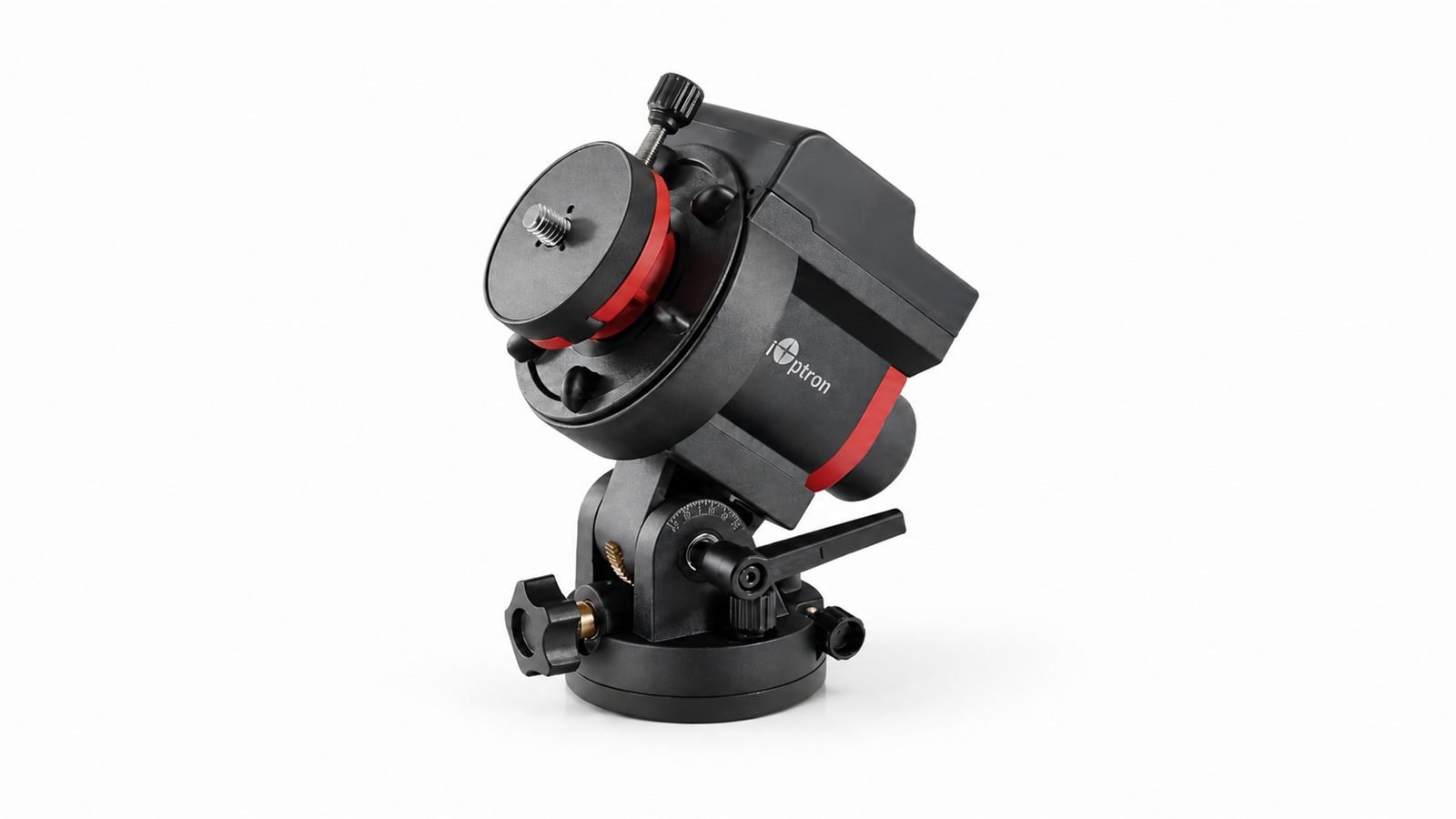
The iOptron SkyGuider Pro, a portable single-axis equatorial tracker.
Short Answer
Yes, for wide-angle and moderate-telephoto tracked astrophotography. The SkyGuider Pro's near-all-metal build, genuinely good illuminated polar scope and long internal battery life are consistently praised in independent testing, and at least one direct comparison rates it above the Star Adventurer 2i overall. Its honest weak point is the included equatorial wedge, which independent reviewers specifically flag as inferior to the rest of the mount and worth upgrading for serious use.
Editor's Verdict
Based on iOptron's current specifications and recurring findings across independent reviews — not on direct hands-on testing by ORIVON — the SkyGuider Pro earns its recommendation as a well-built, portable single-axis tracker for wide-field and moderate-telephoto imaging, with the caveat that its stock wedge is a documented weak link worth planning around.
What the SkyGuider Pro Is
The SkyGuider Pro is iOptron's single-axis equatorial tracker — it rotates a mounted camera around one axis to counter Earth's rotation, turning a few-second static-tripod exposure into a multi-minute tracked one. It sits in iOptron's lineup as the step up in size and payload from the palm-sized SkyTracker Pro, while remaining a single-axis tracker without GoTo, distinct from motorized two-axis mounts like Sky-Watcher's Star Adventurer GTi.
SkyTracker Pro vs. SkyGuider Pro
Both are iOptron products and both are single-axis trackers, but they're built for different scales of use: the SkyTracker Pro is the smaller, lighter, travel-first option (685g mount alone, 6.6 lb payload); the SkyGuider Pro is larger and heavier (roughly 1kg mount alone, 11 lb payload) with a more substantial equatorial base built to support real DSLR-and-telephoto or small-refractor combinations rather than staying camera-and-lens-only. ORIVON's full SkyTracker Pro review covers the smaller tracker in the same depth as this page.
What's Included
Per iOptron's current listing for the full package (model 3550): mount head, alt-azimuth base, AccuAlign polar scope, mini-USB charging cable, a padded carry bag, declination bracket, counterweight and counterweight shaft, plus a one-year limited warranty (90 days on the battery).
Build
Independent hands-on testing specifically praises the construction: the mount body is described as being made almost entirely of metal, with a solid, durable feel consistent with its price point.
Portability
At roughly 2.2 lb (1kg) for the mount alone and 3.2 lb (1.45kg) with the alt-azimuth base — both figures with the battery installed, per iOptron's current specifications — it remains genuinely travel-friendly, heavier than the SkyTracker Pro but still well within reasonable carry-on and backpack weight for a single-axis tracker with more payload headroom.
11 lb Payload
iOptron rates the SkyGuider Pro at 11 lb (5kg), balanced. Independent hands-on use confirms real DSLR-and-telephoto combinations work within that rating, with the declination bracket and counterweight becoming genuinely necessary as payload increases — one reviewer specifically notes often leaving the DEC bracket and counterweight at home for lighter, wide-angle-only setups to save pack weight, only adding them back for heavier gear.
DEC Bracket and Counterweight
Both are included in the full package and exist specifically to balance heavier payloads (a DSLR with a longer telephoto lens, or a small refractor) around the tracker's single rotation axis — without them, only lighter camera-and-lens combinations can be properly balanced.
Polar Alignment
This is one of the SkyGuider Pro's most consistently praised features in independent testing: the integrated illuminated polar scope is described as making alignment straightforward enough to support 5-to-6-minute exposures with wide-angle and medium-focal-length lenses.
AccuAlign Polar Scope
The standard 3550 package uses iOptron's AccuAlign optical polar scope — the same illuminated dark-field design family used across other current iOptron trackers, requiring the user to manually center Polaris in the reticle rather than relying on an electronic camera.
iPolar Variant
iOptron also sells this tracker as model 3550A, which replaces AccuAlign with iPolar — an electronic polar-alignment camera and companion software that requires a connected laptop for its alignment routine, offering higher precision at added cost and setup complexity. Independent reviewers note iPolar particularly benefits telephoto-focused imagers who want tighter alignment than a manual optical scope easily achieves. This review, and the affiliate link below, cover the base 3550 with AccuAlign — the two variants should not be treated as interchangeable when comparing prices.
Tracking
iOptron specifies multiple tracking speeds — 1× sidereal (Cel), 1/2× sidereal, solar, lunar and a dedicated N/S calibration setting — plus a 144× quick-slew speed for fast repositioning between shots.
1/2× Tracking Mode
The half-sidereal-rate mode exists specifically for nightscape composites blending a tracked sky with a recognizable, only-mildly-blurred foreground in the same exposure — a standard feature across iOptron's tracker lineup, not unique to this model but genuinely useful for landscape astrophotography.
Wide-Angle Milky Way Imaging
This is the SkyGuider Pro's strongest, most consistently praised use case in independent testing — a camera and wide-angle lens produces clean, round-star results well within the tracker's comfortable performance range. Not ready to buy a tracker yet? ORIVON's guide to photographing the Milky Way on a fixed tripod shows what's achievable first.
Telephoto Imaging
Independent testing reports strong performance up to roughly 35mm focal length, with star trails becoming noticeable past about 80mm without autoguiding — a real, specific limitation worth knowing before pairing this tracker with a long telephoto lens and expecting pinpoint stars unguided.
Small Telescope Use
The declination bracket and counterweight support small-refractor use within the payload rating, but the same telephoto tracking-accuracy limitation applies — a small scope's longer effective focal length means autoguiding becomes important for anything beyond short exposures, not optional.
ST-4 Guiding
An ST-4 autoguider port is built in, letting the tracker accept correction signals from a separate guide camera and guide scope — the documented path for extending usable exposure times past what unguided tracking supports at longer focal lengths.
Battery
The tracker uses an internal rechargeable Li-Poly battery (3.7V, 2000mAh per iOptron's specifications), charged via mini-USB to 80% in roughly 5 hours. Independent hands-on use reports up to 20 hours of real-world operation, removing the corrosion and cold-weather concerns that come with external AA-battery designs on some competing trackers.
Northern Hemisphere
The AccuAlign polar scope and tracking design support standard Northern Hemisphere polar alignment against Polaris without any special configuration.
Southern Hemisphere
iOptron's tracking modes explicitly include Southern Hemisphere support (the "N/S" setting referenced above), consistent with the rest of iOptron's current tracker lineup supporting international and Southern Hemisphere use.
Setup
Independent reviewers describe the overall setup — alt-azimuth base leveling, then polar scope alignment — as approachable and quick once familiar, consistent with the "5-to-6-minute exposure within minutes of setup" experience reported for wide-angle work.
Learning Curve
Beyond initial polar alignment, the main adjustment for a new owner is understanding the tracker's real telephoto limits (the roughly 80mm unguided threshold above) rather than any unusual operational complexity — the controls themselves are described as straightforward.
Travel
The combination of compact size, all-metal durability and long internal battery life makes this a well-regarded travel tracker in independent reviews, particularly for imagers who don't want to manage spare AA batteries or worry about battery corrosion on a remote trip.
Real Limitations
The stock equatorial wedge is the most consistently repeated criticism in independent testing — described as inferior to the rest of the mount, with at least one reviewer specifically recommending an aftermarket wedge (from William Optics or Sky-Watcher) for buyers serious about imaging. Tracking accuracy past roughly 80mm focal length requires autoguiding, not something the tracker handles comfortably alone.
Who Should Buy It
Based on this editorial synthesis of current specifications and independent reviews — not on direct hands-on testing by ORIVON — the SkyGuider Pro makes the most sense for photographers who want a well-built, portable single-axis tracker for wide-angle Milky Way and moderate-telephoto work, value long internal battery life over swappable AA batteries, and are willing to consider an aftermarket wedge if pushing toward serious imaging.
Who Should Skip It
Imagers who specifically want automatic GoTo object-finding need the Star Adventurer GTi instead — a genuinely different, two-axis product, not a competitor to this tracker. Anyone planning serious telephoto or small-telescope deep-sky work without autoguiding should expect real limitations past roughly 80mm focal length.
Who Should Skip It (Weight Priority)
Travelers who want the absolute smallest, lightest kit and don't need the full 11 lb payload are better served by iOptron's own smaller SkyTracker Pro.
SkyGuider Pro vs. Star Adventurer 2i
Both are single-axis trackers with a comparable 11 lb payload rating and similar current pricing. Independent direct comparison credits the SkyGuider Pro with better battery convenience (internal rechargeable vs. AA batteries) and a higher-quality polar scope, while crediting the Star Adventurer 2i with a sturdier stock equatorial wedge — the SkyGuider Pro's specific documented weak point. At least one reviewer's overall recommendation favors the SkyGuider Pro, though the margin comes down to which specific weakness (wedge vs. battery format) matters less to you. ORIVON's full Star Adventurer 2i review covers it in the same depth as this page.
SkyGuider Pro vs. Star Adventurer GTi
These are not direct competitors despite both being Sky-Watcher/iOptron portable mounts — the SkyGuider Pro is a single-axis tracker with no GoTo, while the GTi is a genuinely two-axis, motorized GoTo equatorial mount at a higher price and weight. Choose based on whether automatic object-finding and two-axis tracking are worth the added cost, weight and complexity to you, not on which is "better" in the abstract. ORIVON's full Star Adventurer GTi review covers that distinction in depth.
Pros
What Reviewers Praise
- Near-all-metal construction, described as durable and solid for its price class
- Genuinely good illuminated AccuAlign polar scope, supporting documented 5-to-6-minute wide-angle exposures
- Long internal battery life (up to 20 hours reported), no AA-battery corrosion concerns
- At least one direct independent comparison rates it above the Star Adventurer 2i overall
Common Criticisms
- Stock equatorial wedge is a consistently flagged weak point versus the rest of the build quality
- Tracking accuracy degrades past roughly 80mm focal length without autoguiding
- Two variants (3550 AccuAlign vs. 3550A iPolar) that are easy to conflate when comparing prices
- No GoTo — targets are found manually, same as any single-axis tracker
Price and Value
At the time of this August 2026 update, iOptron's own product page lists the SkyGuider Pro full package at a $539 regular price with a current sale price of $359 — broadly consistent with independent reviewer commentary describing the full package as frequently available discounted below $400. Treat both figures as a snapshot rather than fixed: sale pricing changes, and it's worth checking the retailer's live price before buying.
Final Verdict
The SkyGuider Pro holds up as a well-built, genuinely capable single-axis tracker — the polar scope quality and battery life independent reviewers document are real advantages, and at least one direct comparison prefers it to the Star Adventurer 2i outright. Its honest limitation is the stock wedge, worth budgeting an upgrade for if you're pushing toward serious telephoto or small-scope imaging. For wide-angle-to-moderate-telephoto tracked astrophotography at its current price, it remains a sound, current recommendation.
How It Compares
| Tracker | Axes | Payload | Current Price (est.) |
|---|---|---|---|
| iOptron SkyGuider Pro | One (RA) | 11 lbs | $359–$539 |
| Star Adventurer 2i Pro Pack | One (RA) | 11 lbs | $585 |
| Star Adventurer GTi (S20595) | Two (RA+DEC) | 11 lbs | $679 |
| iOptron SkyTracker Pro | One (RA) | 6.6 lbs | $225–$399 |
Prices are current-market estimates as of August 2026, drawn from each manufacturer's own listings and cross-referenced against retail sources. They fluctuate — always check the retailer's live price before buying.
Sources & Methodology
This review combines iOptron's current official specifications, independent hands-on reviewer findings and recurring patterns in owner feedback. ORIVON has not tested this tracker directly — no claim here should be read as a hands-on ORIVON finding. Editorial synthesis (positioning, comparisons, "who should buy" guidance) is ORIVON's own analysis built on the sourced facts below, not itself an external claim.
- Official specifications: iOptron, SkyGuider Pro (model 3550) product page (accessed August 2026)
- Independent hands-on review: Capture the Atlas, "iOptron SkyGuider Pro Review" — build quality, polar alignment, real payload use, direct comparison to the Star Adventurer 2i
- Owner and long-term feedback: patterns observed across current retailer buyer reviews
- ORIVON editorial analysis: positioning against the Star Adventurer 2i, Star Adventurer GTi and iOptron's own SkyTracker Pro, "who should/shouldn't buy" guidance, and current-value assessment
Frequently Asked Questions
For a wide-angle-to-moderate-telephoto tracker with a genuinely good polar scope and strong battery life, yes — independent reviewers still recommend it and, in at least one direct comparison, prefer it to the Star Adventurer 2i overall. Its stock equatorial wedge is a real, documented weak point worth budgeting to upgrade for serious imaging.
This review covers the base full package, model 3550, which uses iOptron's AccuAlign optical polar scope. The 3550A variant replaces AccuAlign with iPolar, an electronic polar-alignment camera requiring a connected laptop, at a higher price.
Both are single-axis trackers with a comparable 11 lb payload rating. Independent direct comparison credits the SkyGuider Pro with better battery convenience and a higher-quality polar scope, and the Star Adventurer 2i with a sturdier stock equatorial wedge.
They are not direct competitors. The SkyGuider Pro is a single-axis tracker with no GoTo; the Star Adventurer GTi is a two-axis, motorized GoTo equatorial mount at a higher price and weight. Choose based on whether you specifically want automatic object-finding.
It's rated for 11 lb (5kg) balanced payload, and the included declination bracket and counterweight support small refractor use, but independent testing notes tracking accuracy degrades past roughly 80mm focal length without autoguiding — it remains primarily a wide-field camera tracker, not a telescope mount for demanding deep-sky work.