
Polar Alignment, Done Right, in Ten Minutes
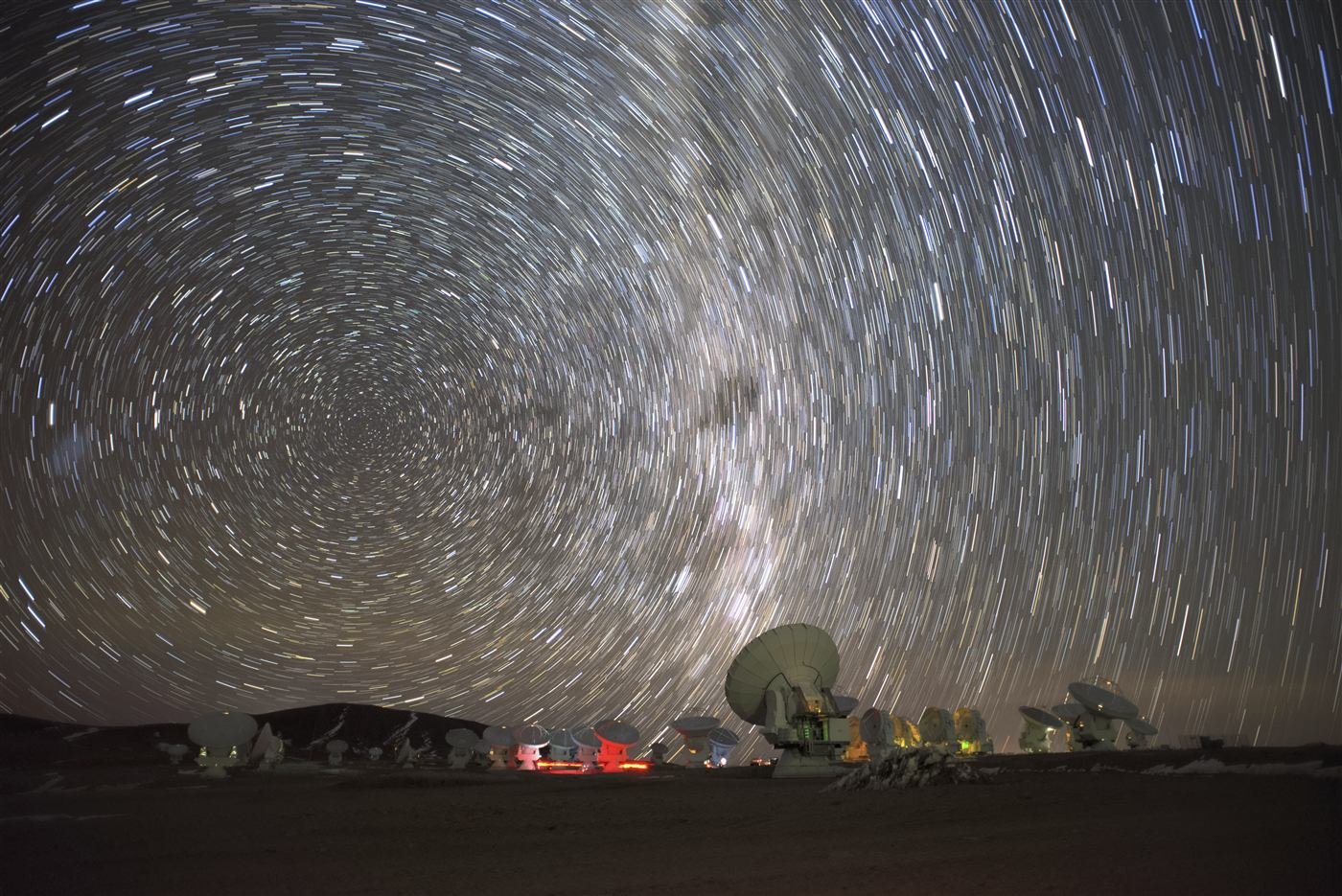
Good enough polar alignment for a typical imaging session doesn't require perfection — just a consistent routine.
Credit: ESO/S. Brunier (www.eso.org)
Why Polar Alignment Matters
An equatorial mount tracks the sky accurately only once its rotational axis is aligned with Earth's own axis, pointed at the celestial pole. Get that alignment close, and a single motor smoothly compensates for Earth's rotation, keeping a target centered for long exposures. Get it wrong, and stars gradually drift and trail across a stacked image, no matter how good the rest of the setup is.
How Precise Does It Actually Need to Be?
Perfection isn't the goal for most imaging sessions — a rough alignment gets stars trailing within seconds, while a good-enough alignment can support exposures of a minute or more without meaningful drift. The required precision scales with focal length and exposure time: a short lens shooting 30-second frames is far more forgiving of alignment error than a long telescope shooting five-minute exposures.
The Ten-Minute Routine
- Level the tripod roughly, and set the mount's latitude scale to your actual latitude.
- Point the mount roughly north (or south, in the Southern Hemisphere) using a compass or landmark — this gets you in the right neighborhood before fine adjustment.
- Use the mount's polar scope, or a smartphone polar alignment app, to locate Polaris (or the south celestial pole region) and center it in the reticle.
- Adjust the mount's altitude and azimuth knobs — not the telescope itself — to move the target star into the correct position marked on the reticle.
- Recheck the position once settled, since tightening mount knobs can shift alignment slightly.
This routine, done a few times, becomes genuinely fast — many imagers report getting comfortably under ten minutes once the steps become familiar.
Tools That Make It Faster
Many modern mounts include an illuminated polar scope with a rotating reticle keyed to the current date and time, removing guesswork about where exactly to place Polaris in the field of view. Smartphone apps that overlay a live polar alignment reticle onto the phone's camera view are a popular alternative for mounts without a built-in polar scope, and some GoTo mounts offer software-assisted electronic alignment routines that skip the polar scope entirely.
Common Mistakes
- Adjusting the telescope's pointing instead of the mount's altitude/azimuth knobs during fine alignment — this defeats the purpose entirely
- Skipping the rough north/south pointing step and going straight to the polar scope, which makes finding Polaris in a narrow field of view unnecessarily difficult
- Not re-leveling or rechecking alignment after transporting the mount between sessions
Frequently Asked Questions
A rough alignment is still worth doing, but the tolerance is much looser than for long-focal-length, long-exposure imaging.
Yes — software-assisted alignment routines using a camera attached to the telescope can polar align without a clear line of sight to Polaris, useful when obstructions block the view.