Sky-Watcher Star Adventurer 2i Review (2026): Still Worth Buying?
This article contains affiliate links. If you buy through them, ORIVON may earn a commission at no extra cost to you.
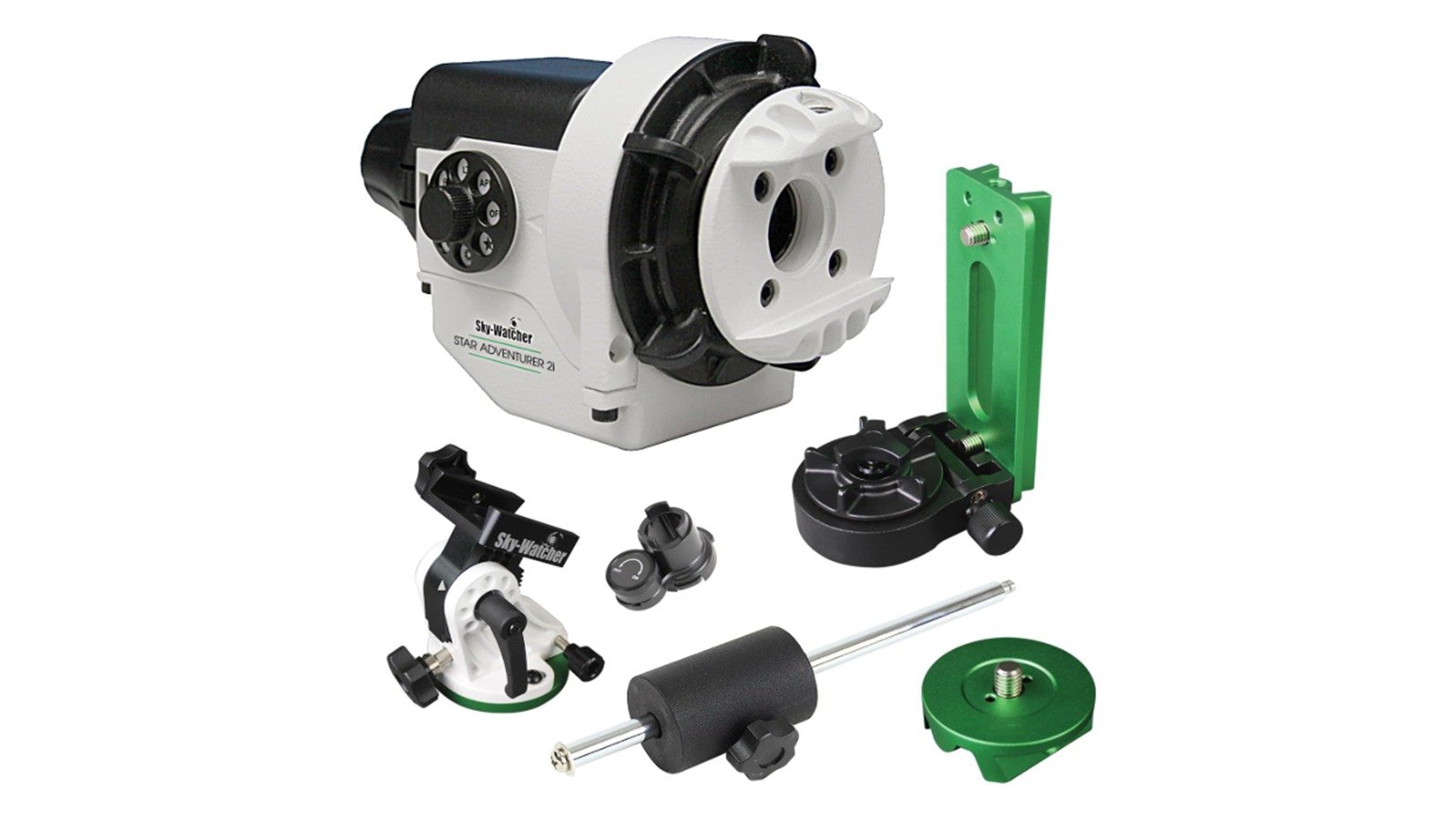
The Sky-Watcher Star Adventurer 2i Pro Pack, a portable equatorial tracker built for wide-field astrophotography.
Short Answer
Yes, for the specific job it does — but check the current price before assuming it's the budget option. Sky-Watcher's own listing puts the Pro Pack meaningfully higher than older buying guides (including ORIVON's own previous version of this page) suggested. At that price it's closer to Sky-Watcher's own GoTo-equipped Star Adventurer GTi than a clearly cheaper alternative, so the real decision in 2026 is whether you specifically want a simpler, non-GoTo tracker — not whether it's the budget pick by default.
What the Star Adventurer 2i Is
A camera on a static tripod can only expose for a few seconds before the sky's rotation blurs stars into trails. The Star Adventurer 2i is a compact equatorial tracker that rotates a mounted camera to match that motion, turning a few-second exposure into a multi-minute one — the difference between a snapshot and an actual tracked astrophoto. The "Pro Pack" reviewed here bundles the tracker head with the declination bracket, counterweight kit and latitude base needed to use it as a real equatorial mount out of the box, rather than the bare tracker head alone.
What Comes in the Pro Pack
Per Sky-Watcher USA's current listing, the Pro Pack includes: the Star Adventurer 2i mount with built-in Wi-Fi, a ball head adapter, a declination bracket, a latitude (EQ) base, a counterweight kit, and a ¼-20″ adapter for standard tripod mounting. A dedicated tripod is not included — it mounts to any standard photo tripod with a ¼-20″ thread.
Current Price
At the time of this August 2026 update, Sky-Watcher USA's own product page lists the Pro Pack at $585. That is notably higher than the roughly $280–$350 figure earlier versions of this page carried, and worth knowing before comparing it against cheaper-looking listings elsewhere — third-party retailers and bundle configurations vary, so treat any single number, including this one, as a snapshot rather than a fixed price. Check the retailer's live price before buying.
Technical Specifications
| Payload Capacity | 11 lbs (5 kg) |
| Mount Head Weight | 3.63 lbs, with declination bracket attached (official spec) |
| Connectivity | Built-in Wi-Fi, controlled via the Star Adventurer Console app (iOS/Android) |
| Tracking Modes | Sidereal, solar, lunar |
| Camera Control | Built-in SNAP port for automatic DSLR/mirrorless shutter release |
| Polar Alignment | Built-in polar scope; illuminator included as a separate accessory |
| Power | 4× AA batteries (up to 24 hours continuous) or 5V mini-USB power bank |
| Price (current) | $585 USD, Pro Pack — see Current Price above |
Build and Portability
The tracker head itself is small enough to travel with easily; independent reviewers consistently flag it as airline-carry-on friendly, particularly compared to a full telescope mount. The full Pro Pack — head, dec bracket, counterweight and latitude base together — is bulkier than the bare tracker but still well within reasonable travel luggage, and several reviewers specifically praise how compactly the counterweight kit packs down.
Payload: Theoretical vs. Realistic Imaging Use
The 11 lb (5 kg) rating is not a number to load right up to. Independent hands-on testing backs the rating up for genuinely tracked, multi-minute exposures when the setup is properly balanced: one reviewer documents a William Optics RedCat 51 (a 250mm-focal-length refractor, roughly 3.8 kg all-in with camera) producing round stars on 90-second exposures, and other users report confident three-minute exposures at similar total weights. Pushed toward the rated maximum with a heavier DSLR-and-telephoto combination, results are more setup-dependent — balance, polar alignment accuracy and how still the tripod is all matter more as weight climbs. ORIVON is not aware of a documented, universally-agreed "safe percentage" of rated payload for long exposures on this specific tracker, and does not invent one here; the practical guidance from independent testing is to stay well clear of the rated maximum for anything beyond short exposures, and to expect the counterweight kit to become necessary once you're mounting more than a camera and a moderate lens.
Polar Alignment
Independent reviewers describe the process as genuinely learnable rather than difficult: the built-in polar scope works without any electronic aid, and one reviewer specifically notes being able to "polar align quickly and accurately without the need for an electronic polar scope," often using a phone app like Polar Finder alongside it to help identify Polaris's exact offset position. The most commonly repeated complaint isn't the alignment method itself — it's the included polar scope illuminator, described across multiple independent reviews as a flimsy, easily-detached or easily-lost plastic accessory.
Tracking Accuracy
For its price class, tracking performance is consistently rated well above expectations by independent reviewers. Documented results include round stars on 90-second exposures at roughly 400mm effective focal length (crop-sensor camera plus a 250mm scope), and reports of confident three-minute exposures at properly balanced weights. This isn't sub-arcsecond mount-grade precision — it's genuinely good performance for a compact, non-GoTo tracker in this price and size class.
Wide-Angle Astrophotography
This is the Star Adventurer 2i's strongest, most unambiguous use case. With a wide-angle lens, independent reviewers report clean 5-to-6-minute exposures — enough for genuinely deep Milky Way and star-field images that a static tripod simply cannot produce, with round, untrailed stars.
Telephoto / Deep-Sky Use
At longer telephoto focal lengths, the same reviewers describe roughly one-to-two-minute exposures as a safe, reliable ceiling in typical conditions — usable for larger nebulae and star clusters, but a genuinely different (and more limited) proposition than what a full telescope mount offers for narrow deep-sky targets.
Small Refractor Use: Realistic Limits
Independent, documented use with a small refractor (specifically the William Optics RedCat 51, a common choice in this weight class) shows the tracker handling that combination well within its rated payload, producing usable nebula images with proper balance and the declination bracket installed. This is meaningfully different from mounting a full-sized imaging telescope — the realistic ceiling is a compact, lightweight refractor, not a general-purpose telescope mount.
Wi-Fi and the Star Adventurer Console
The tracker's built-in Wi-Fi is controlled through Sky-Watcher's official Star Adventurer Console app (iOS and Android), which handles tracking mode selection, intervalometer-style shutter timing and basic setup without touching the unit mid-session. It is a convenience layer, not a requirement — the physical mode dial and controls run the tracker independently of any app or phone.
Camera Shutter Control
A built-in SNAP port provides automatic DSLR/mirrorless shutter triggering timed to the tracker, removing the need for a separate intervalometer for basic time-lapse or long-exposure sequences.
Power and Battery Life
Sky-Watcher specifies up to 24 hours of continuous use from four AA batteries, or unlimited runtime from a 5V USB power bank via the mini-USB port. Independent reviews note two recurring physical gripes rather than runtime complaints: an outdated four-AA battery format compared to more modern rechargeable designs, and a battery compartment cover reviewers describe as prone to sliding open.
Autoguiding Capability and Limitations
The Star Adventurer 2i supports ST-4-standard autoguiding input, letting it accept correction signals from a separate guide camera and guide scope for longer, more precise exposures — a capability aimed at imagers pushing toward the upper end of its practical use, not something a wide-field or Milky Way shooter needs to worry about.
No GoTo: Does It Matter?
The Star Adventurer 2i does not automatically slew to targets — you find and frame them manually, then let the tracker hold the exposure steady. Independent reviewers treat this as a deliberate trade-off for size, weight, price and battery life rather than a missing feature, but it's a real, practical difference from Sky-Watcher's own GoTo-equipped Star Adventurer GTi (see comparison below), and worth weighing honestly against the current price gap between the two.
Learning Curve
Beyond polar alignment, independent reviews flag a handful of small but real usability rough edges: no dedicated on/off button (the mode dial itself can be accidentally bumped into an active tracking mode during transport), and azimuth locking that requires an Allen key rather than a tool-free knob. None of these are described as dealbreakers, but they add up to a tracker that rewards a bit of patience in the first few sessions.
Travel Use
Size and weight remain the Star Adventurer 2i's clearest advantage over a full mount-and-tripod setup, and independent reviewers consistently recommend it specifically for travel astrophotography — dark-sky trips where a full telescope rig isn't practical to bring.
Who Should Buy It
Based on this editorial synthesis of current specifications and independent reviews — not on direct hands-on testing by ORIVON — the Star Adventurer 2i Pro Pack makes the most sense for photographers with a DSLR or mirrorless camera and a wide-to-moderate telephoto lens who want genuinely longer, sharper exposures of the Milky Way, star fields and larger nebulae, plus travelers who want real equatorial tracking without a full mount's bulk.
Who Should Skip It
Anyone planning to mount an imaging telescope heavier than a compact refractor, or who specifically wants automatic GoTo object-finding, should look at Sky-Watcher's own Star Adventurer GTi instead — at a price now much closer to this Pro Pack's current $585 than it used to be, the GoTo upgrade is a smaller premium than it once was.
Star Adventurer 2i vs. iOptron SkyTracker Pro
The two occupy genuinely different points in the same category. The Star Adventurer 2i carries nearly double the rated payload (11 lb vs. the SkyTracker Pro's 6.6 lb) and includes a full equatorial kit — dec bracket, counterweight, latitude base — that the SkyTracker Pro doesn't bundle in the same way, at roughly double the current price. The SkyTracker Pro is smaller, lighter and built around an internal rechargeable battery rather than AAs, which matters more for minimal-luggage travel. For a small refractor or a heavier telephoto setup, the Star Adventurer 2i is the more capable choice; for the lightest possible Milky Way travel kit, the SkyTracker Pro is worth a direct look — ORIVON's full SkyTracker Pro review covers it in the same depth as this page.
Star Adventurer 2i vs. SkyGuider Pro
iOptron's SkyGuider Pro is the Star Adventurer 2i's closest direct competitor — a similarly-sized equatorial tracker with a comparable 11 lb payload rating, currently priced around $428 for the base unit per iOptron's own listings (bundled full packages run higher). The two are close enough in capability that the deciding factor for most buyers comes down to app/ecosystem preference and whichever is available at a better price when you're actually buying.
Star Adventurer 2i vs. Star Adventurer GTi
The GTi is Sky-Watcher's GoTo-equipped sibling — same core tracking hardware family, with automatic object-finding and slewing added, currently priced around $500 for the mount-head kit per current retail listings. With the standard 2i's Pro Pack now at $585, the price gap between "no GoTo" and "GoTo" has narrowed considerably compared to what older buying guides suggest. If automatic target-finding matters to you, it's worth pricing both directly before deciding the 2i is the cheaper option — it may not be by much, or at all, depending on current bundle pricing.
Pros and Cons
Drawing on Sky-Watcher's current specifications and recurring themes across independent hands-on reviews and owner feedback:
What Reviewers Praise
- Genuinely portable — small and light enough to travel with, even by air
- Documented tracking performance (90-second to 3-minute exposures) that exceeds expectations for its size and price class
- Built-in polar scope that works well without an electronic aid, once learned
- Wi-Fi control through the Star Adventurer Console app, plus a built-in SNAP shutter port
- Real, documented success with compact refractors like the RedCat 51 when properly balanced
Common Criticisms
- Current price ($585 for the Pro Pack) sits much closer to the GoTo-equipped GTi than older buying advice suggests
- No GoTo — targets are found and framed manually
- A flimsy, easily-lost polar scope illuminator, called out across multiple independent reviews
- Outdated four-AA battery format; battery compartment cover reported as prone to sliding open
- No dedicated on/off switch; the mode dial can be bumped during transport
Value in 2026
The honest framing for 2026: the Star Adventurer 2i Pro Pack is still a genuinely capable, well-regarded tracker, but it is no longer clearly the budget entry point its older reputation suggests. At $585, buyers should actively compare it against both the SkyGuider Pro (similar capability, generally lower price) and Sky-Watcher's own GTi (GoTo added, price gap now smaller than it used to be) rather than assuming it's the default cheap choice.
Final Verdict
The Star Adventurer 2i remains a well-built, genuinely capable tracker for photographers moving from static tripod shots into real tracked exposures — the tracking accuracy and portability independent reviewers document hold up. What's changed is the price context: at its current listing, it competes directly with GoTo-equipped alternatives rather than sitting clearly below them, so the right question in 2026 isn't "is this the cheap option" but "do I specifically want a simpler, manual-target, non-GoTo tracker at this price."
How It Compares
| Model | Payload | GoTo | Current Price (est.) |
|---|---|---|---|
| Star Adventurer 2i Pro Pack | 11 lbs | No | $585 |
| iOptron SkyGuider Pro | 11 lbs | No | ~$428 (base unit) |
| Star Adventurer GTi (mount head) | 11 lbs | Yes | ~$500 |
| iOptron SkyTracker Pro | 6.6 lbs | No | ~$225–$399 |
Prices are current-market estimates as of August 2026, drawn from each manufacturer's own listings and cross-referenced against retail sources. They fluctuate — always check the retailer's live price before buying.
Sources & Methodology
This review combines Sky-Watcher's current official specifications, independent hands-on reviewer findings and recurring patterns in owner feedback. ORIVON has not tested this tracker directly — no claim here should be read as a hands-on ORIVON finding. Editorial synthesis (positioning, comparisons, "who should buy" guidance) is ORIVON's own analysis built on the sourced facts below, not itself an external claim.
- Official specifications: Sky-Watcher USA, Star Adventurer 2i Pro Pack product page and official user manuals (accessed August 2026)
- Independent hands-on reviews: AstroBackyard, "Star Adventurer Pro Review"; Capture the Atlas, "Sky-Watcher Star Adventurer Pro Review" — payload, polar alignment, tracking accuracy and long-term ownership notes
- Owner and long-term feedback: patterns observed across current retailer buyer reviews
- ORIVON editorial analysis: positioning against the SkyGuider Pro, Star Adventurer GTi and iOptron SkyTracker Pro, "who should/shouldn't buy" guidance, and current-value assessment
Frequently Asked Questions
For photographers moving from static tripod shots into real tracked exposures, yes — it remains one of the most consistently recommended trackers in its class. Its current price is higher than older buying guides suggest, so it's worth comparing directly against the GTi (which adds GoTo) before buying.
Within its 11 lb (5kg) payload rating, yes for small refractors like a 250mm-class scope with a camera — independent reviewers document this working well when properly balanced with the counterweight kit. It is not built as a telescope mount for anything heavier.
No — the tracker has physical controls and can run independently. The Star Adventurer Console app adds Wi-Fi convenience and camera control but isn't required for basic tracking.
Independent reviewers consistently describe a real but short learning curve using the included polar scope — most report reaching a workable alignment routine within their first few sessions.
The Star Adventurer 2i carries nearly double the payload (11 lb vs 6.6 lb) at roughly double the weight and a higher price. The SkyTracker Pro is smaller and lighter for travel; the Star Adventurer 2i supports meaningfully heavier camera-and-lens or small-refractor setups.