
A Field Guide to the Messier Catalog
This article contains affiliate links. If you buy through them, ORIVON may earn a commission at no extra cost to you.
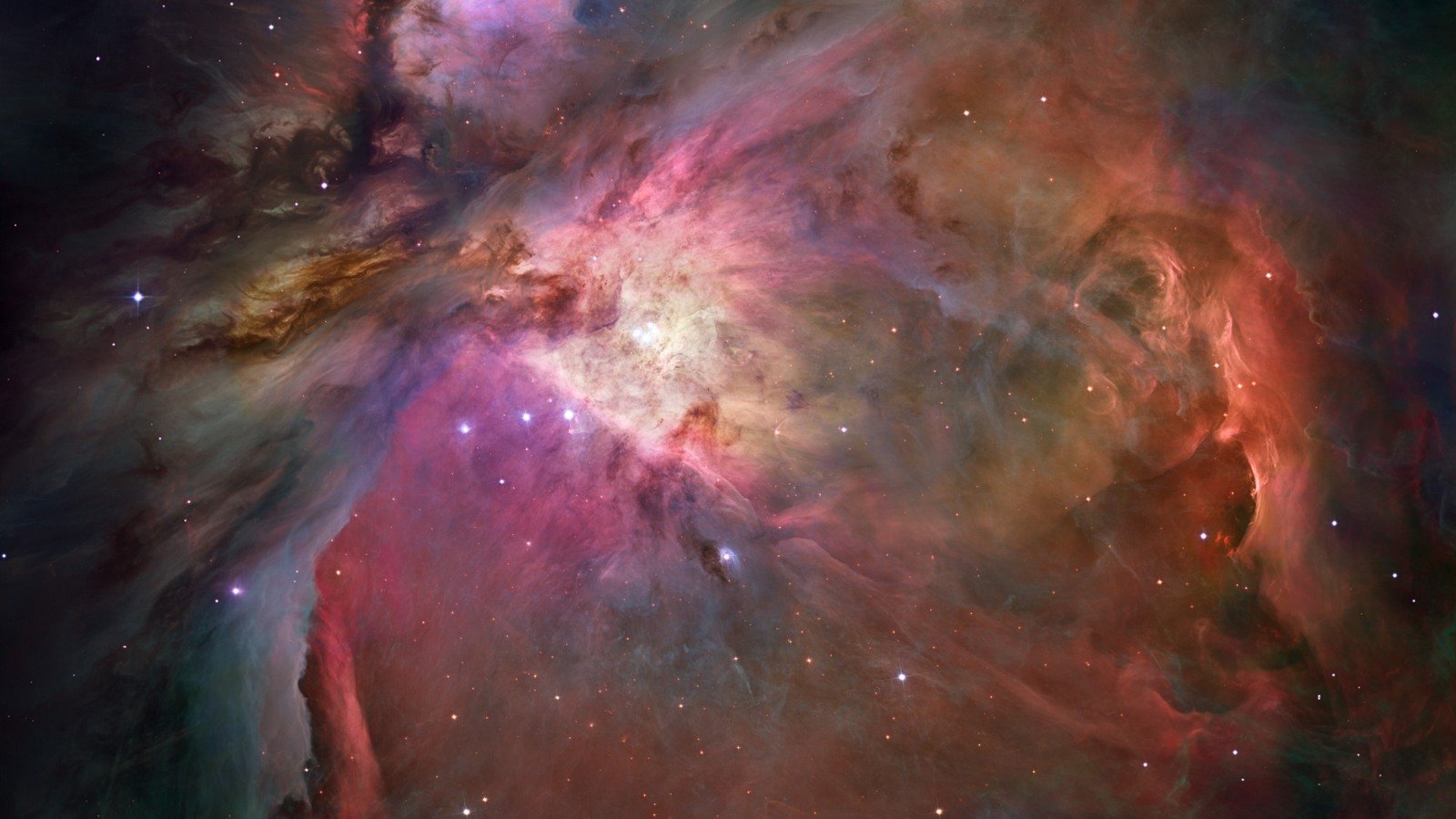
Credit: NASA, ESA, M. Robberto (STScI/ESA)
What the Messier Catalog Actually Is
In the 1770s, French astronomer Charles Messier was hunting comets — and kept mistaking fuzzy, non-moving smudges in the sky for them. To stop wasting his own time, he started cataloging every one of these "not a comet" objects so he and other comet hunters could rule them out at a glance. The result, first published in 1774 and expanded through 1781, was a list of 110 deep-sky objects: nebulae, star clusters and galaxies, numbered M1 through M110.
Messier never intended it as an observing bucket list. That's simply what it became, because every object on it happens to share one useful property: it's bright enough to see with the modest refractors and reflectors of an 18th-century French observer, which makes the catalog, by accident, a near-perfect list of targets for a beginner with a modern backyard telescope.
Why It's Still the Reference List Beginners Work Through First
Two and a half centuries later, the Messier Catalog remains the default starting point for a reason: every object on it was, by definition, observable with period optics far less capable than a modern $200 telescope. It's a naturally graded, achievable list rather than an aspirational one built around what a professional observatory can detect. Working through it also builds real observing skills — star-hopping, framing, patience with averted vision — in a way that jumping straight to obscure NGC catalog targets doesn't.
How the Catalog Is Organized
Messier objects fall into three broad categories, and recognizing which type you're looking for changes what to expect at the eyepiece:
- Nebulae — clouds of gas and dust, either glowing on their own (emission nebulae like M42) or lit by nearby stars (reflection nebulae), plus the shells left behind by dying stars (planetary nebulae like M57)
- Star clusters — loose, young open clusters (like the Pleiades, M45) or dense, ancient globular clusters (like M13), which can contain hundreds of thousands of stars packed into a compact sphere
- Galaxies — entire separate star systems outside the Milky Way, from face-on spirals like M51 to the much closer, naked-eye-visible Andromeda Galaxy, M31
The Most Accessible Objects to Start With
Not all 110 objects are equally forgiving. Some are naked-eye visible from a suburban backyard; others demand a genuinely dark sky and a patient eye. This list is ordered from easiest to find toward more demanding — work down it as your observing skills improve.
| M45 — Pleiades | Naked-eye open cluster in Taurus; unmistakable even from light-polluted skies |
| M42 — Orion Nebula | Visible to the naked eye as a fuzzy "star" in Orion's Sword; spectacular in any telescope |
| M31 — Andromeda Galaxy | Naked-eye from a dark site; a telescope reveals its bright core and companion galaxies |
| M44 — Beehive Cluster | A large, bright open cluster in Cancer, best in binoculars or a low-power eyepiece |
| M13 — Hercules Cluster | The finest globular cluster in the northern sky; resolves into individual stars in a 6" scope |
| M57 — Ring Nebula | A small but distinct smoke-ring shape in Lyra; needs moderate magnification |
| M8 — Lagoon Nebula | A bright summer nebula in Sagittarius, best from a dark sky low on the southern horizon |
| M27 — Dumbbell Nebula | A bright planetary nebula in Vulpecula, easier than most of its kind |
| M51 — Whirlpool Galaxy | A face-on spiral with a visible companion, but needs a dark sky to show real structure |
| M1 — Crab Nebula | A supernova remnant in Taurus; faint and rewarding, one of the harder early targets |
Frequently Asked Questions
No — many, including the Pleiades, Orion Nebula and Andromeda Galaxy, are visible in binoculars or even to the naked eye from a reasonably dark site. A 4–6 inch telescope comfortably shows the majority of the catalog.
An observing challenge, usually attempted in early spring, where observers try to find all 110 Messier objects in a single night — possible only because of a rare seasonal alignment that puts the whole catalog above the horizon.
Not in color or fine structure — most appear as gray, soft-edged shapes at the eyepiece. The forms and relative sizes are real, but the vivid color in photographs comes from long-exposure imaging your eye can't replicate live.