Ring Nebula (M57): A Sun-Like Star's Final Act
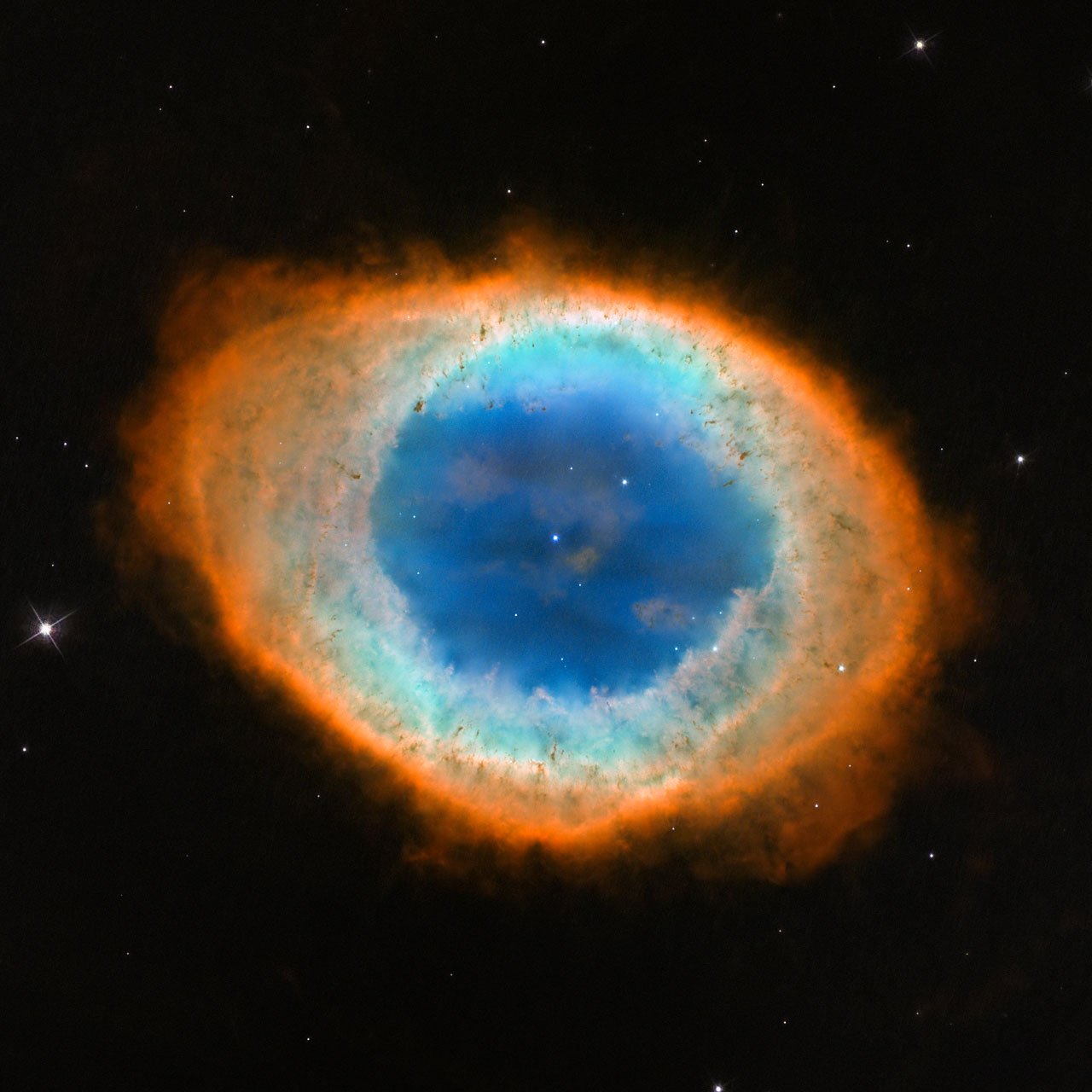
Credit: NASA, ESA and the Hubble Heritage (STScI/AURA)-ESA/Hubble Collaboration
What It Is
The Ring Nebula is a planetary nebula — a glowing shell of gas cast off by a Sun-like star nearing the end of its life, despite the name having nothing to do with planets. As the star's outer layers drift outward, ultraviolet light from the exposed stellar core ionizes the gas, producing the nebula's signature glow. It's a preview, in astronomical terms, of a fate our own Sun will eventually share billions of years from now.
Constellation & Distance
M57 lies in the constellation Lyra, roughly 2,300 light-years from Earth. It's one of the most compact well-known deep sky targets, spanning only about a light-year across despite its relatively bright, easy-to-locate position.
Why It's Worth Seeing This Month
Lyra is a classic summer constellation, well-placed in the evening sky during July for Northern Hemisphere observers. The nebula's small size and relatively high surface brightness mean it holds up reasonably well even under some light pollution, making it a dependable target on nights that aren't perfectly dark.
Equipment: Visual vs. Astrophotography
Visual: Because M57 is small, higher magnification and at least moderate aperture help — through a small telescope at low power, it can be easy to mistake for a slightly fuzzy star. Bumped up in magnification, its characteristic smoke-ring shape becomes clear.
Astrophotography: A longer focal length instrument is the better match here, since a wide-field setup built for large nebulae will render M57 as a tiny speck in the frame. An OIII filter helps bring out the fainter outer halo of gas surrounding the brighter central ring, and a cooled camera helps recover subtle color variation across the shell.