
The Eclipse That Darkened Spain
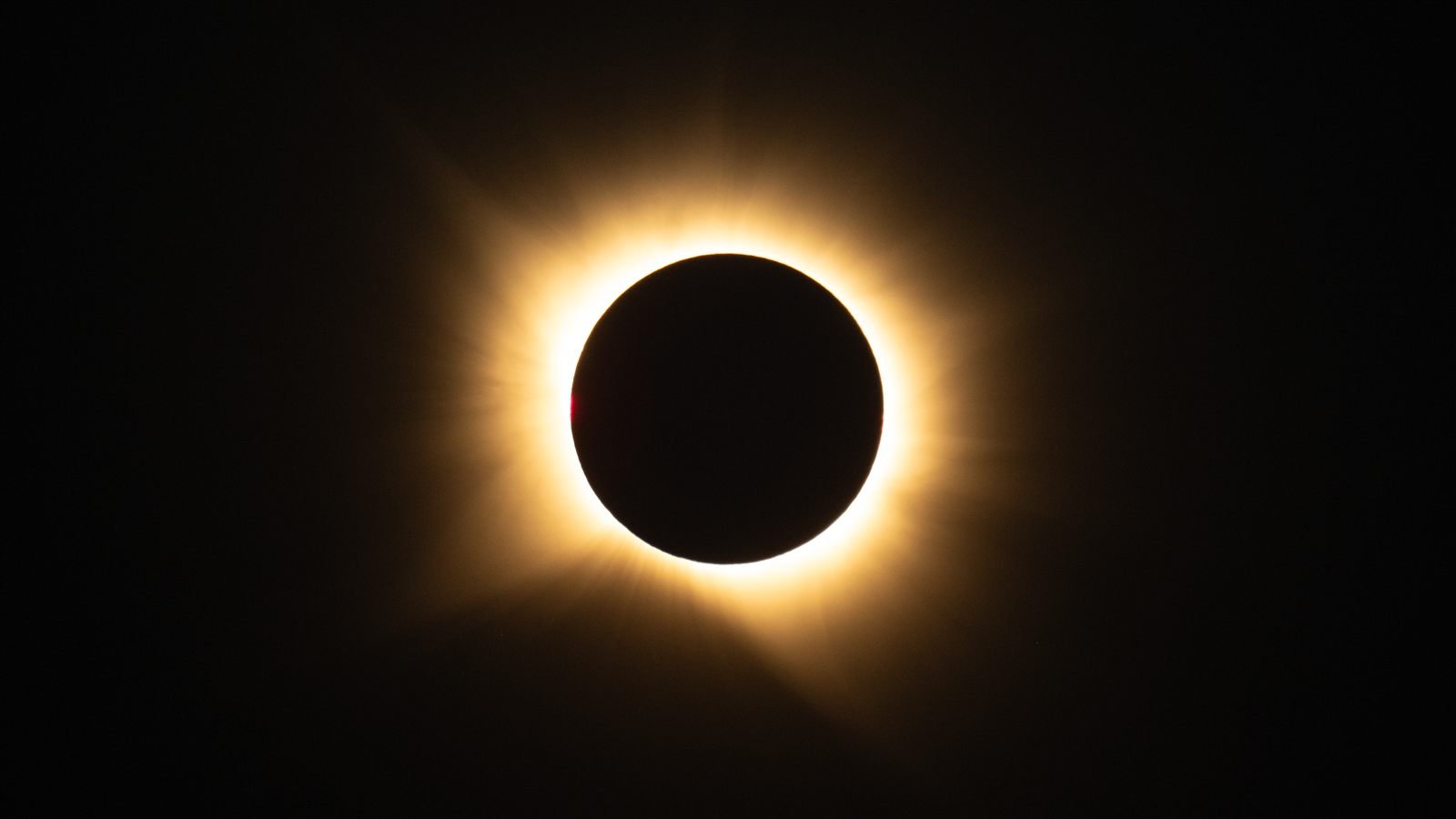
The total solar eclipse seen from San Millán de los Caballeros, Spain, August 12, 2026. Credit: NASA/Bill Ingalls
On August 12, 2026, the Moon's shadow reached mainland Europe for the first time since 1999. After sweeping across the Arctic, Greenland, Iceland and a long stretch of open Atlantic, the path of totality made landfall in Spain, and darkness swept over towns across the country in the late afternoon before totality clipped a small corner of northeastern Portugal.
Beyond the narrow path itself, a partial eclipse was visible far more widely — across parts of the United States, most of Canada, much of the rest of Europe, and northwestern Africa. For the much smaller number of observers standing inside the path, the Sun's corona emerged as a pale halo around the silhouette of the Moon, exactly as ORIVON's pre-eclipse guide described it would.
What the Photos Show
NASA photographer Bill Ingalls captured totality from San Millán de los Caballeros, Spain — the image above shows the corona, the Sun's faint outer atmosphere, bright around the Moon's black disc with a reddish tint visible at the edge. That reddish fringe comes from prominences: loops of hot plasma arcing off the Sun's surface, only visible to the eye during the brief minutes of totality.
Why This One Mattered
Total solar eclipses are not rare globally — one occurs somewhere on Earth roughly every 18 months — but a total eclipse crossing mainland Europe is genuinely uncommon. The last one was in 1999. Most of the August 12 path crossed open ocean and sparsely populated Arctic terrain, which made Spain's stretch of the path, and the accessible viewing it offered to a large population, the most significant part of this particular eclipse for European observers.
If you're already planning ahead: the next total solar eclipse crossing a major populated region is worth tracking now, since path and timing details take real preparation to use well.
What's Next
August 2026's eclipse activity didn't end there — a partial lunar eclipse closed out the month on August 28. Unlike a solar eclipse, no special filters were needed to watch it safely. See ORIVON's recap of the August 28 partial lunar eclipse for confirmed timing and geometry.