What You Can Actually See on Jupiter and Saturn
This article contains affiliate links. If you buy through them, ORIVON may earn a commission at no extra cost to you.
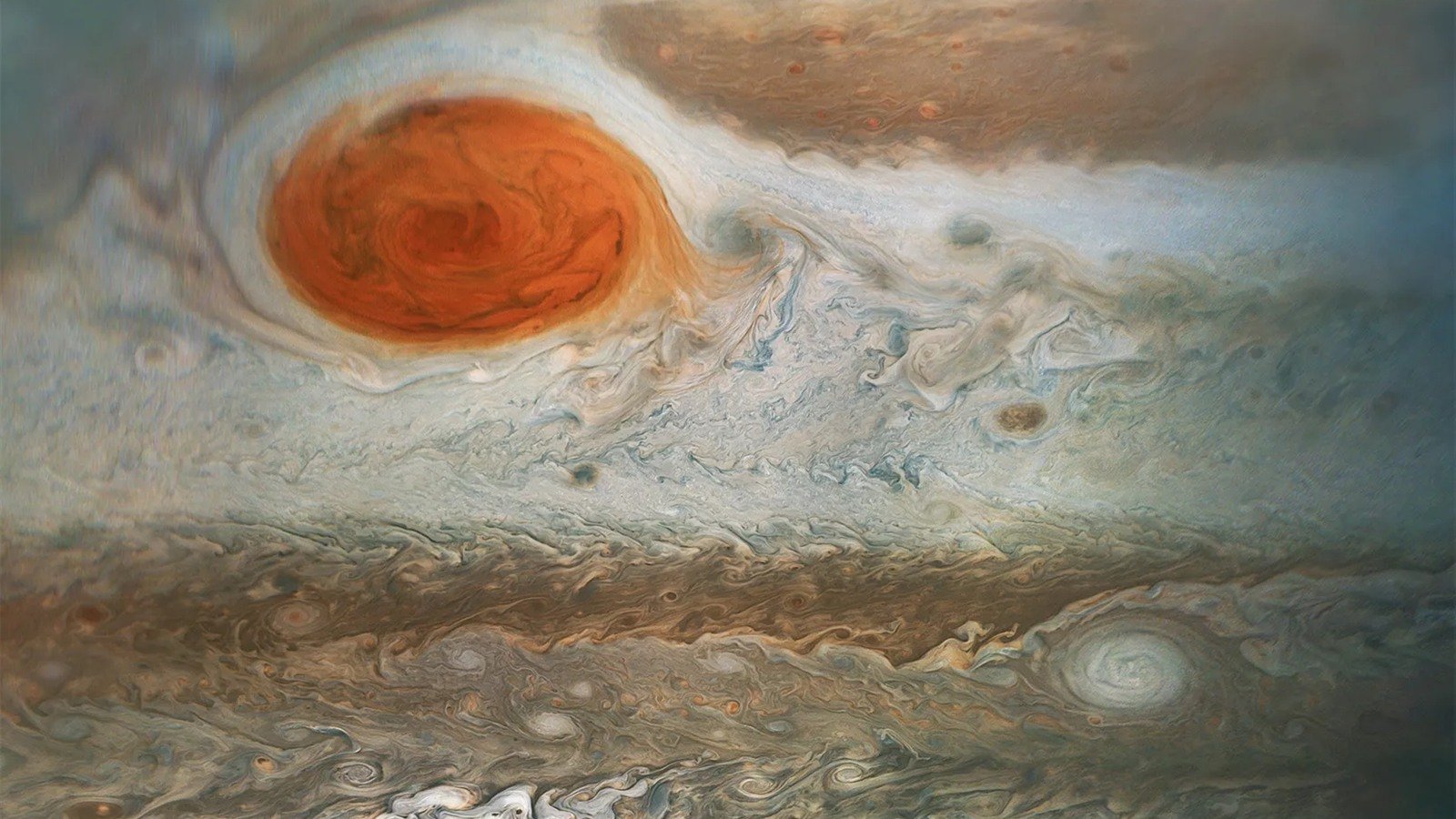
Credit: NASA/JPL-Caltech/SwRI/MSSS
Set the Right Expectations First
Jupiter and Saturn are the two most rewarding planets for a beginner telescope, precisely because they show real, unambiguous detail at modest apertures — unlike Mars, which mostly stays a small orange disc until you own serious equipment. But "real detail" through an eyepiece looks nothing like a NASA press photo, and knowing that going in prevents the single most common first-night disappointment in the hobby.
What a Small Telescope Shows on Jupiter
Even a modest 60–90mm refractor or tabletop reflector resolves Jupiter as a small but clearly non-stellar disc, typically showing two dark cloud bands running across it — the North and South Equatorial Belts. Around it, four points of light hold steady in a rough line: the Galilean moons — Io, Europa, Ganymede and Callisto — which visibly change position from night to night as they orbit. Watching their arrangement shift over a week is one of the most satisfying "the universe is actually moving" experiences available to a beginner.
The Great Red Spot itself is a harder catch at this aperture. It's there, but it needs a night of steady seeing, a telescope collimated well, and the spot to actually be facing Earth at the time — Jupiter's ten-hour rotation means it isn't always in view.
What a Medium Aperture Shows on Saturn
Saturn's rings are visible in almost any telescope at reasonable magnification — the moment most beginners point at a planet for the first time and audibly react. A 114–150mm reflector under good seeing goes further, resolving the Cassini Division: the dark gap separating the outer A ring from the brighter B ring. It appears as a thin, sharp dark line rather than a dramatic canyon, but it's unmistakably there once you know what you're looking for.
Saturn's largest moon, Titan, is an easy catch as a steady point of light off to one side even in small scopes; a handful of fainter moons become visible with more aperture and a dark sky.
Why It Never Looks Like a Space Probe Photo
NASA's Juno and Cassini images are taken from spacecraft that flew within thousands, not millions, of kilometers of these planets, using sensors and processing pipelines built for scientific detail extraction rather than visual accuracy. A backyard telescope is working with reflected sunlight from hundreds of millions of kilometers away, through Earth's own turbulent atmosphere. Managing that gap in expectations — rather than trying to close it with a bigger telescope — is what keeps planetary observing enjoyable rather than a constant letdown.
Frequently Asked Questions
The rings are visible starting around 25–30x, but 100–150x on a night of steady seeing is where the Cassini Division and ring shadow detail start to show clearly.
Atmospheric turbulence ("seeing") varies night to night and even hour to hour. A planet low on the horizon, or on a night of poor seeing, will look softer regardless of telescope quality.
Visually, color is subtle — the bands read as tan or grayish, and the Great Red Spot often looks more like a pale salmon smudge than the vivid photographs suggest. Larger apertures and steady skies improve color perception somewhat, but it stays muted compared to imaging.