The Space B-Roll Pack We Actually Use for Reels and Shorts
This article contains affiliate links. If you buy through them, ORIVON may earn a commission at no extra cost to you.
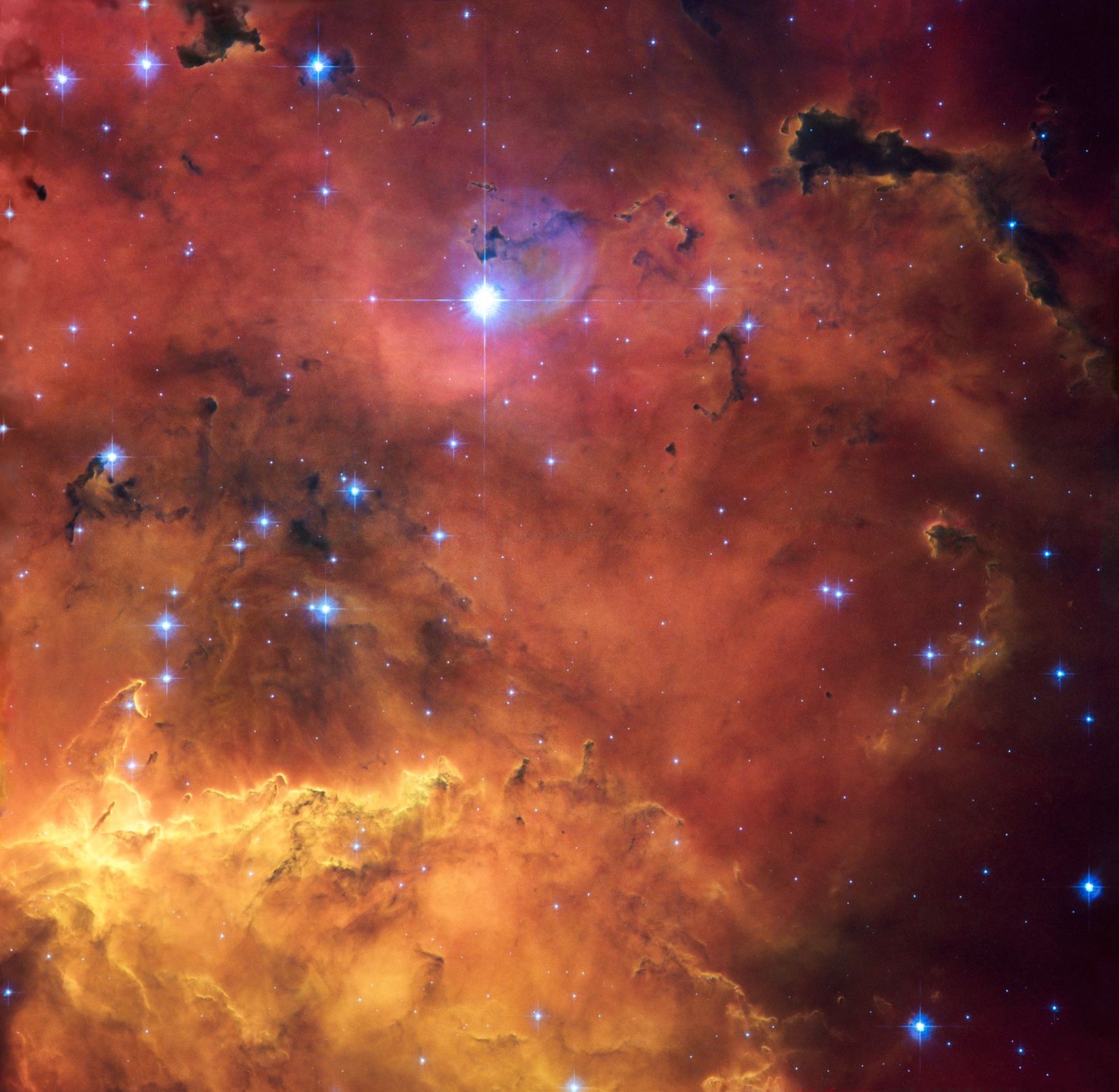
NGC 2467, a star-forming region in the constellation Puppis. Illustrative space imagery — not a frame from the bundle itself.
Credit: NASA, ESA
The Problem Nobody Warns You About
If you make astronomy content, you already know the trap: the algorithm doesn't care that clear nights are rare, that deep-sky imaging takes hours per frame, or that you have a day job. It wants you posting. Constantly. And a genuinely good astrophotograph — the kind worth putting your name on — can take a full night of capture and another evening of processing before it's ready. That math doesn't scale to a daily Reel.
We ran into this ourselves — but let's be precise about how. ORIVON is an editorial publication, not a production studio: the analysis, the scripts, the opinions, and the editorial voice in everything we publish are entirely our own, and they always will be. What we don't have is a warehouse of astro cameras rolling fresh B-roll every night. So for one small slice of what we make — the fast-turnaround visual filler behind a voiceover, the three-second cutaway between talking points, the ambient loop under a caption — we reached for a different answer than "shoot it yourself." That filler is a minor part of the whole, not the foundation of it.
What We Landed On
The thing we actually reach for is a ready-to-post bundle: the 1200+ Space Galaxy Reels Bundle. It's exactly what it sounds like — a large library of short, vertical-friendly space and galaxy clips you can drop straight into an edit without processing anything from scratch. When we need a nebula drifting behind a title card or a starfield loop under a hook, we pull one from the pack instead of burning a night of capture time on something that's only ever going to be background.
It doesn't replace real astrophotography, and we wouldn't want it to. What it replaces is the low-stakes visual filler you'd otherwise waste hours sourcing or shooting — the stuff the audience never screenshots, but that your feed still needs to keep moving.
To be clear: this bundle covers background B-roll only. The analysis, the scripts, and the opinions in our content are still entirely our own — this is a support tool for a fraction of the visuals, not the source of what we actually say.
Let's Be Precise About What It Is
No overselling here, because that's not the point of this piece. The bundle is a collection of more than 1,200 short space- and galaxy-themed clips, delivered in high resolution and ready to use out of the box. A significant portion of the material is AI-generated rather than captured through a telescope — meaning these are stylized, cinematic space visuals, not scientifically accurate images of real objects.
That distinction matters depending on what you make. For mood, motion, and atmosphere behind short-form content, AI-generated space footage is genuinely useful and saves real time. For anything where accuracy is the point — an educational breakdown of a specific nebula, a "here's what this object actually looks like" explainer — you'd still want real telescope data, credited properly. Know which kind of clip you're reaching for.
One Honest Caveat: Read the License
Before you build a content workflow on top of any pack like this — this one or any other — actually read the seller's license terms. "Full rights" is a phrase that means different things to different vendors. Some licenses cover personal and commercial use on your own channels but prohibit reselling the clips or bundling them into a product of your own. Others are more permissive; others less. If your plan is anything beyond posting to your own audience — say, using clips in client work, or in a paid product — confirm the specific terms cover that use case before you scale up. It's a five-minute check that saves a real headache later.
Who This Actually Makes Sense For
This is a tool for a specific situation, not a universal recommendation. It makes the most sense if you already have an audience and a publishing rhythm, and the bottleneck is simply keeping up with volume — you know your voice, you know what performs, and you just need more raw visual material to feed the machine without it eating your whole week.
If you're just starting out, we'd honestly steer you the other way. Early on, the thing that separates you from every other space account is a point of view, and leaning on a big pack of generic clips before you've found your own style tends to make your feed look like everyone else's. Build the voice first. The volume tools are far more valuable once you actually have something distinct to pour into them.
The Bottom Line
We use it because it solves one narrow, real problem — constant short-form visual filler without a production budget — and it's honest work to say so. It's not a substitute for the real thing, it's a time-saver for the parts of content creation that were never going to be the real thing anyway. If that's the problem you have, it's worth a look. If it's not, save your money and go outside on the next clear night.
Frequently Asked Questions
Many of the clips are AI-generated rather than captured through a telescope. They're stylized, cinematic space visuals — great for mood and motion, but not a source for scientifically accurate depictions of specific objects.
That depends entirely on the seller's license terms, which you should read before relying on the pack. Uses like reselling or bundling the clips into your own product are commonly restricted even when personal and channel use is allowed.
Probably not yet. It's most useful once you already have an audience and a distinct style, and the only bottleneck is volume. Early on, developing your own voice matters more than having a large library of generic footage.