
Starship Flight 13 Delivers the Softest Splashdown Yet — and a Heat Shield That Survived
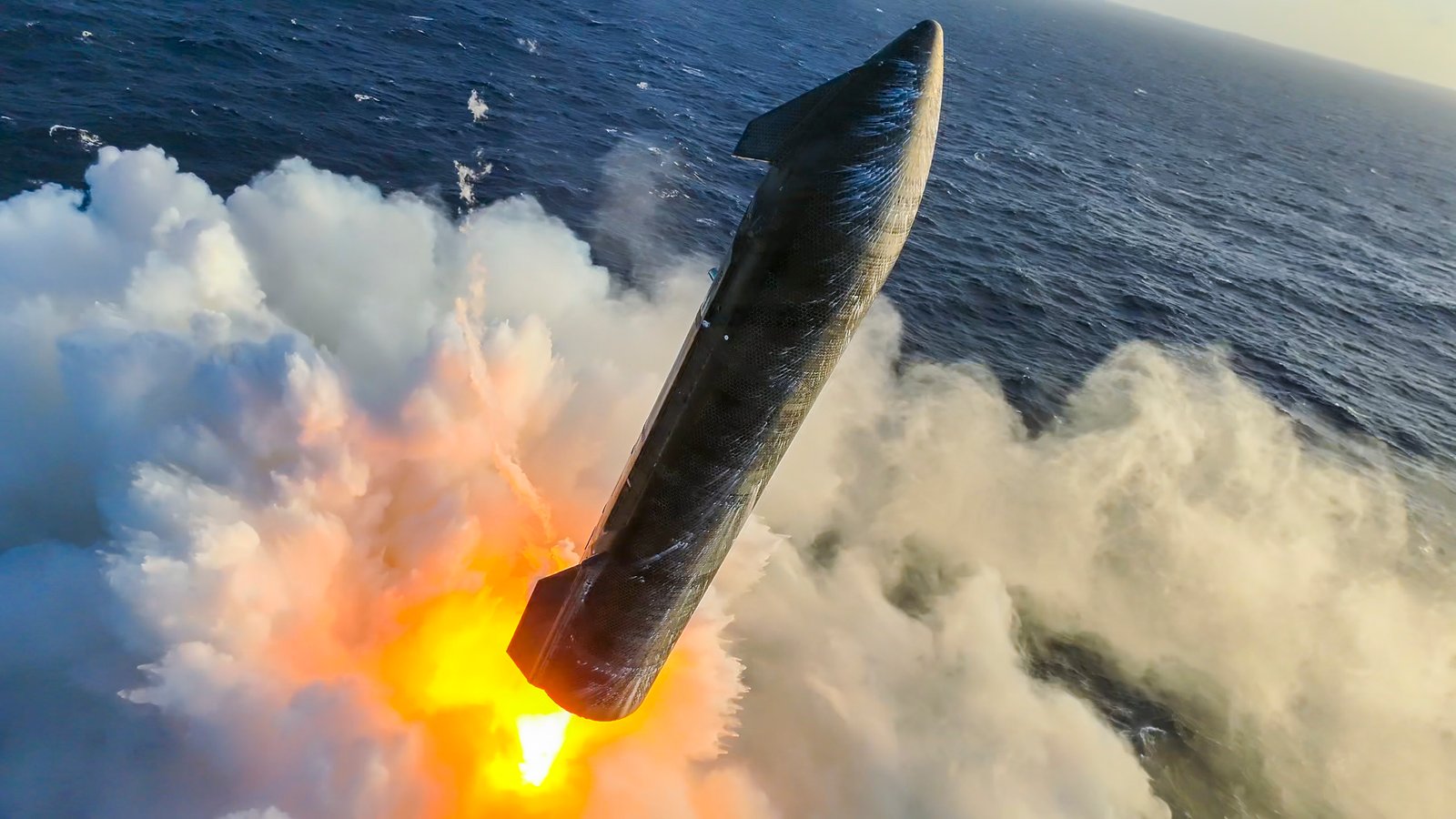
Credit: SpaceX
Landing burn and splashdown of Starship on Flight 13
— SpaceX (@SpaceX) July 28, 2026
Source: @SpaceX on X
SpaceX's thirteenth Starship test flight ended on July 24, 2026, with the softest splashdown the program has produced to date — and, for the first time, a heat shield that came through a full ocean landing intact.
The flight, lasting 1 hour and 6 minutes from Starbase, Texas, was the first outing for the new Starship V3 configuration. Super Heavy's 33 Raptor 3 engines lit cleanly at liftoff, and after hot-staging, the upper stage's 6 engines carried Starship through its planned suborbital trajectory. Along the way, the vehicle deployed its first batch of Starlink V3 satellites — a secondary objective that quietly confirmed the ship can do useful work on the way to reentry, not just survive it.
Reentry is where Flight 13 earned its headline. Starship passed through peak heating and peak dynamic pressure without incident, then executed its landing flip and final burn for splashdown in the Indian Ocean, west of Australia. SpaceX communicator Dan Huot, narrating the descent live, called it "a dream scenario for this team that's trying to get this heat shield data" — and the numbers backed him up. It was the softest splashdown the program has recorded, and the heat shield stayed intact through the entire event, a first for a complete ocean landing.
Landing burn and splashdown of Starship on Flight 13
— SpaceX (@SpaceX) July 28, 2026
The landing burn and splashdown, in full. Source: @SpaceX on X
Super Heavy's day went less smoothly. The booster was set to relight 13 engines for its own splashdown in the Gulf, but only achieved partial reignition, producing a harder impact than planned. Since Super Heavy was already expendable for this flight — headed for the water regardless — the rough landing didn't threaten the mission. It's a data point for the booster team to chase down, not a step backward for the flight as a whole.
Why the Heat Shield Matters More Than the Headline
A soft splashdown is a nice photo. An intact heat shield after a full reentry and landing sequence is the actual engineering milestone. Starship's thermal protection system has been the program's most persistent open question — the difference between a vehicle that survives one trip home and one that can fly again with minimal turnaround. Flight 13 is the first time SpaceX has closed that question all the way through splashdown, and it's the reason Huot's "dream scenario" comment wasn't just enthusiasm — it's the specific data set the team has been chasing across a dozen flights.
What Comes Next
SpaceX is targeting Flight 14 for the program's first attempt at catching Starship with the "Mechazilla" tower arms — the maneuver that, if it works, turns Starship from "a rocket that lands softly in the ocean" into "a rocket that comes home to the launch site." That attempt requires Starship to complete a full orbital trajectory, a step up in complexity from Flight 13's suborbital profile. If the heat shield performance from Flight 13 holds up under closer inspection, Flight 14 becomes the flight to watch.
Frequently Asked Questions
It was the first flight of the Starship V3 configuration, and the first time the vehicle's heat shield survived a complete ocean splashdown intact.
No — it landed harder than planned after only partially relighting its 13 engines for the splashdown burn, but the booster was already expendable for this flight, so the rough landing didn't affect the mission's success.
SpaceX is targeting Flight 14 for the first attempt to catch Starship with the Mechazilla tower, which requires the vehicle to complete a full orbital trajectory rather than the suborbital path flown on Flight 13.